Animals in Aboriginal Art: Symbols and Meanings
Australian Aboriginal art is an ancestral cultural expression, rich in spiritual meanings and deep connections to nature. For millennia, the Aboriginal peoples of Australia have used painting, engraving, and other artistic forms to narrate Dreamtime stories, transmit knowledge, and honor the living beings that inhabit their environment. Among these representations, animals hold an essential place, symbolizing totems, spiritual guides, or fundamental elements of the cycle of life.
Discover how animals are represented in Aboriginal art and the profound meanings they carry.
1. The Importance of Animals in Aboriginal Art
Aboriginal art is inseparable from the spiritual and cultural connection that Aboriginal peoples maintain with their environment. Each animal painted, engraved, or drawn on bark or sand carries a particular meaning, often linked to the foundational myths of the Dreamtime (or Dreamtime in English).
These artworks, rich in geometric patterns and pointillism, are not merely decorative representations: they convey messages and serve to transmit knowledge about nature, survival, and ancestral beliefs. Animals are thus spiritual guides, protectors, and symbols of the invisible world.
2. Key Animals and Their Symbolism
🐍 The Snake: Creator and Guardian of the Waters
The Rainbow Serpent is one of the most sacred figures in Aboriginal culture. Present in numerous creation stories, it is associated with the birth of rivers, mountains, and waterholes, all essential elements for life in Australia. It symbolizes strength, fertility, and protection, but also nature's destructive power when angered.
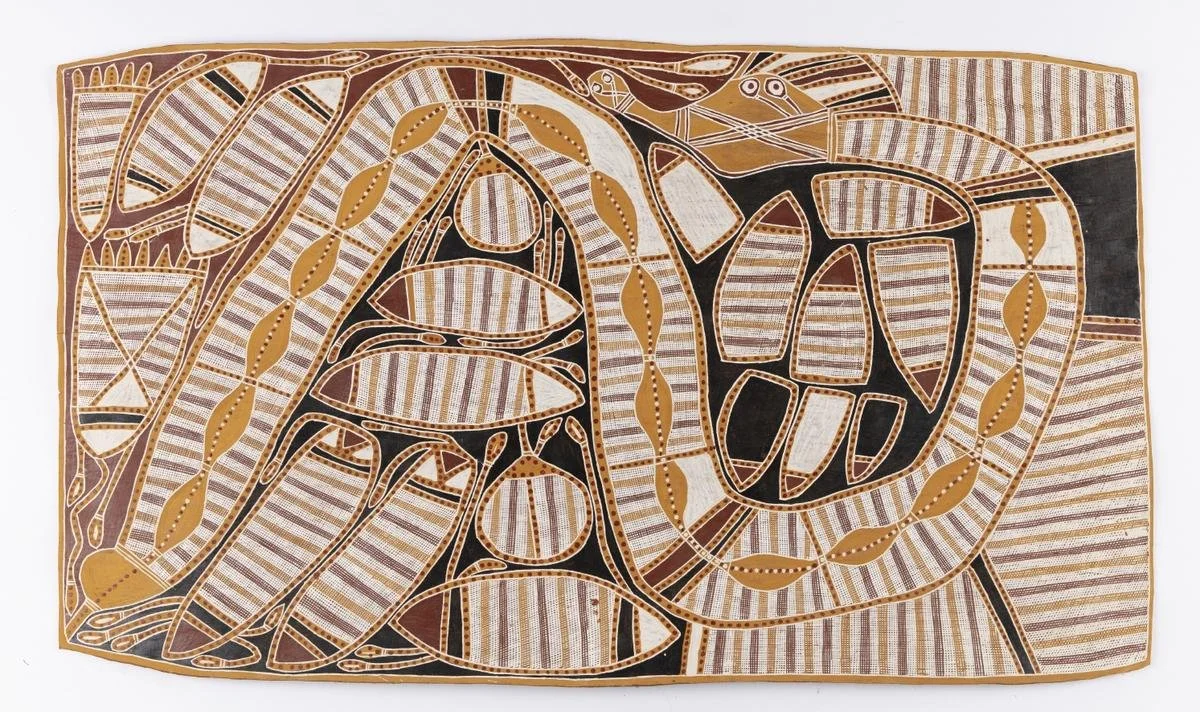
Traditional representation of the Rainbow Serpent in Aboriginal art, a symbol of creation and fertility. This mythological figure is one of the most sacred in Australian Aboriginal culture.
🦘 The Kangaroo: Symbol of Strength and Survival
The kangaroo, an emblematic animal of Australia, is often represented in Aboriginal art. It embodies endurance, adaptability, and perseverance, essential qualities for survival in the continent's often hostile environment. It is also a family totem, representing protection and abundance.
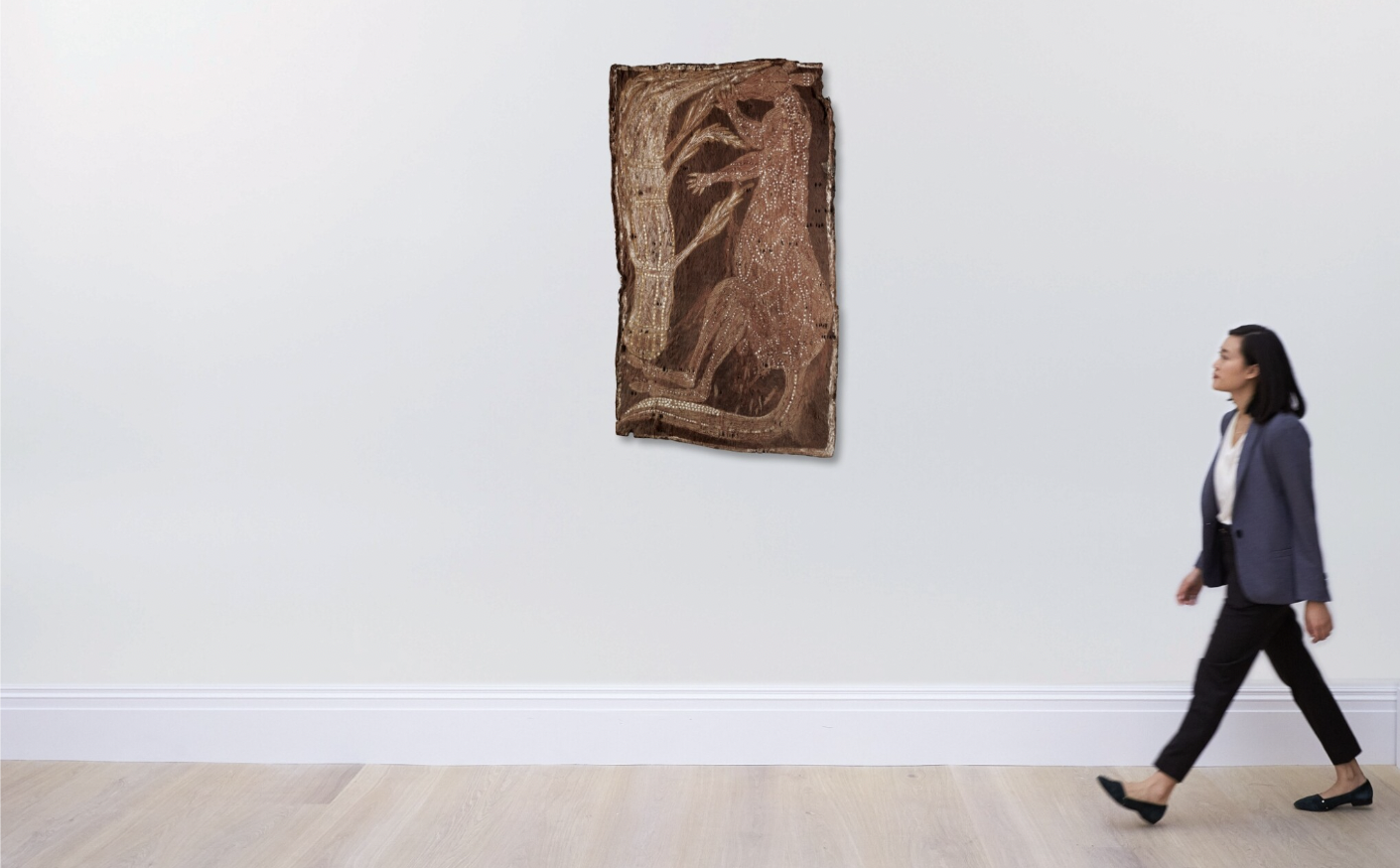
Bark painting illustrating a kangaroo, a symbol of strength and resilience in Aboriginal culture.
🦅 The Eagle and Birds: Spiritual Messengers
Birds, particularly the eagle, are seen as messengers between the earthly and spiritual worlds. They symbolize vision, wisdom, and freedom. The Cockatoo, for its part, is often associated with communication and the transmission of knowledge.
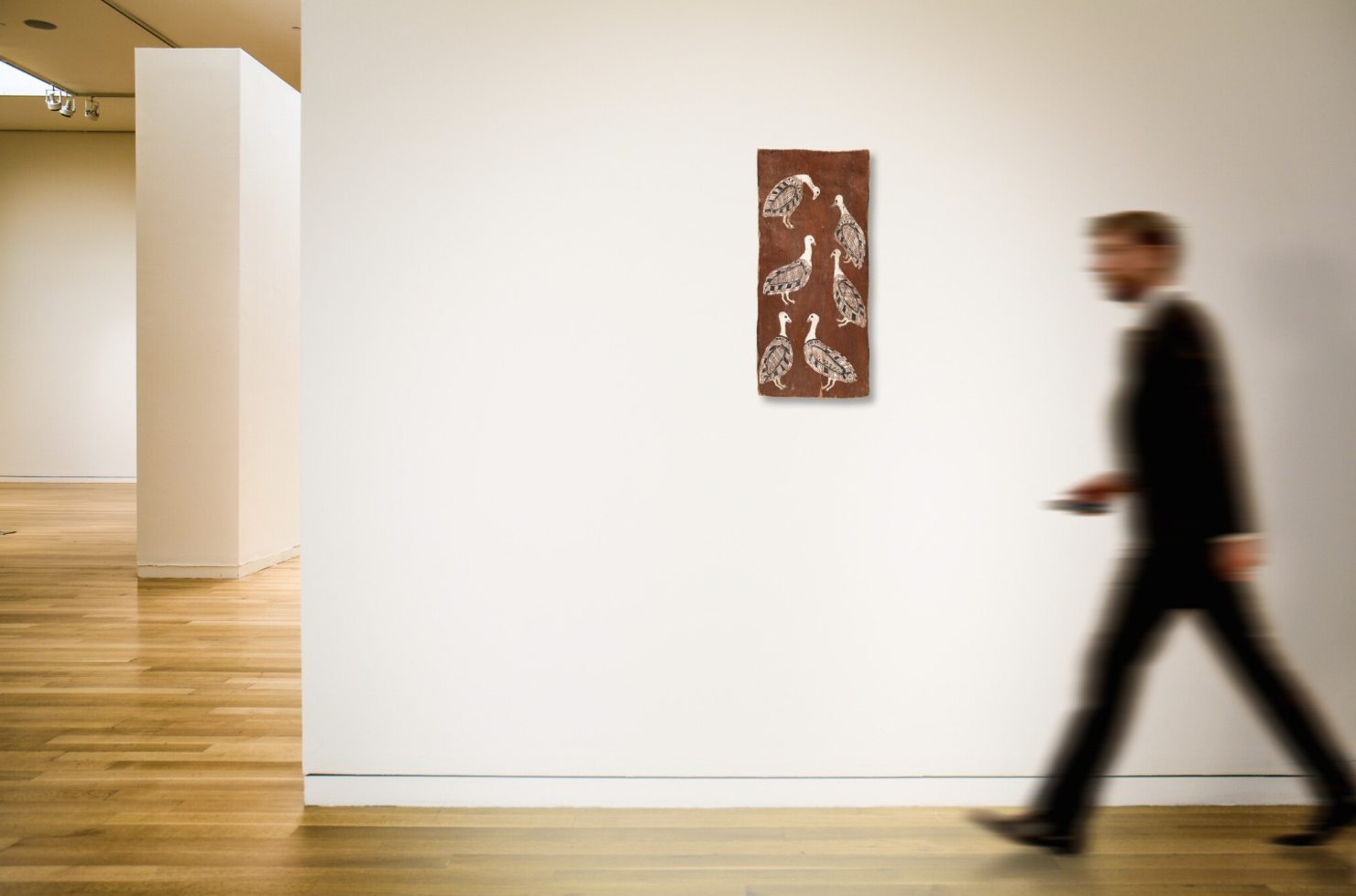
Sacred birds in Aboriginal art, often considered spiritual messengers between earth and sky.
🐊 The Crocodile: Power and Respect
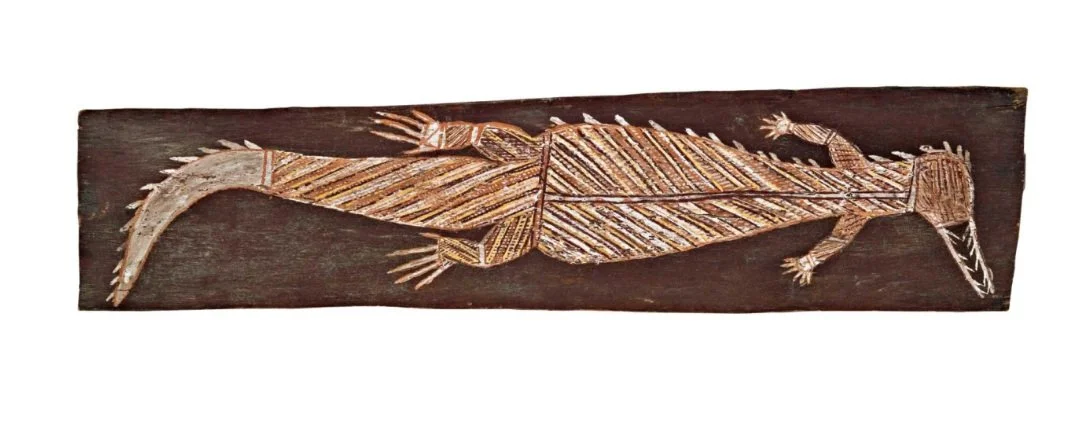
In the northern regions of Australia, the crocodile is a powerful totem animal. It embodies raw strength, the protection of elders, and the law of the land. Its representations in Aboriginal art recall the importance of respecting water spirits and exercising caution in the face of nature's forces.
🐢 The Turtle: Wisdom and Longevity
The turtle is a symbol of patience, wisdom, and connection to natural cycles. It is often associated with journeys and ancestral teachings passed down through generations.

Traditional bark painting depicting a turtle, a symbol of longevity and wisdom in Aboriginal culture.
🦜 The Cassowary and the Emu: Protectors of Nature
The emu, a large terrestrial bird of Australia, is a symbol of perseverance and land protection. The cassowary, for its part, is often associated with the spirits of the rainforests and represents ecological balance.
3. Artistic Techniques Used
Aboriginal art relies on distinct techniques that vary according to the regions and traditions of different communities:
Pointillism (dot painting): This technique, very widespread in contemporary Aboriginal art, is used to create complex motifs representing animals, landscapes, and Dreamtime stories.
X-ray Motifs: Practiced primarily in Arnhem Land, this technique involves depicting animals with their internal organs visible, highlighting the importance of their spiritual and biological essence.
Bark Paintings: Traditionally created using natural ochre, these paintings narrate ancestral stories and convey spiritual messages.
Rock Engravings: Some rock paintings and engravings, over 20,000 years old, bear witness to the intimate relationship between Aboriginal peoples and the animals surrounding them.
4. Why Does Aboriginal Art Continue to Fascinate So Much?
Aboriginal art is today one of the most respected and sought-after art forms globally. It combines aesthetics, spirituality, and the transmission of knowledge, making it unique. Animal representations, in particular, resonate with our own connection to nature and wildlife.
This art, far more than a mere mode of expression, is a bridge between past and present, a way for Aboriginal peoples to preserve their culture and assert their identity in the face of modern challenges.
Conclusion
Aboriginal art and its animal representations offer a fascinating testament to the profound relationship between humans and nature. Each animal carries a unique meaning, passed down through generations via ancestral artistic techniques.
Whether it's the snake, kangaroo, eagle, or crocodile, each painted figure tells a story, a myth, or a teaching essential to Aboriginal culture. This art, rich in symbols and history, continues to inspire and captivate the entire world.
👉 Discover our exclusive selection of Aboriginal artworks featuring animals on Inma.