
Aboriginal artists of Australia
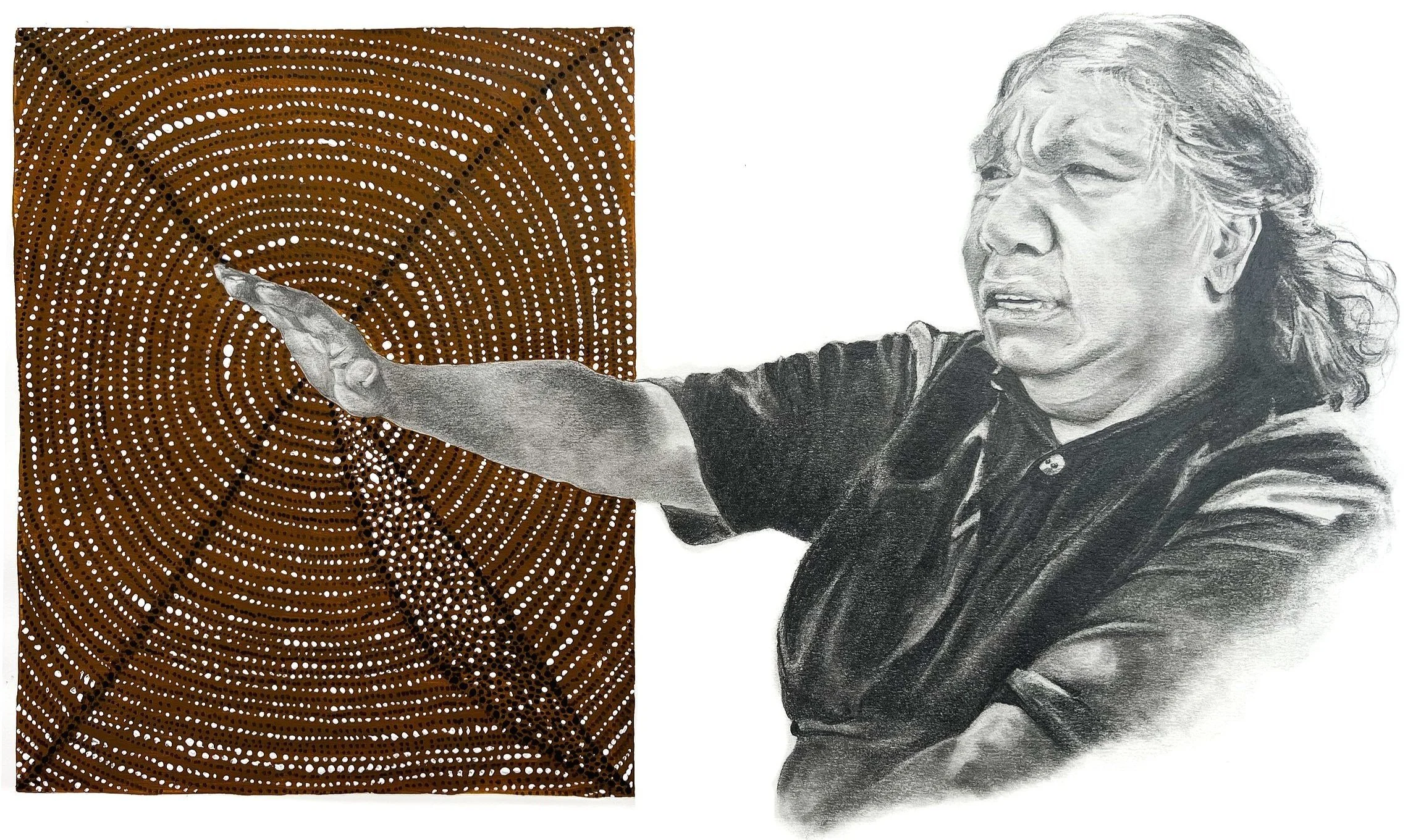
Kathleen Petyarre
Kathleen Petyarre is one of the most significant Aboriginal artists. Her work is featured in numerous museums, including the Quai Branly in Paris and the Confluences in Lyon, and she has enjoyed increasing success since her first paintings in the mid-1980s.
In 1996, she received the Testra National Aboriginal Art Award, the most prestigious accolade given to an Aboriginal painter, which propelled her onto the international stage.
Born in 1940 in Utopia, approximately 250 km northwest of Alice Springs, Kathleen inherited stories and rights from her parents, of which she is the custodian, and which she reproduces in her distinctive style of filling canvases with small dots arranged in complex and refined compositions.
Among the 'Dreams' and sites her work refers to are the Bush Seed Dream (often titled 'My Country'), the Dingo Dream, and especially the Mountain Devil Lizard Dream (linked to her birthplace, Atnangker), which constitutes the main theme of her art.
Kathleen – who passed away in 2018 – is the sister of Gloria Petyarre and the grandmother of Abie Loy Kemarre, whom she helped train.
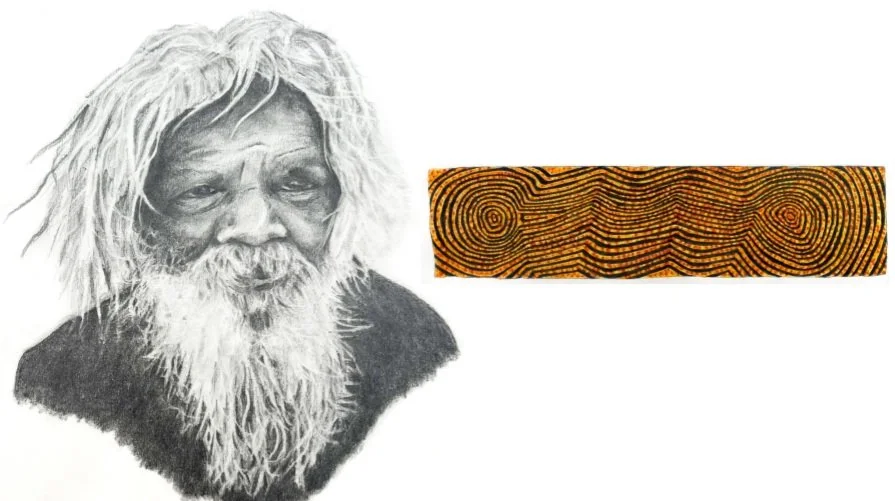
Charlie Tjapangati
Charlie Tjapangati, known as 'Charley', was born around 1949 near Juniper Well in the Western Desert. In 1946, his group was brought to Papunya as part of the assimilation policy, which allowed him, at a very young age, to become familiar with the early works of those who would later be called the Desert Painters.
After his initiation, he married Numida Nampitjinpa, the daughter of Uta Uta Tjangala, with whom he collaborated on a famous canvas depicting the site of Umari, located east of Mount Webb.
Charley began painting his first canvases in 1978 and quickly gained recognition, which led him to accompany artist Billy Stockman Tjapaljarri for an exhibition in the United States. He settled in Kintore in 1982.
Recognized for his meticulous work and complex linear patterns with sumptuous optical effects, Charlie paints 'stories' or 'dreams' related to the Tingari ceremonial cycle and, as an initiate, participates in large-format collective men's artworks.
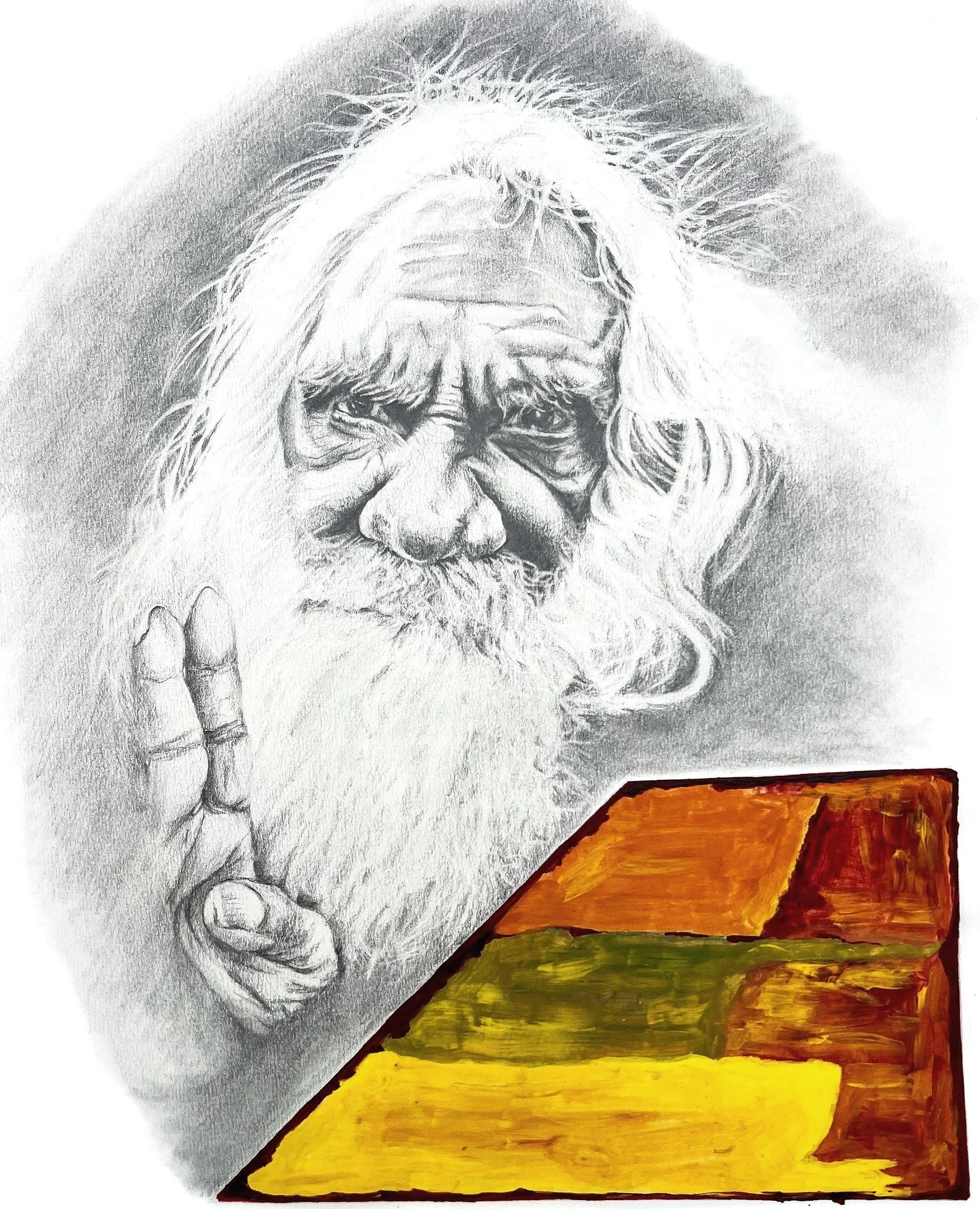
Kudditji Kngwarreye
Kudditji Kngwarreye holds a unique position within the Aboriginal desert painting movement.
Born around 1928 in Utopia, he had a traditional childhood in the bush and first worked as a stockman before becoming a miner in gold mines.
Kudditji (phonetically Goo-beh-Chee) is the inheritor of several important 'Dreams' and custodian of sacred ceremonial sites reserved for men's 'business'. The majority of his canvases refer to these under the title My Country.
Although his modern and intuitive style, characterized by large blocks of color, was not well received by gallerists when he began painting in 1986, he gradually became recognized as one of the most innovative artists. Working with a brush like his sister, the very famous Emily Kame, who also moved away from pointillist painting, he offers a vision of his country seen from the sky through compositions where colors, chosen according to seasons and locations, are harmoniously juxtaposed. The result is reminiscent of Rothko's spaces.
Profoundly original and deeply personal, his works are now featured in all major collections. He passed away in 2017.
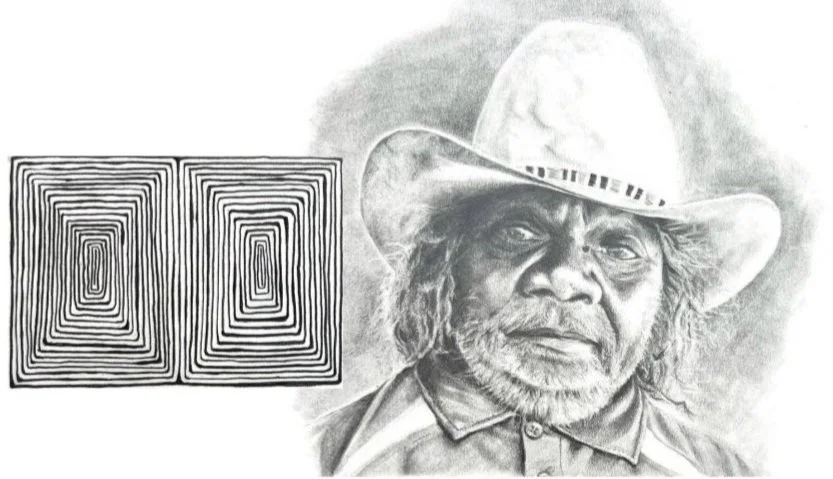
George Hairbrush Tjungurrayi
Born in Kiwirrkurra near Kintore around 1947, George Hairbrush Tjungurrayi arrived in Papunya in 1962. He only began painting for himself in the years 1976-1980.
Initially, his work was quite classical, with preferred subjects being ceremonies and stories related to the Ancestors' journey during the Tingari cycle. His paintings feature dotted circles connected by crossing lines.
In the 1990s, however, he, along with his brother Willy and other major artists such as Turkey Tolson Tjupurrula, Ronnie Tjampitjinpa, and Mick Namarari, ushered in a new phase of the desert painting movement.
He then developed a more personal, minimalist, and abstract style, characterized by parallel lines and geometric patterns that vibrate rhythmically, creating a striking optical effect.
The works of George Hairbrush Tjungurrayi are present in all major museums dedicated to Aboriginal arts in Europe, America, and, of course, Australia.
He is one of the most sought-after contemporary masters.
Ningura Napurrula
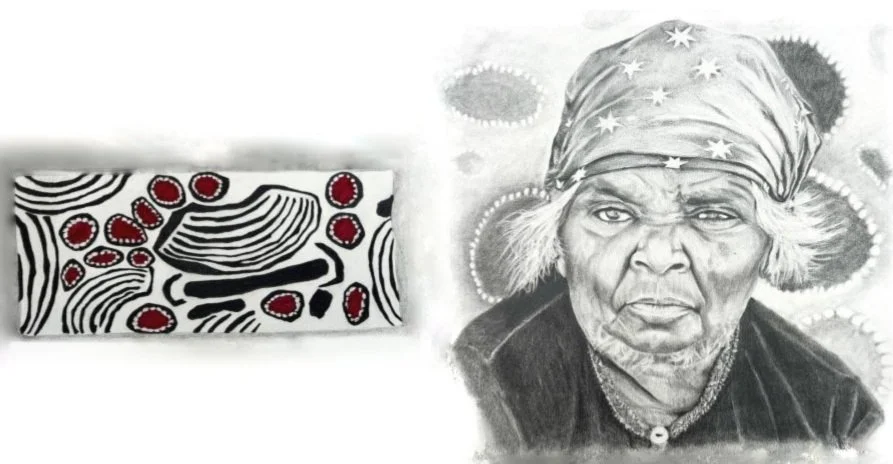
Ningura Napurrula, an emblematic figure of Australian Aboriginal art, was born around 1938 in Watulka, in the Gibson Desert (Northern Territory). In 1962, she left her homeland with her husband, Yala Yala Gibbs Tjungurrayi, one of the six artists of the Papunya Movement chosen by Bardon to receive a grant from the Australian government to paint full-time. The couple permanently settled in Papunya in 1963.
Ningura only began painting in the 1990s, influenced by the vision of her husband, originator of the 'Tingari' style. She also contributes to preserving and promoting Pintupi traditions and women's themes, co-founding the Pintupi Women's Painting Movement, which originated in Pintore.
In 2002, she won the prestigious Alice Prize, and a few years later, inspired by the symbols dear to her, she created the design for the ceiling and walls of the first floor of the Musée du Quai Branly, which secured her international renown.
Ningura created large-format works, often bicolour – black and white or red and white. Her white 'dot' motifs form a lattice that stands out against the black background, creating a striking impression of depth. Her refinement and attention to detail make her a remarkable artist, whose works have been exhibited in major cities across Australia, Asia, Europe, and the United States. She passed away in 2013.
Judy Watson Napangardi
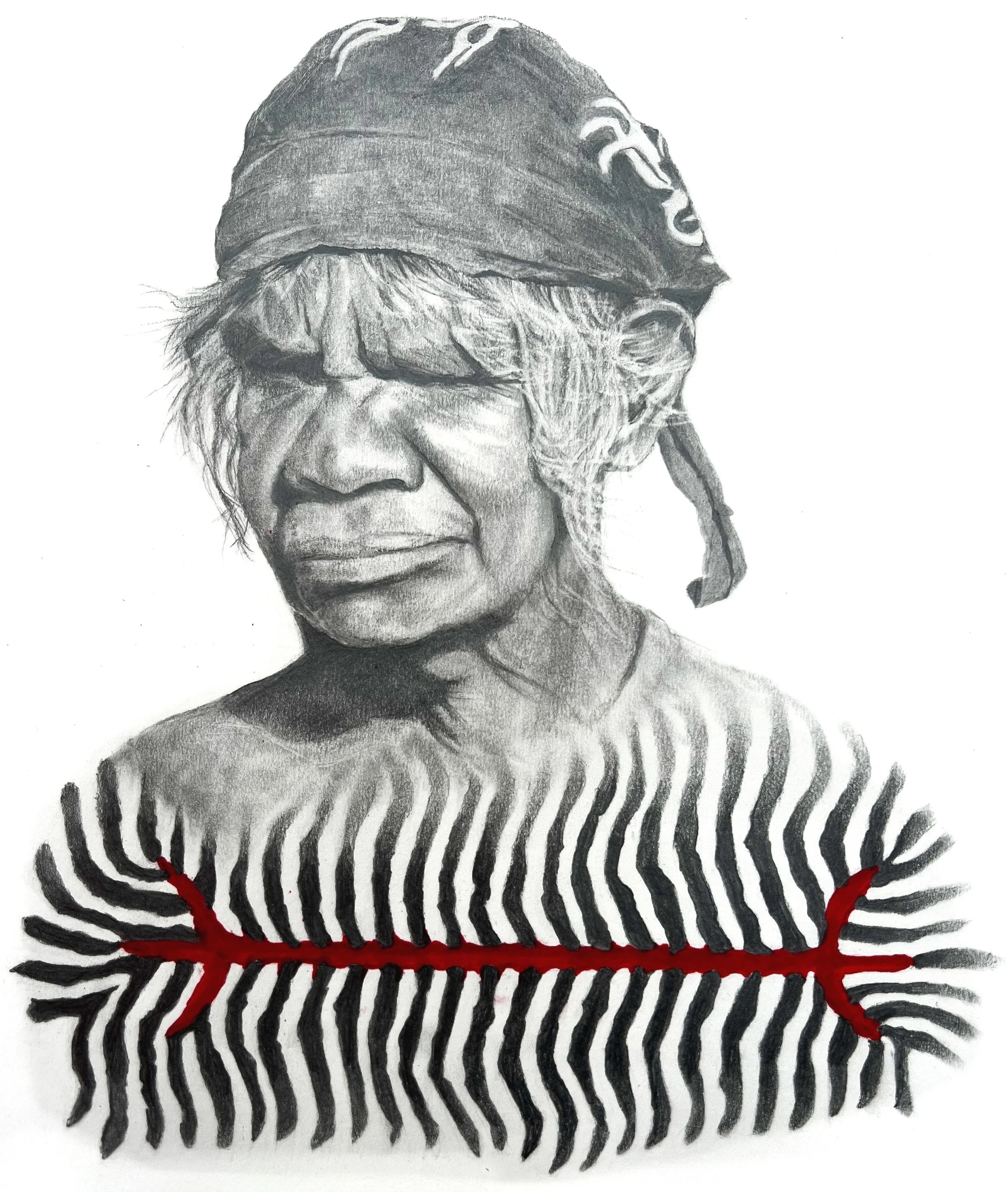
Born between 1930-1935 in Yarungkanji, northwest of Alice Springs, Judy Watson Napangardi initially led a traditional semi-nomadic hunter-gatherer existence, like many Warlpiri of her generation. She divided her time between the sites of Mina Mina and Yingipurlangu, on ancestral lands located on the edge of the Gibson and Tanami Deserts.
This woman, renowned for her 'incredible energy,' raised 10 children in this desolate environment before settling in Yuendumu (the second village after Papunya to embark on the Western Desert painting movement) with her sister Maggie, who taught her to paint. In 1986, she began producing for the community's Art Centre and quickly became a prominent artist until her passing in 2016.
Her works, with their complex and colourful motifs (sometimes in black and white), reveal a wealth of information about the history, rites, and myths of the sites she depicts. Two themes dominate with remarkable power and movement: women's ceremonies at Mina Mina and the hairstrings worn during initiations.
Numida Nampitjinpa
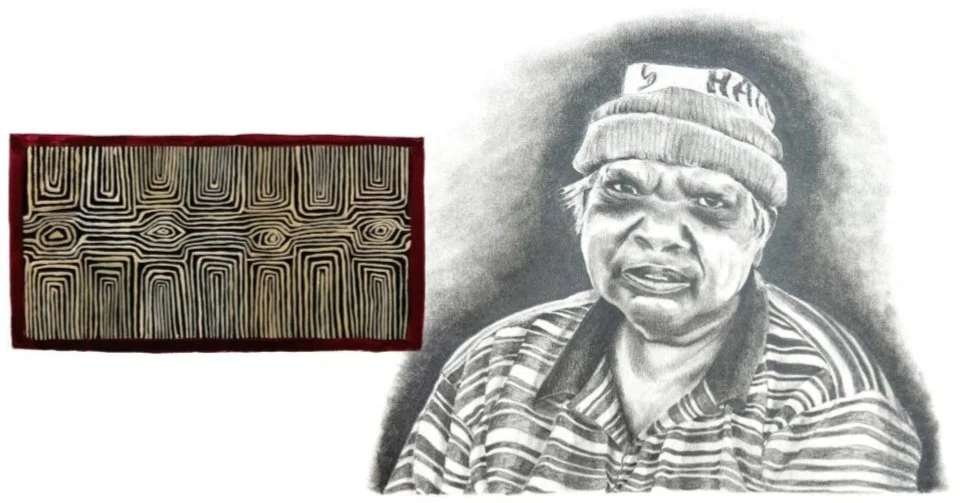
Born around 1954, Numida Nampitjinpa is the wife of Charlie Tjapangati, renowned for his depictions of the ceremonial history of the Tingari cycle, and the daughter of Manbala Napanangka, one of the first women to join the Papunya Tula art movement. Rooted in a lineage of influential artists, Numida perpetuates this rich cultural tradition.
Her work, of remarkable finesse and delicacy, is distinguished by a geometry of meticulously drawn lines, often converging towards a central point or axis. This precision is accompanied by a restrained yet harmonious colour palette, lending her works a timeless elegance.
Numida resides in Kiwirrkura, Western Australia, where she continues to produce works deeply rooted in Pintupi culture and the sacred narratives of her community.
Yinarupa Nangala
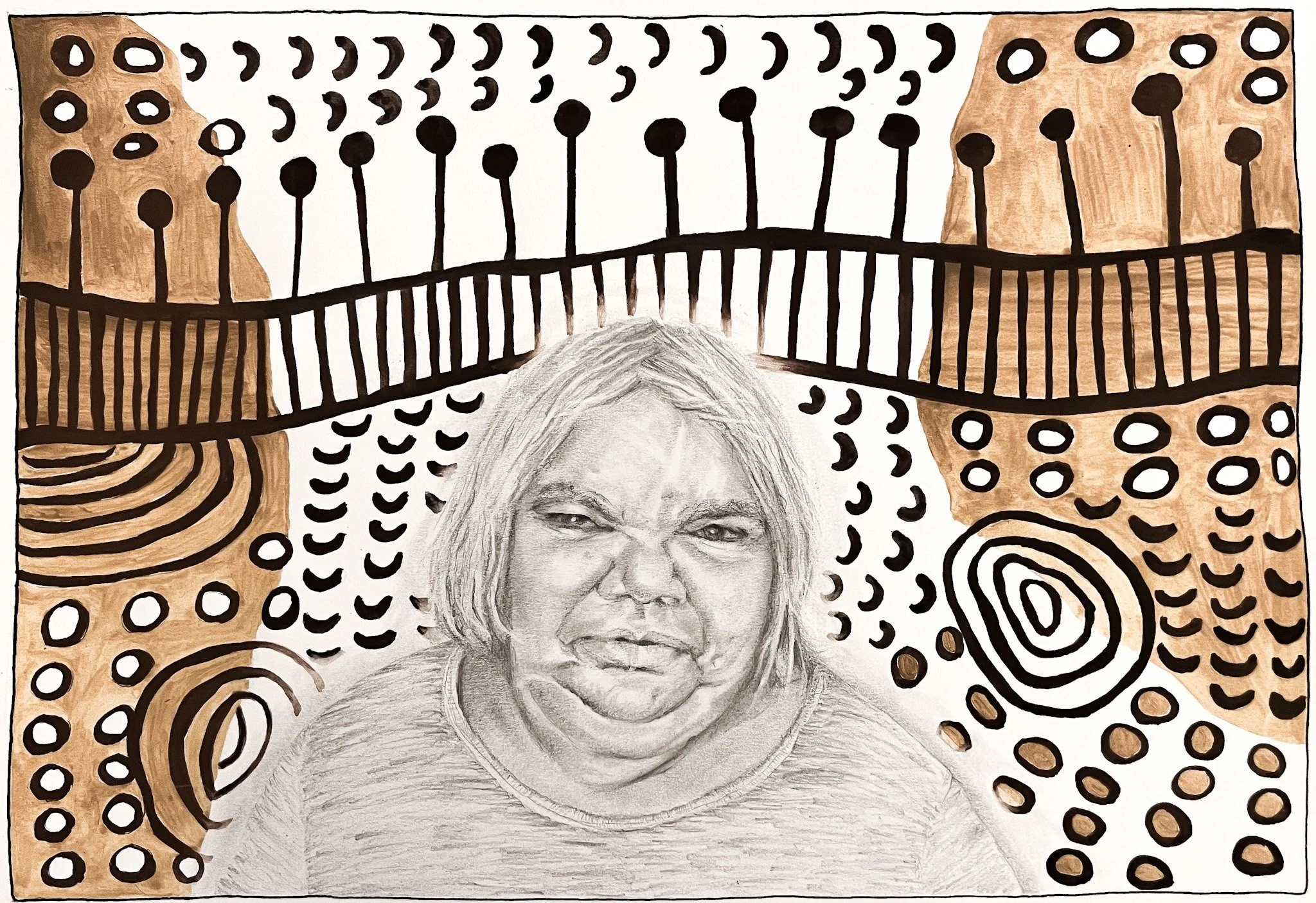
Yinarupa Nangala is a Pintupi woman born around 1960 near Mukula, Western Australia, in the region where the Kiwirrkurra community is now located. She was the co-wife (notably with Ningura Napurrula) of another great Papunya Tula artist, Yala Yala Gibbs Tjungurrayi. She is thus related by marriage to George Ward and Willy Tjungurrayi.
Yinarupa began painting in 1996, but her work initially garnered only moderate interest. Things gradually changed from 2005 onwards, when her rather austere style was recognized for what it is, a classic Pintupi art form – earning her numerous awards, including the prestigious Telstra Award (in 2009).
Primarily using black and white, along with the dot painting technique, her works offer a vibrant and aerial view of her homeland in Mukula, and particularly of the sacred site of Ngamurru, a meeting place for women where numerous ceremonies take place.
The Ngamurru region is known for its abundance of acacia seeds which, processed into flour and then into cakes, are consumed during ceremonial rites. The various elements depicted in Yinarupa's canvases, besides the presence of women in 'U' shapes, are features of the land such as waterholes and bush foods (for example, kampararpa berries represented by hooks). The ensemble delicately and detailedly evokes the journeys of the ancestral women in this region during the Dreamtime.
Today, Yinarupa Nangala (or Yinarupa Gibson Nangala) divides her time between her community of Kiwirrkurra and Alice Springs. She is considered a major figure among the second generation of Aboriginal painters, undoubtedly destined to play a significant role in the future development of Papunya Tula.

Ronnie Tjampitjinpa
Ronnie Tjampitjinpa paints motifs associated with the Tingari Cycle, but also explores other themes, such as his impressive "Fire Dream" or his fascinating "Water Dreams." Initiated in his adolescence according to Pintupi tradition, he conveys a precious part of his knowledge onto canvas, symbolically evoking the journeys of the Tingari ancestors who shaped the landscapes of his country. This type of painting, seemingly simple with its parallel lines or cascading rectangles, yet strikingly rich when its complexity is explored, has made him a sought-after artist. Through his works, he traces the paths followed by mythological heroes during the Dreamtime.
Born in 1943 near Kintore, approximately 500 km west of Alice Springs, Ronnie Tjampitjinpa joined the painting movement initiated by Geoffrey Bardon in the 1970s. He was among the first Pintupi men to embrace art not only as a mode of expression but also as a powerful means to preserve and transmit their cultural heritage. Thanks to his unique approach and the strength of his compositions, he quickly established himself as a prominent figure in the movement, influencing many artists.
Throughout his career, his talent has been celebrated for his unique blend of traditional and contemporary elements, his bold geometric compositions, and his innovative use of colour. His paintings, hypnotic and deeply symbolic, are not only visually stunning but also rooted in the history and beliefs of his people. Through each work, he weaves a connection between the past and the present, the sacred and the aesthetic.
Ronnie passed away in June 2023, leaving a lasting mark on contemporary Aboriginal art. A respected figure, he was known within his community as the "King of Kintore," a testament to the admiration he commanded. His legacy continues to inspire those who discover his works, perpetuating the history and memory of the Tingari ancestors through the universal language of art.

Gloria Petyarre
Gloria (1942-2021) is one of Utopia's most prolific and influential artists. A pioneer in many fields! She is part of the legendary Petyarre sisterhood of seven, all artists, including Kathleen, the most prominent, Nancy, Violet, and Ada Bird.
Like many others between 1975 and 1985, Gloria was initially recognized for her batik work. She began working with acrylics and canvas painting from 1988 and was the first Aboriginal artist to win a major Australian art award, the highly prestigious "Wynne Prize for Landscape" (in 1999), forever changing the perception of and enthusiasm for Aboriginal art.
Her initial source of inspiration was body painting. She clearly depicted the patterns painted on women's chests and shoulders during ceremonies. Subsequently, she expanded her style to higher levels of abstraction, continuously experimenting with new techniques and diversifying the narratives she illustrated: such as the Grass Seed, Pencil Yam, Emu, Bean, or Little Brown Grass 'Dreamings'.
During the last 20 years of her career, she focused on the theme of "Bush Leaves" – medicinal and sacred plants – a theme that brought her worldwide renown and secured her place in all major collections. She leaves behind an exceptional artistic legacy that continues to inspire generations of Aboriginal artists and captivate art enthusiasts worldwide.
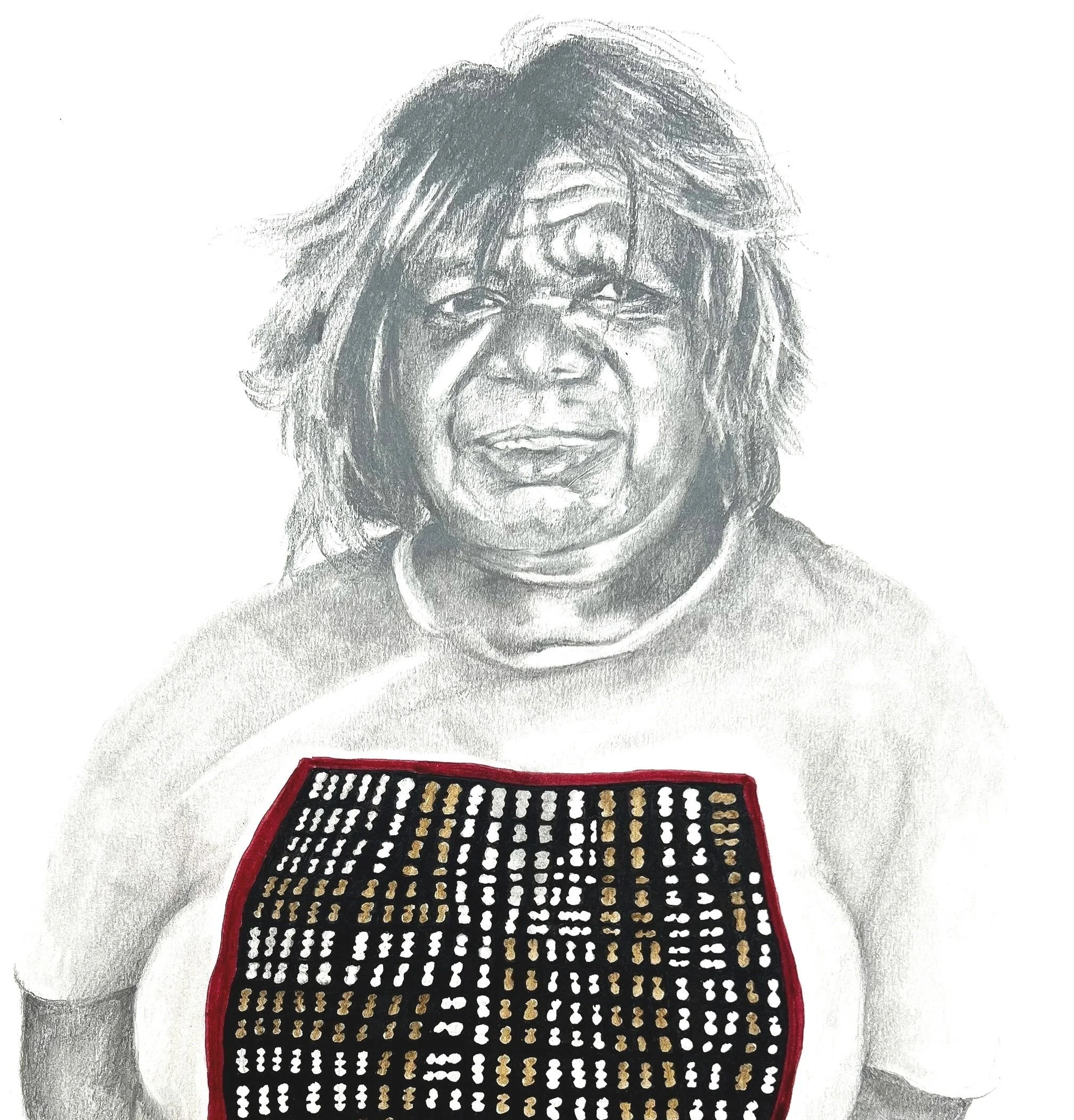
Lorna Ward Napanangka
Hundreds of stick-like forms, each composed of multiple dots, align side by side on the canvas in a very free grid, creating an impression of intense life. This painting illustrates events that originally took place at the Marrapinti waterhole site. According to ancient narratives, the story tells of a group of female Ancestors who camped there for an extended period and brought life to this place.
The grid-like motif literally represents a symbolic map of the region. The site is also associated with nose-piercing rituals for Pintupi women. It constitutes one of the major themes for Lorna Ward Napanangka, who is its custodian and celebrates it in her own way through an extremely fine and rhythmic pictorial style.
Born in Papunya in 1961, Lorna is the daughter of Timmy Payungka Tjapangardi, a first-generation artist. She began painting in 1996 while living in Kintore, but her reputation grew after her participation in the collaborative work Kiwirrkurra Women's Painting.
Lorna Ward Napanangka has exhibited her works since 2000 in Australia and abroad. Her work has often been compared to that of Dorothy Napangardi. Demonstrating great mastery of space and surprisingly modern compositions, she is regarded by many as one of the leading figures of her generation.
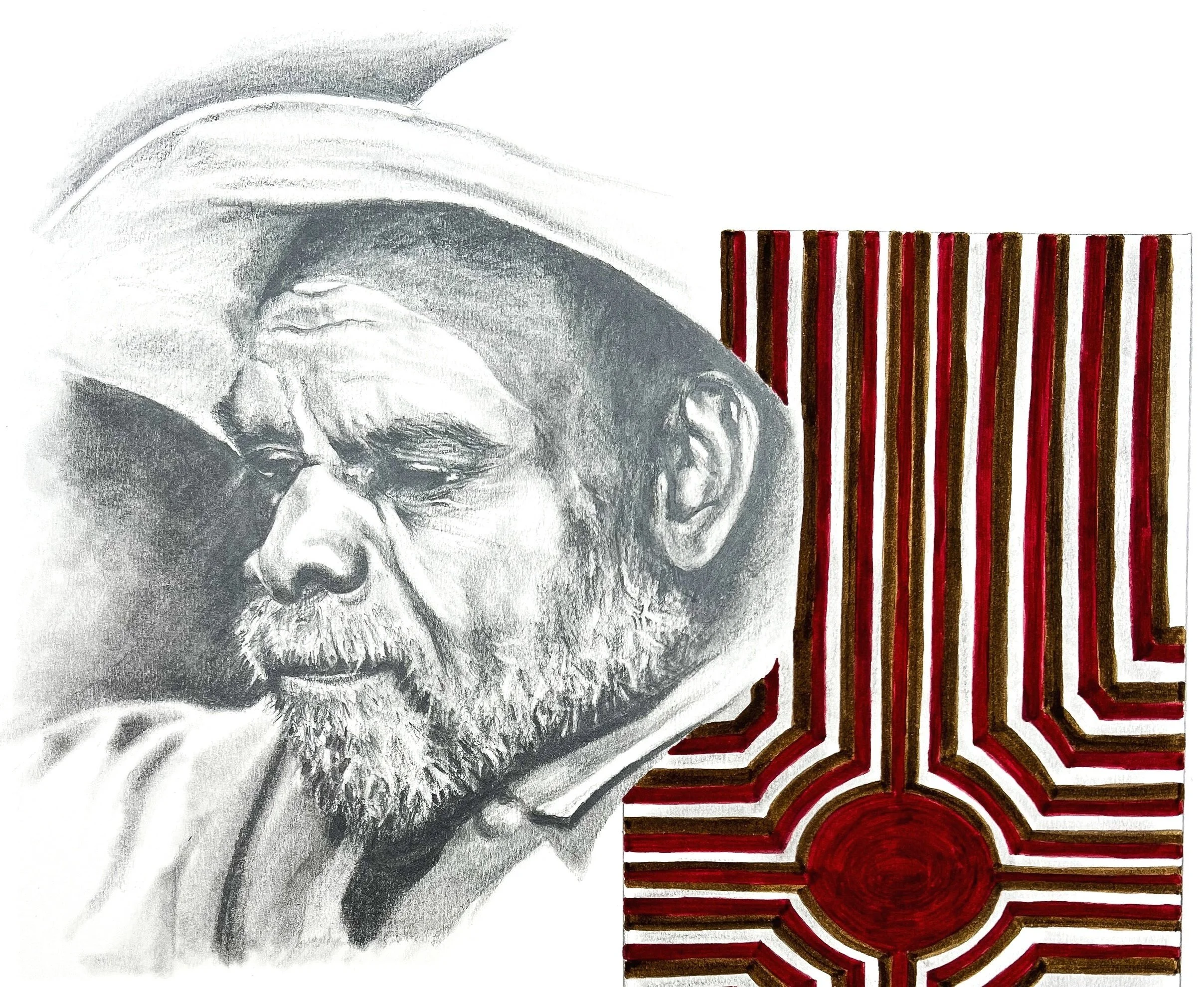
Mick Namarari Tjapaltjarri
A member of the Pintupi linguistic group, Mick Namarari Tjapaltjarri (Marnpi 1926–Alice Springs 1998) was one of the founding artists of the Papunya Tula movement in 1971. Geoffrey Bardon, the Australian schoolteacher who played a decisive role in its inception, considered Mick Namarari a major contributor due to his profound knowledge of Aboriginal tradition and art.
After initially exploring a figurative style that meticulously and somewhat classically reproduced ceremonial ground paintings and sacred objects in a pointillist manner, Mick Namarari evolved towards creating large geometric motifs in the 1980s. He subsequently developed an even more minimalist linear style.
Until the end of his life, his work remained marked by the originality, richness, and complexity of his innovations.
It can be said of this discreet man that he stands today among the most brilliant and renowned Aboriginal artists.
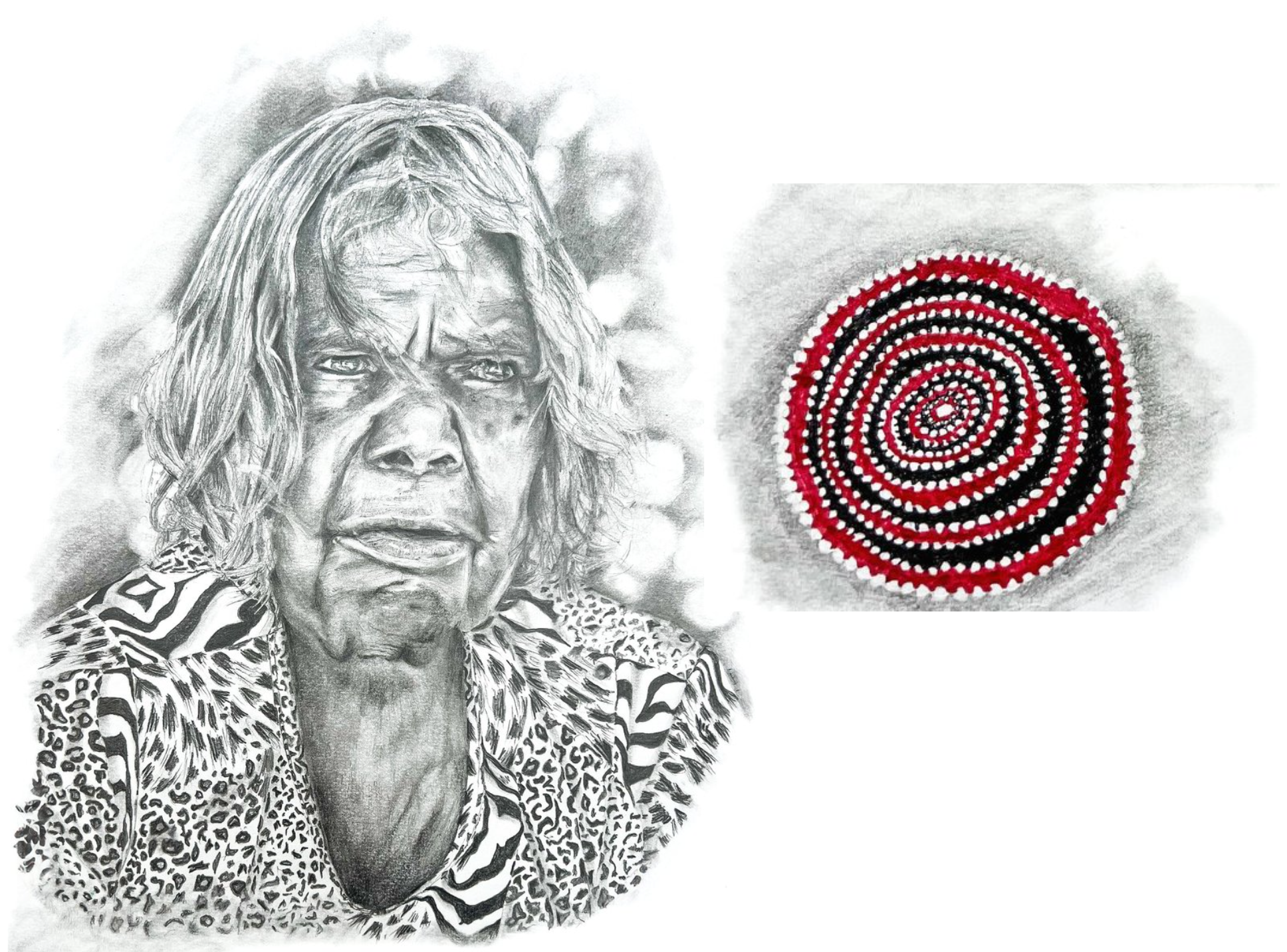
Wentja Morgan Napaltjarri
Wentja Morgan Napaltjarri often paints her father's ancestral country, located near Kintore in the Gibson Desert, although, as a child, and like others before them, Wentja and her family were forced to leave this region to move much further east to Haasts Bluff. This occurred in 1948. They never returned to their traditional lands.
Wentja's father, Shorty Lungkata Tjungurrayi, was a highly initiated man renowned for his skills as a hunter and healer, and a respected elder for his knowledge of Pintupi tradition. He was also one of the founding artists of the Aboriginal painting movement. When he journeyed across the desert with his brother and their respective families, moving from one waterhole to another, he followed the tracks of the Ancestral Emu Men. Only a precise knowledge of the kapis (waters) – whether they emerged from simple rock holes, springs, or claypans – allowed them to survive.
This journey clearly constituted a significant episode in Wentja's life. Interwoven with other stories associated with the Tingari cycle, reinterpreted with 'dreams' related to her birth country, it would become a strong source of inspiration when she began to paint for herself. Indeed, after an apprenticeship with her father, and then participating in collective works with other elders from her family, it was only upon arriving in Mt Liebig with her husband and children in 1995-96 that her own career began, quickly taking off and making her a highly sought-after artist.
One of Wentja's main totems is the 'Blue-tongue Lizard,' a painting formed of concentric circles illustrating waterholes and/or ceremonial sites, with the dot-filled space between these circles representing the seeds the animal eats. However, much of the information contained within her paintings remains mysterious, which is precisely what makes them so powerful.
Wentja passed away in 2021.
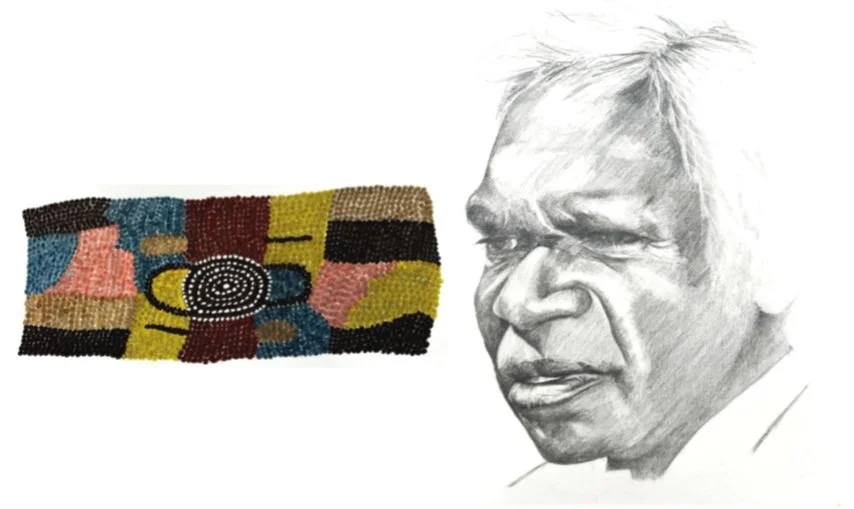
Billy Stockman Tjapaljarri
Billy Stockman Tjapaljarri was born around 1927 in Ilpitirri, Northern Territory. In 1928, his mother and other family members were killed during an Aboriginal massacre at Coniston – his father, who had gone hunting that day, survived.
Billy began his career as a stockman, earning him the nickname 'Stockman'. In 1960, he became a cook in Papunya, and later ventured into wood carving with his cousin Clifford Possum for the Art and Craft Centre. At the behest of Geoffrey Bardon, who initiated the Papunya art movement, he painted the renowned 'Honey Ant Dreaming' on the school wall.
In the 1970s, he was appointed a member of the Aboriginal Arts Board and chairman of Papunya Tula Artists. In 1988, he traveled to New York with Michael Nelson Jagamarra (creator of the famous painting Five Stories, which sold for the highest price ever achieved by a living Aboriginal painter and is considered a major work), to create a sand painting with him as part of an exhibition.
Over time, Billy became one of the most renowned leading artists of the Desert Painters Art Movement. He divided his life between Ililly, in the Western Territories, and particularly Alice Springs, where he passed away in 2015.
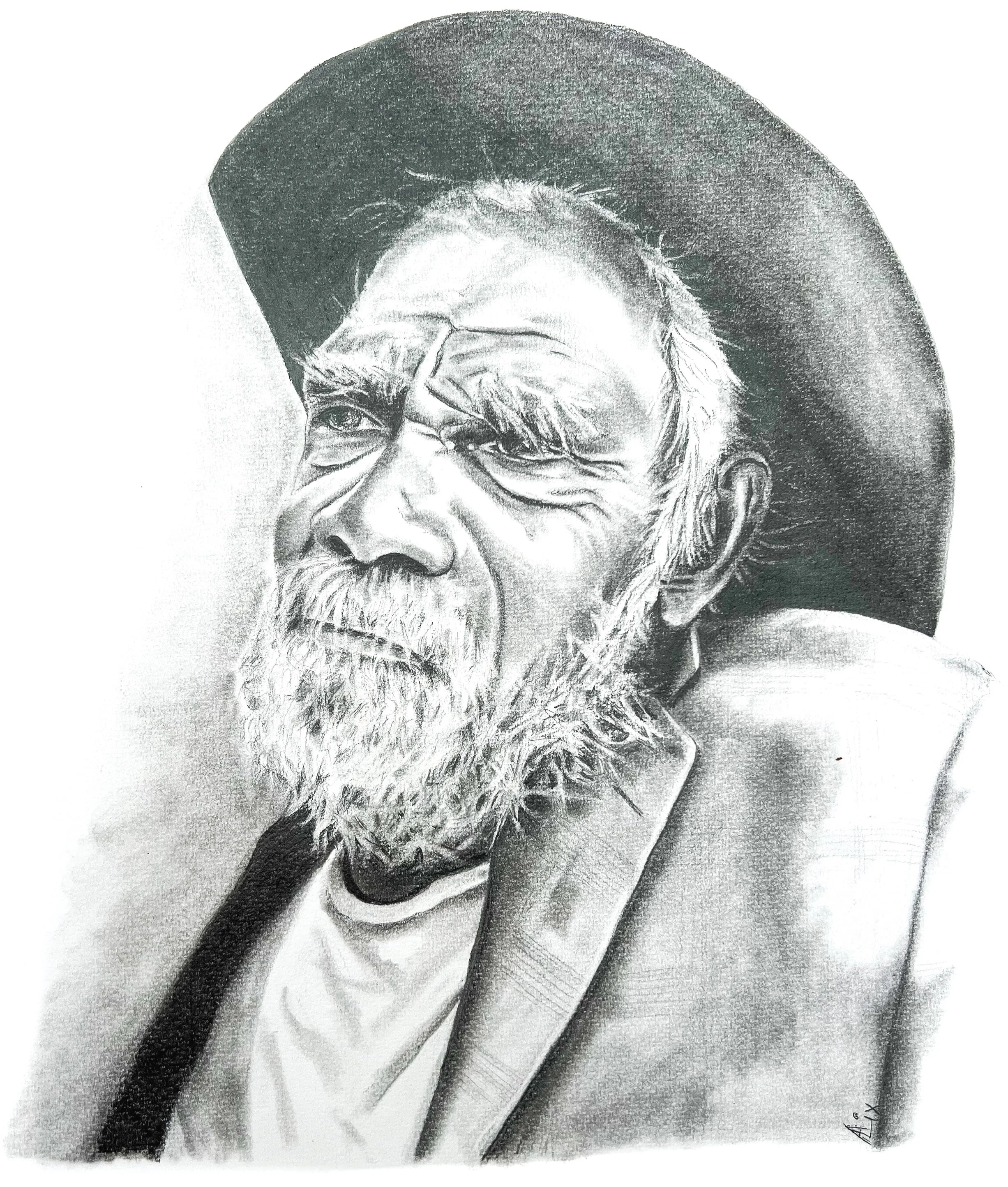
Old Mick Wallankari Tjakamarra
Old Mick Wallankari Tjakamarra was born around 1905/1910 in Watipikipinrri, near Mount Wedge, and passed away in 1996. He was, it seems, one of the last survivors of the Kukatja clan that then populated the Central Desert region.
During his early years, Mick lived by hunting and gathering before being resettled in Papunya in the 1960s, like many others before him. Fluent in English, he often served as an interpreter for other community members. But his role extended far beyond that: recognized as an important ceremonial leader – hence his deep knowledge of traditional motifs – he was the one who, with a small group of men, one day handed Geoffrey Bardon a tiny piece of paper on which a barely legible drawing was reproduced. Through this seemingly insignificant gesture, he had just granted him permission to reproduce on a wall the traditional motifs that the schoolchildren were creating on the sand. Thus was born Papunya's first mural, the 'Honey Ant Dreaming,' created by Billy Stockman and Long Jack under Kaapa's supervision.
This moment marked the beginning of the enthusiasm for the artistic reproduction of secret traditional designs, as well as maps depicting waterholes and sacred sites.
Gradually, Geoffrey Bardon gained the trust of Mick, who, as a spiritual leader, gave him the keys to understanding the desert landscapes.
Mick's painting is not as precise as that of other artists, but what it evokes is all the more powerful and revealing of its authenticity. He was able to visually narrate the stories of his land in a raw and infinitely spiritual style. Some of his canvases can only be understood through the eyes of initiated individuals.
His painting career was cut short. Ill and nearly blind, he was forced to abandon painting in the 1980s. His art continues to influence the vision of contemporary Aboriginal artists today.
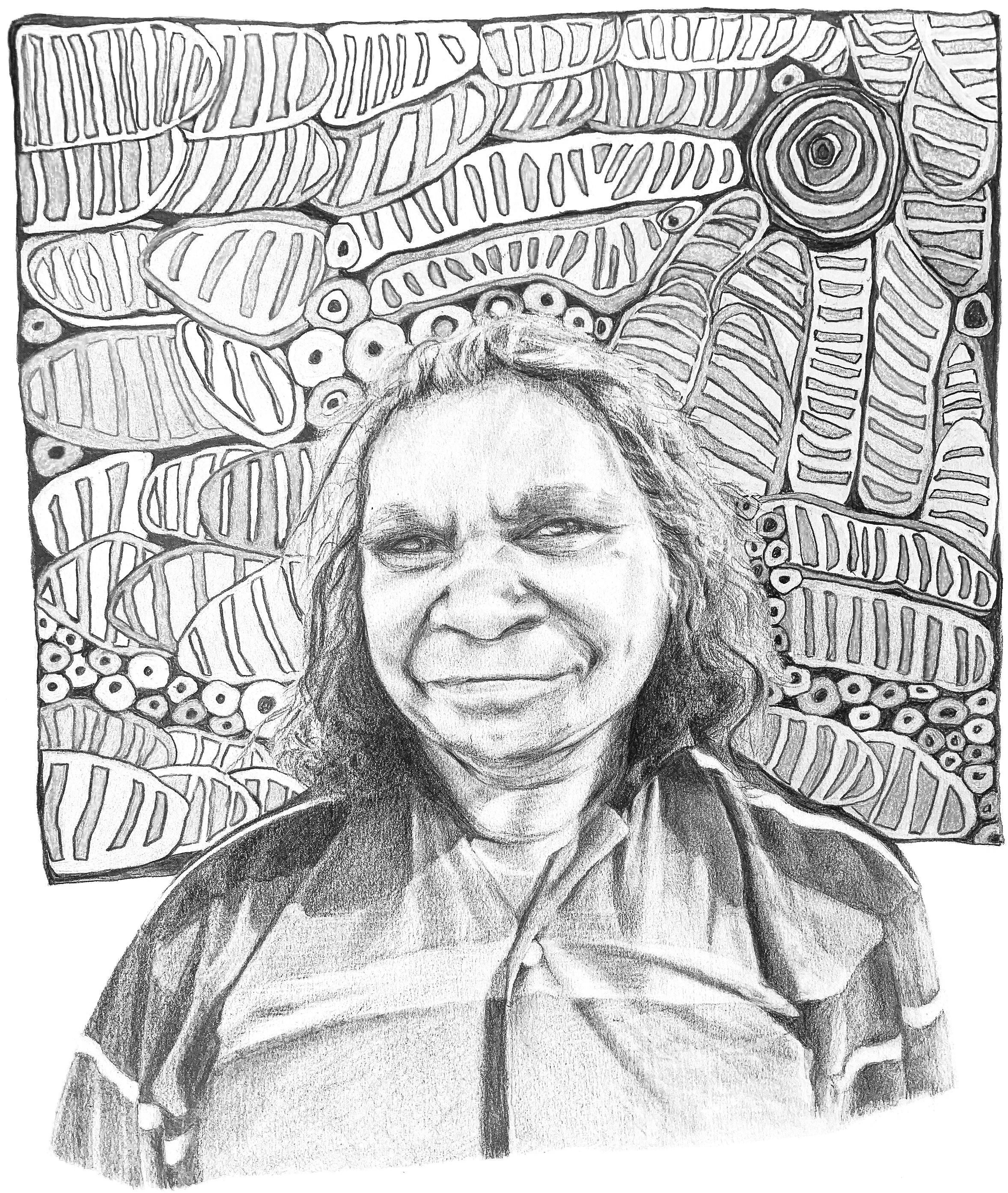
Betty Club Mbitjana
Betty Club Mbitjana (sometimes spelled Mpetyane) was born in 1954 or 1955 in the vicinity of Utopia, Northern Territory. She spent her early years there, blending traditional life with Western education.
Daughter of world-renowned artist Minnie Pwerle and niece of Emily Pwerle, Betty and her sister Barbara Weir grew up observing the rise of the art movement in and around Utopia. She began painting with the group of artists involved in the batik project, a period during which she traveled across Australia. She later grew closer to her mother as her mother became more famous.
After Minnie Pwerle's passing in 2006, Betty's career took off independently, gaining notoriety. She adopted several ceremonial motifs inherited from her mother, such as the "Bush Melon Dreaming," representing a dried fruit enjoyed by women during commemorations, or the "Awelye Dreaming," which refers to women's ceremonies, dances, and body paintings worn on these occasions.
With her distinct "aerial view" painting technique, Betty Club offers a very personal interpretation of these ceremonies, sometimes combining several motifs in an energetic style, full of movement. She passed away in 2023.
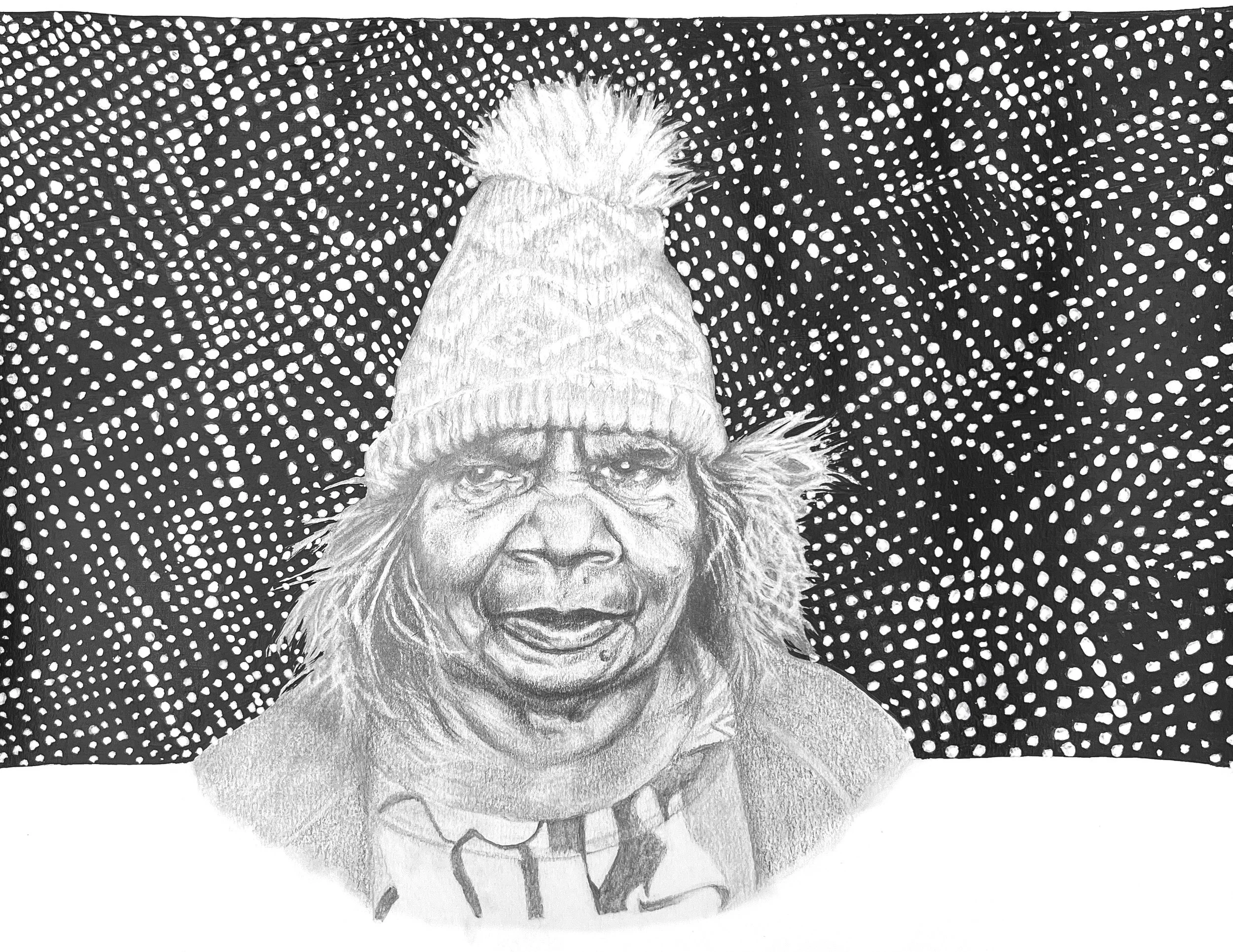
Lilly Kelly Napangardi
Lilly Kelly Napangardi was born in 1948 in the remote region of Haasts Bluff, approximately 250km west of Alice Springs.
In the 1970s, she moved with her family to Papunya, where she was encouraged to participate in the pictorial art movement. She is a respected law woman within the Warlpiri community, of which she is a part, and strives to defend it both culturally and in terms of rights.
Initiated at a very young age into the ceremonies and traditional stories of her ancestors, she began painting in the 1980s.
Her work quickly garnered attention. It is characterized by complex geometric patterns – often series of dots of different sizes that align repetitively, creating an impression of waves, rain curtains, or hills, depending on the piece. These motifs are representations of the landscapes and natural elements of the region where she grew up. This is particularly true for the theme of « Tali », or sand dunes, which largely contributed to her renown.
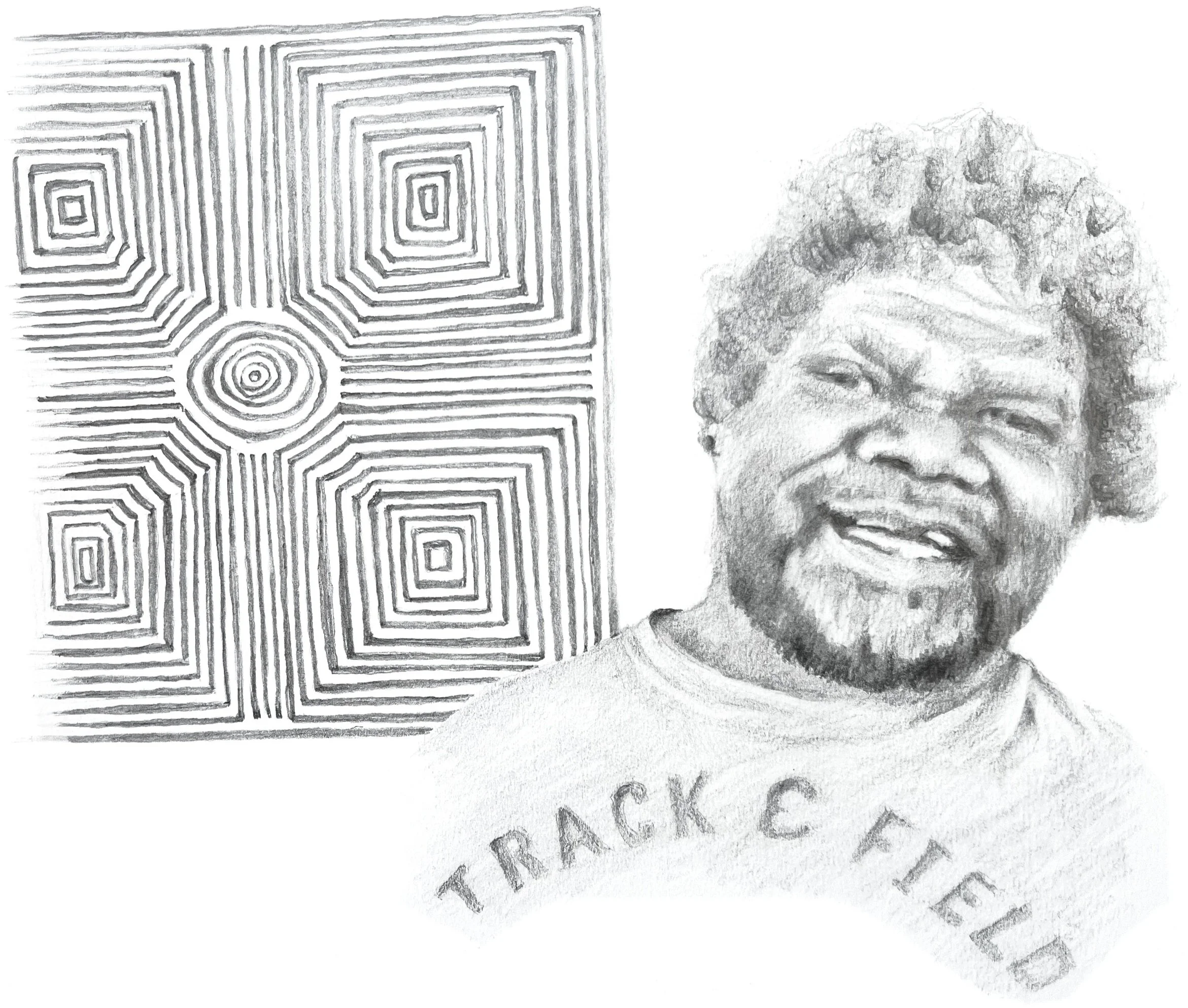
Jake James Tjapaltjarri
Jake James Tjapaltjarri was born in 1962 in Kiwirrkurra, Western Australia. He belongs to the Pintupi linguistic group and resides in Kintore, Northern Territory. He is the son of George Hairbrush Tjungurrayi, from whom he learned the history and myths of the Tingari cycle.
The Tingari dreams are highly significant for Pintupi culture and spirituality as they encapsulate the creation narratives of this people, when the great heroes and ancestors of the tribe journeyed across their territory, shaping the landscapes and creating sacred sites. These dreams are enigmatic, secret, and sacred. They are not recounted to uninitiated men, children, women, or non-Aboriginal people.
Like his father, Jake produces motifs belonging to this heritage. It was under his tutelage that he began painting in the early 2000s. In keeping with George Hairbrush's style, Jake paints with strong lines articulated in arabesque or geometric forms. He uses contrasting colors, primarily white and black, but also ochres (cream or orange) to create striking optical effects.
The sites for which he is the custodian are located around Lake Mackay. His canvases, inspired by these sites, establish him as one of the most interesting talents of his generation.
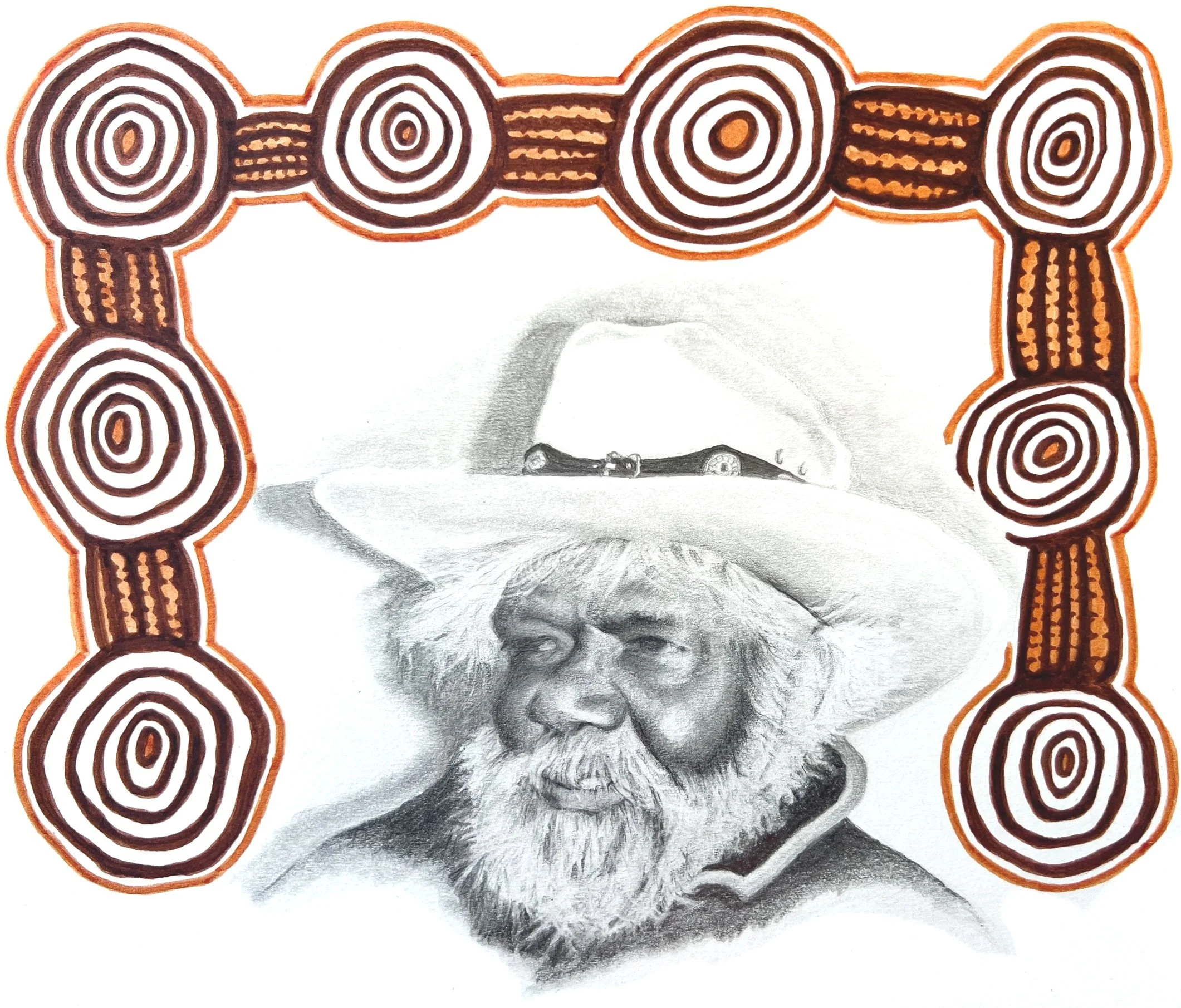
Barney Campbell Tjakamarra
Barney Campbell Tjakamarra belongs to the Pintupi linguistic group. He was born in 1928 in the desert near Warburton, Western Australia. Orphaned at a young age, he was raised by an uncle and his wife. They were the ones who brought him to Papunya, but Barney later returned to live in his ancestral country.
This area extends approximately 150 km around the Macdonald Ranges and includes numerous wells and salt lakes to the east and west of Kintore. Scattered throughout this vast territory are about twenty sacred sites over which Barney holds rights. In this regard, he is a highly respected member of his community and observes a very traditional way of life. Particularly knowledgeable and proud when discussing his culture and traditions, he is authorized to depict the myths of the Tingari cycle, which form the essential theme of his paintings.
Barney paints the stories of his dreams with complete naturalness and simplicity, imbued with a rare elegance that reflects his personality. While his early work appears quite classical, revolving around dotted circles of the Tingari cycle or ceremonial body designs, it later evolved into a more linear style, similar to that of Ronnie Tampitjinpa or Willy Tjungurrayi. Indeed, in Kintore, Barney often worked alongside Willy Tjungurrayi.
Barney passed away at the end of 2006.
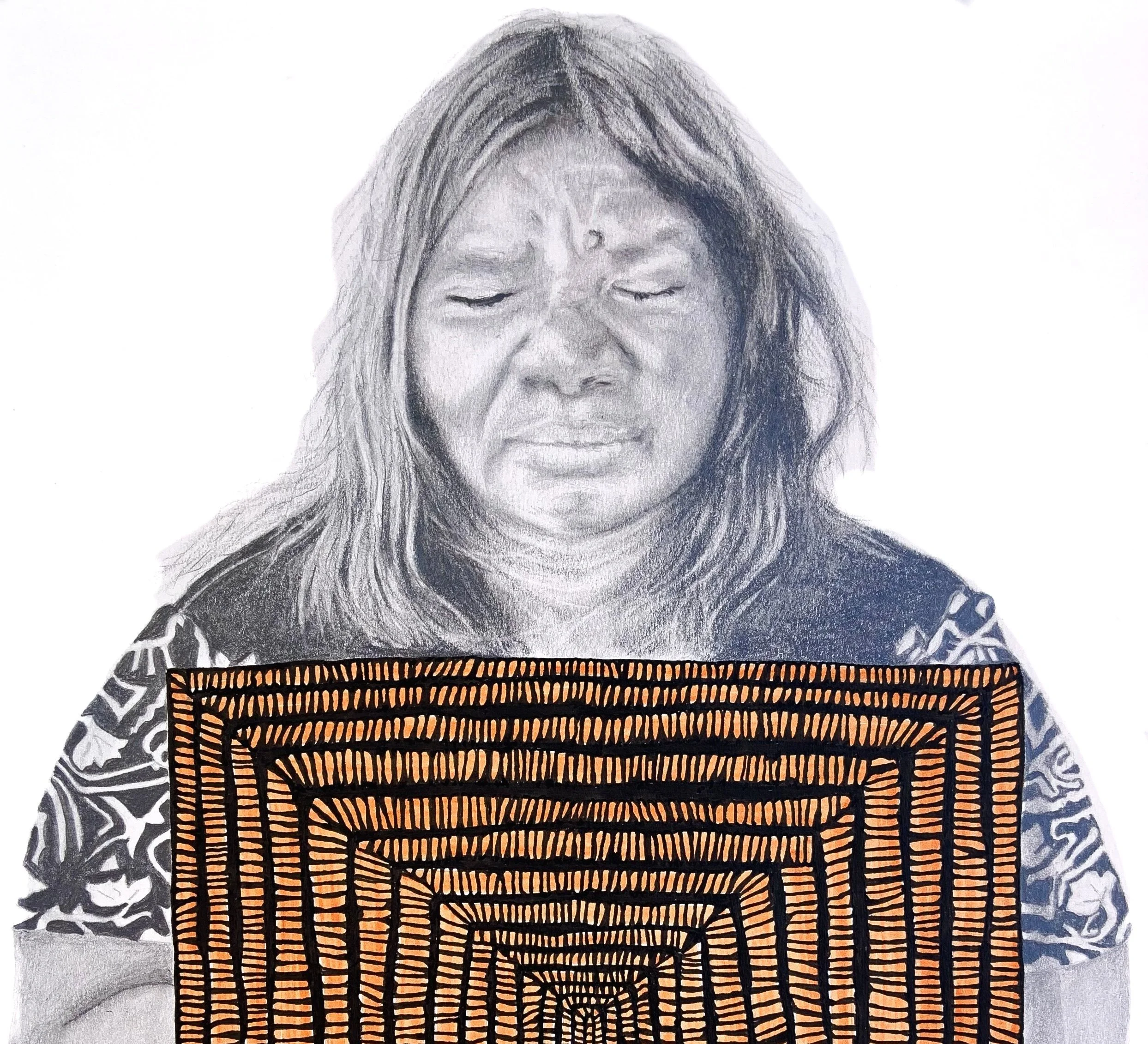
Monica Napaltjarri
Monica Napaltjarri, a Pintupi artist born in 1960 near Kiwirrkurra, 750 km west of Alice Springs, comes from a family deeply rooted in the Aboriginal art movement. Her half-brother, Joseph Jurra Tjapaltjarri, directed the Papunya Tula Art Centre, and her sisters Yakarri, Payu West Napaltjarri, as well as her daughter Maisie Gibson Napurrula, are also recognized painters.
Monica began painting in 1996, initially sporadically, then regularly from the 2000s onwards. Inspired by sacred sites passed down by her grandmother, such as the women's cave, her works recount the journeys of the Tingari Ancestors, pillars of Pintupi mythology and the spiritual life of her community.
Her paintings, with their powerful geometric motifs, recall ceremonial body paintings and markings. Monica lives between Kintore and Alice Springs.
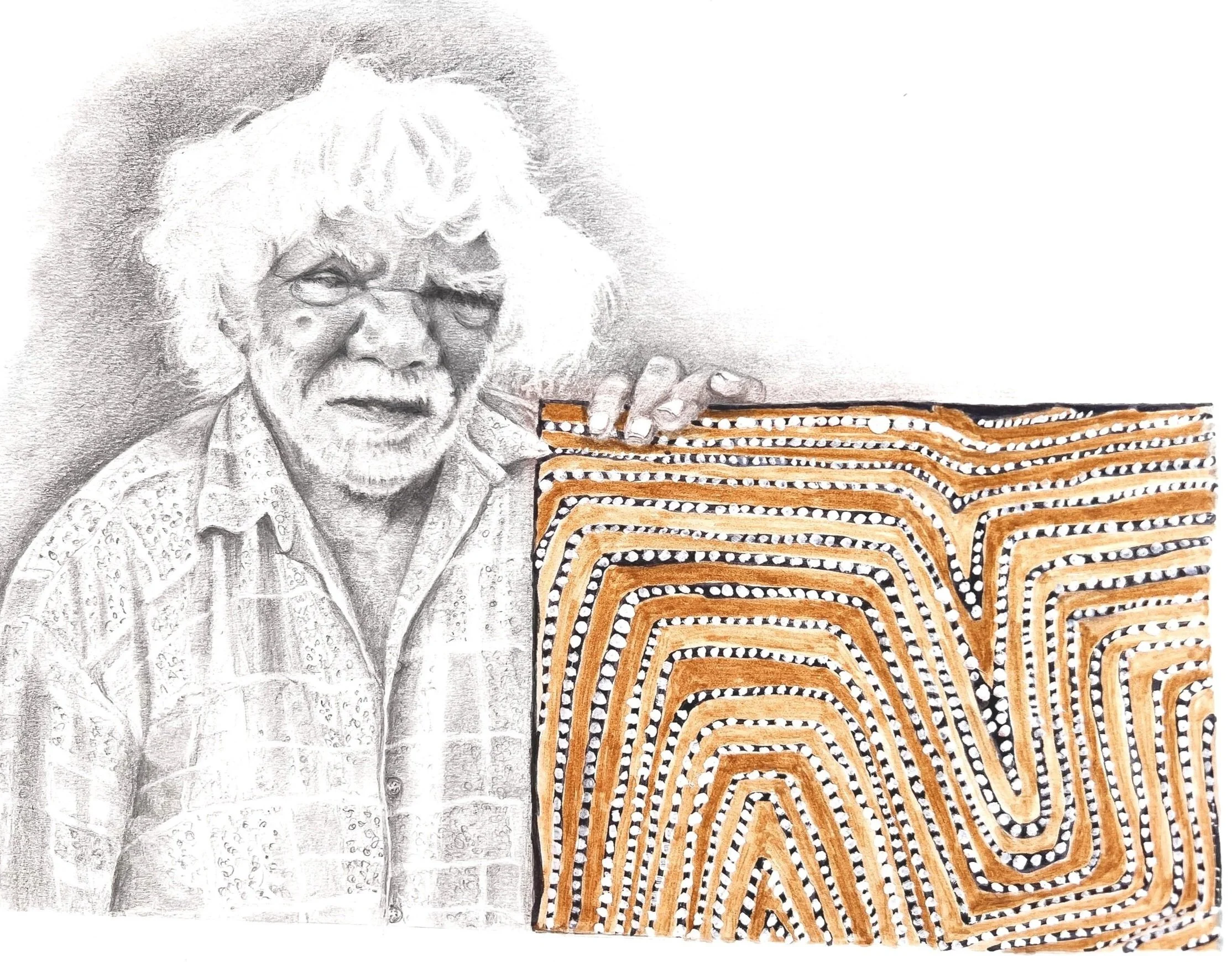
George Ward Tjungurrayi
George Ward Tjungurrayi remained a reserved and silent Western Desert man until the end of his life. He avoided photographs, was uncomfortable with English, and disliked the bustle of large cities like Alice Springs. "I am a bushman," he insisted, with a hint of pride in his voice.
Born in the 1940s in the very isolated region of Kiwirrkura, he did not encounter white people until 1962 when a government welfare patrol, tasked with bringing the last nomadic people into missions, made contact with his family group. He and his family were taken to Papunya, where George Ward worked for a time making fences, then in the community kitchens.
In 1981, George and his family settled in Kintore, a newly established Pintupi community, thanks to a political struggle led by Aboriginal people in the Northern Territory to reclaim their ancestral lands.
Following in the footsteps of his two half-brothers, Yala Yala Gibbs Tjungurrayi (one of the founders of the Papunya Tula art movement) and Willy Tjungurrayi (a major desert artist), he began painting in 1984, initially with 'classic' geometric motifs, then moving towards a style that was still meticulous but more minimalist, and a palette predominantly inspired by the red earth and sand colours of his country. The vibratory effect is a characteristic of his art.
In 2004, he won the prestigious Wynne Prize awarded by the Art Gallery in Sydney. His works, which often recount the history of Tingari journeys near Lakes Macdonald and McKay, are held in major private and public collections.
George Ward passed away in September 2023.

Turkey Tolson Tjupurrula
When he joined the founding group of Papunya Tula artists in 1972, Turkey Tolson Tjupurrula was one of its youngest members. Before taking up the brush himself, he observed the work of older men, notably Mick Namarari and Ray Inkamala.
Turkey Tolson's style evolved over time. His early, small-format works were modest and adhered to the conventions established by Pintupi artists. By the end of the decade, however, Turkey had become an accomplished painter. He created several large, rather classical canvases, combining concentric circles and pointillist bands with captivating perfection. The 1980s marked a period of research and innovation, which his technical mastery, knowledge of traditional painting methods, and creativity allowed him to explore.
In 1990, he painted Straightening the Spears, a canvas now held at the Art Gallery of Adelaide, which heralded a new phase in Papunya Tula art. From then on, he and a few others – Mick Namarari or Ronnie Tjampitjinpa – moved towards a sober, purer, and deliberately minimalist style composed of lines and rectangles. This work, which approaches modern abstract painting, would secure his place for posterity.
Turkey Tolson, born in 1938 east of Haast Bluff, and relocated with his family to the Papunya site in 1959, is also renowned for having served as Chairman of the Papunya Tula Artists' Centre from 1985 to 1995, during the formative years of this movement. His understanding of the non-Aboriginal world and his command of the English language allowed him to occupy a privileged position, serving as an intermediary between his people, his older relatives and companions on one side, and the non-Aboriginal public, galleries, and administration on the other. For this reason, he is also considered a preeminent figure of his generation. Turkey passed away in 2001.
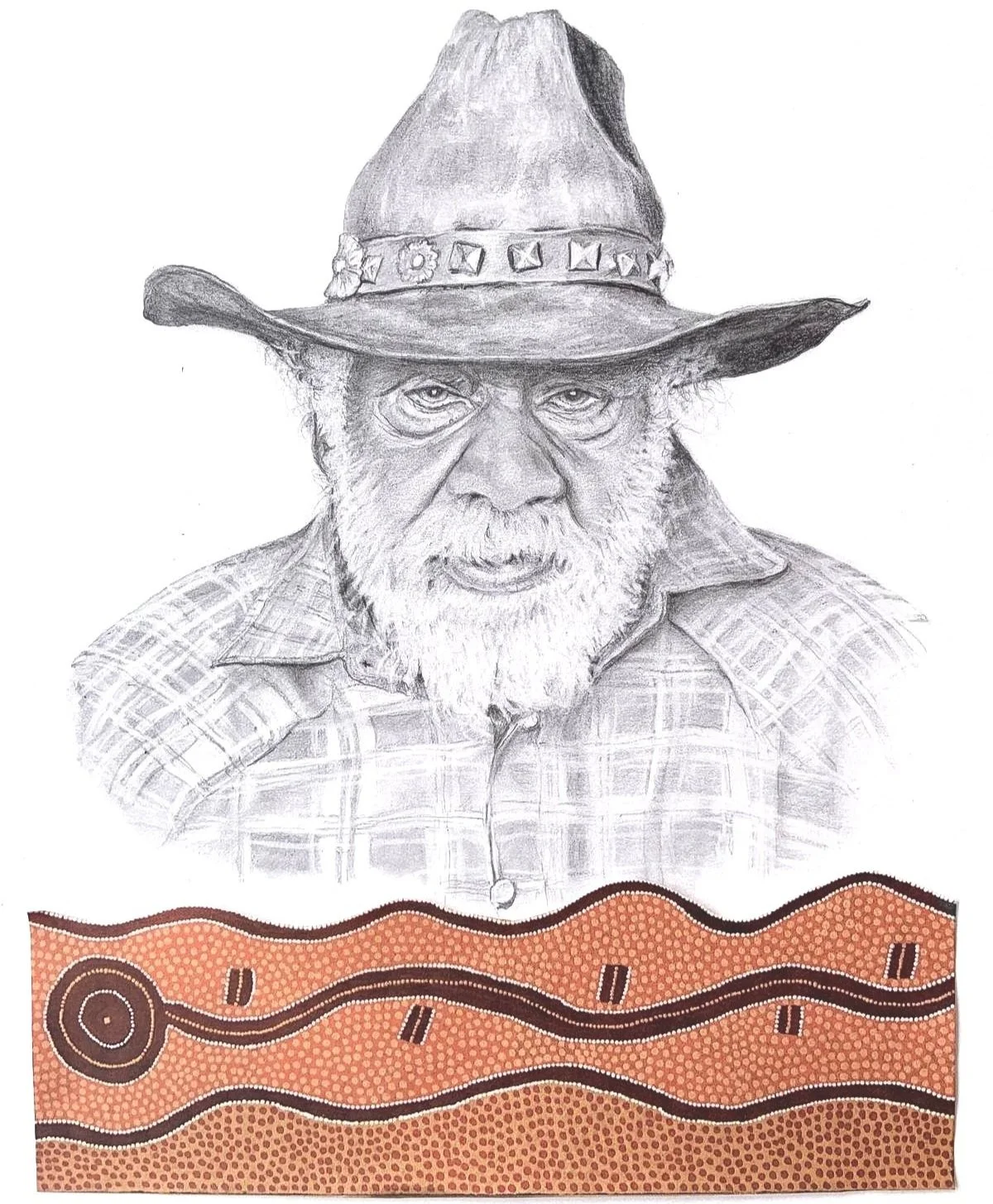
Long Jack Phillipus Tjakamarra
"A tall man of fine bearing," hence his Anglicized name, is how Geoffrey Bardon described him: Long Jack Phillipus Tjakamarra was part of the initial group of painters brought together by Bardon in the early 1970s.
At the time, Long Jack was employed as a caretaker at Papunya school alongside Billy Stockman. He was also a community counselor and, as such, played a key role in the creation of the famous mural that initiated the Western Desert art movement. Having participated in secret discussions held by the elders, he reported to Bardon that the Honey Ant motif was a gift "offered to the whitefella school" by Aboriginal ceremonial leaders. He then helped his friends Kaapa Tjampinjinpa and Billy Stockman in creating the mural.
A thoughtful man with a profound knowledge of tribal laws, Long Jack became a respected elder and exerted great influence over the younger generations. Deeply Christian, having been educated by Lutheran missionaries like many members of the Anmatyerre and Warlpiri tribes from which he originated, he successfully combined his Christian faith (even becoming a pastor in 1984) with his traditional beliefs.
His pictorial work includes the Wallaby, Kingfisher, Dingo, Possum, and Emu Dreamings, but also covers other subjects such as his Rain Dreaming, men's ceremonies, and stories about his native region at the foot of Mount Singleton near Kintore. Born in 1932, he passed away in 2020.

Lindsay Bird Mpetyane
Lindsay Bird Mpetyane was born around 1935 at Mulga Bore near Utopia. For years, he worked as a shepherd and stockman. In the late 1970s, when the women of Utopia became interested in batik, he was one of the few men to participate in this silk painting project. Then in 1987, he began painting with acrylics on canvas.
He is a respected Elder and tribal leader of the Anmatyerre community. As such, and a highly initiated man, Lindsay Bird can evoke numerous themes related to men's law in his paintings. His works, often large in scale, are striking for their bold color choices and harmonious composition. They recount the stories (Dreamings) of the Perentie lizard, the snake, the Mulga seed, the yam, or Charpa, the honey ant. They often feature sacred ceremonial sites where men's business takes place – depicted in a circular style surrounded by hunting weapons symbolizing the spirits that protect the area. These paintings appear simple in their conception but carry profound meaning. They reflect the artist's reverence for the ceremonies held in these places.
Over the years, Lindsay Bird strived to share his heritage. For him, painting was not merely a passion, but an integral part of his purpose to perpetuate his connection to the land's values and share it with younger generations. He passed away in May 2024.
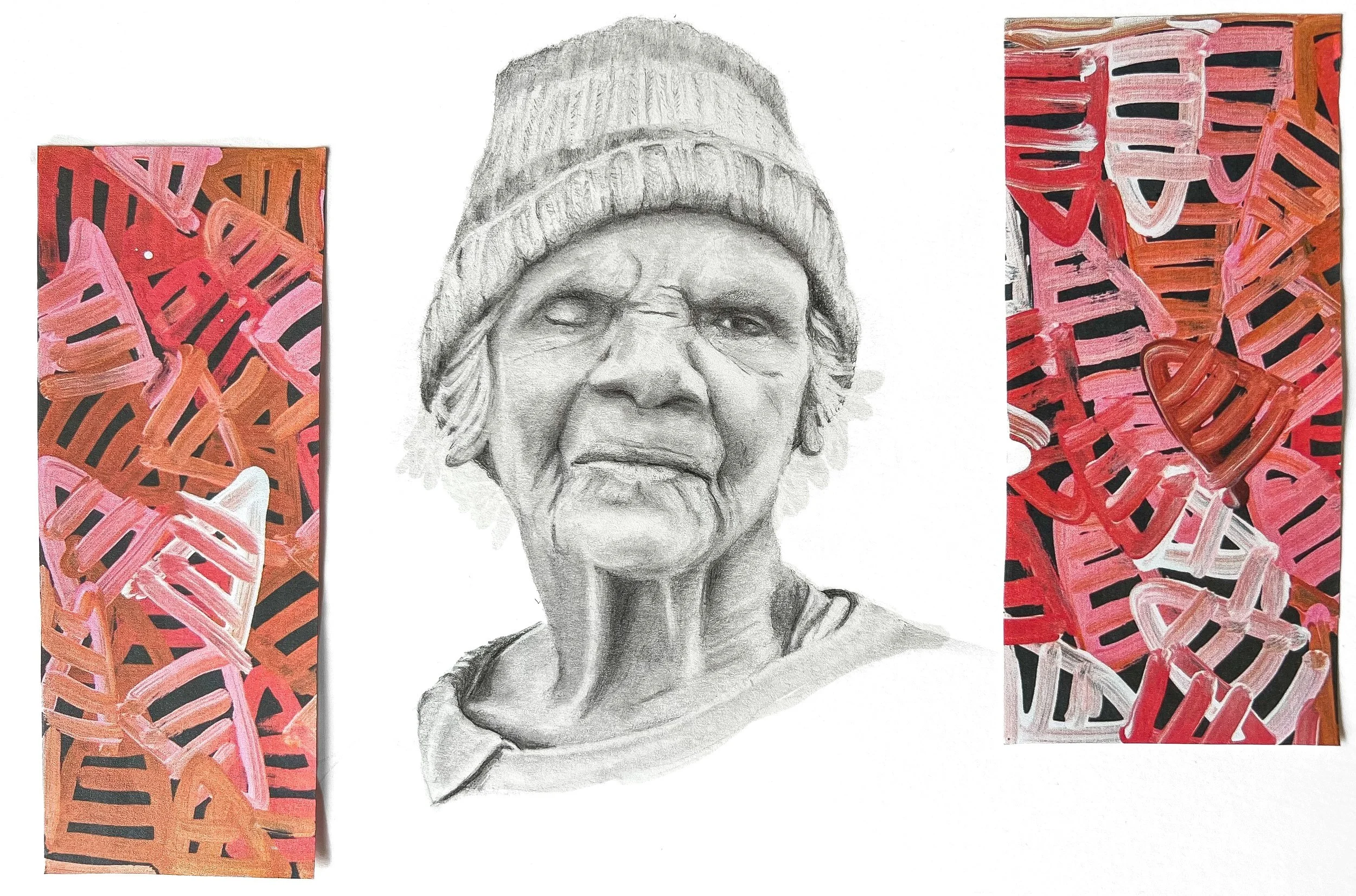
Emily Pwerle
Emily Pwerle was born between 1922 and 1930 (according to sources) in the Utopia community, located approximately 350 km northeast of Alice Springs, Northern Territory.
She belongs to the Anmatyerre and Alyawarre peoples, and many members of her extended family are eminent artists. These include her elder, the renowned Minnie Pwerle, as well as her two other sisters Molly and Gayla, Aileen and Betty Mpetyane, and of course her niece Barbara Weir. It was at Barbara Weir's instigation that Emily began painting professionally in the early 2000s.
Although she received less exposure than her sister Minnie, Emily quickly gained recognition for her unique and powerful style.
Her art is deeply rooted in tradition, most often relating to the women's Awelye Atnwengerrp ceremonies. Her paintings are characterized by dynamic and expressive lines evoking ritual body designs, dance tracks left in the sand, and sacred sites associated with the ceremonies. These motifs have been passed down through generations, and only women from the Pwerle or Kemarre clans are authorized to paint them.
Emily Pwerle is today recognized for the spiritual and cultural power of her work. Offering compositions made of a series of intertwined lines and symbols, superimposed on the canvas to create a vibrant explosion of colors, she asserts herself as a prolific and talented artist, much like her sister Minnie.

Bob Gibson Tjungurrayi
Born in Papunya in 1974, Bob Gibson Tjungurrayi belongs to the Ngaanyatjarra-Pintupi people. In the 1980s, he moved with his family to Tjukurla as part of the 'homelands' movement, which allowed many families to return to live on their ancestral lands.
Bob began painting with the Tjarlirli Art Centre in 2007 and quickly distinguished himself with a unique style: crisp flat areas, energetic forms and rhythmic movements, and the juxtaposition of vibrant colors. If one were to compare it to a Western painting movement, it could be Tachism and the work of Friedensreich Hundertwasser.
His art blends the ancient narratives of the Tjukurrpa (or 'Dreaming') with contemporary abstraction. A proponent of bold colors and spontaneous brushwork, his paintings reflect ceremonies such as the Tingari, while also innovating in the visual transposition of desert landscapes, particularly those extending around Lake Hopkins associated with his heritage.
Described as a vibrant and warm individual, highly regarded by his community and admired for his commitment to his people, Bob is recognized today as one of the most sought-after emerging artists.
He is one of the rising figures in the resurgence of Aboriginal art, lauded for his imaginative vision that bridges the tradition of an initiated man with a very personal contemporary expression.
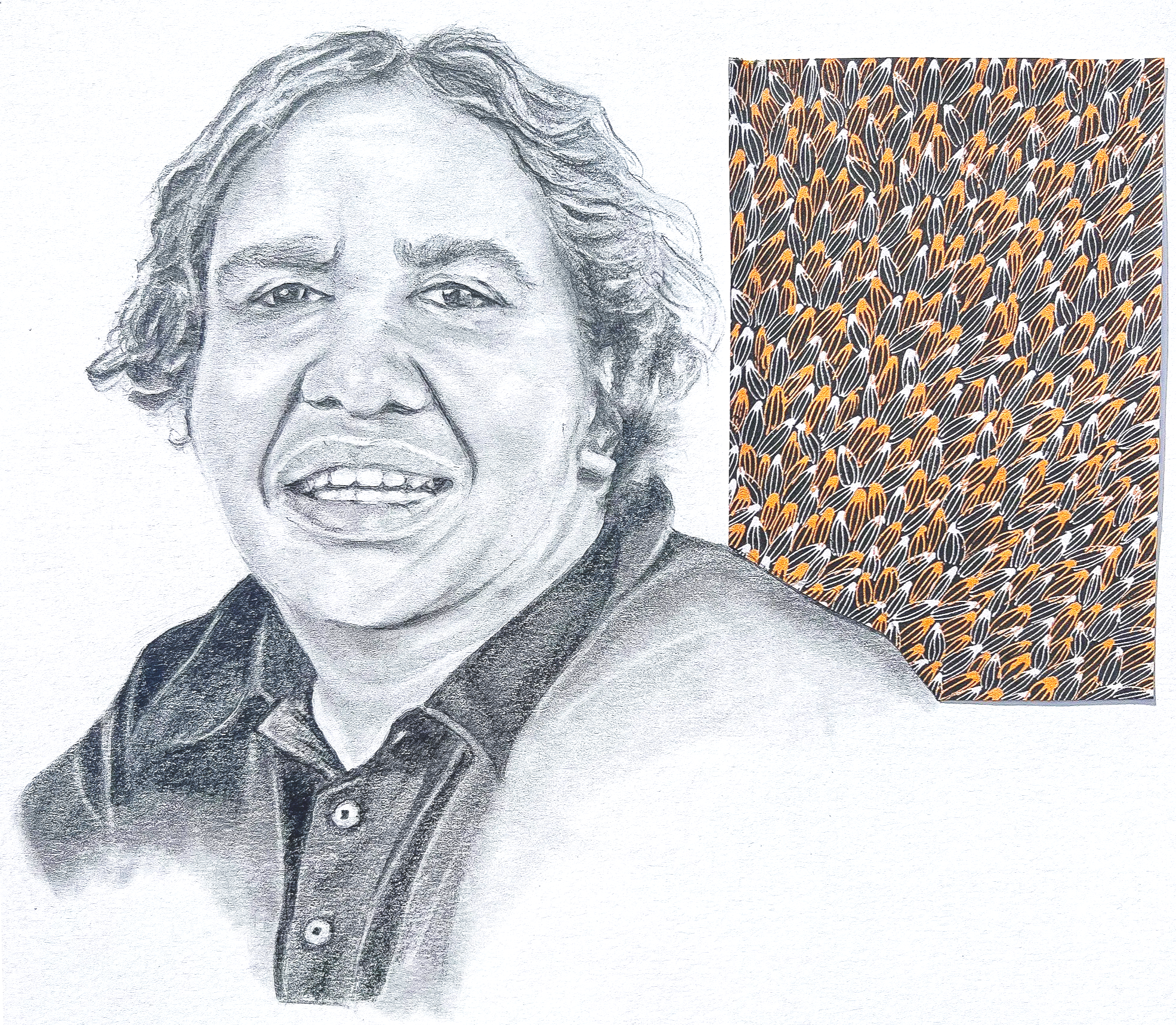
Abie Loy Kemarre
Abie Loy Kemarre was born in 1972 in Utopia, Northern Territory, into an illustrious lineage of Aboriginal artists. She is the granddaughter of Kathleen Petyarre, a major figure in the Utopia art movement who received the prestigious Telstra National Aboriginal Art Award in 1996, and the niece of Gloria Petyarre, the first Indigenous artist to win the Wynne Prize for Landscape in 1999.
Heir to several generations of renowned female artists, Abie grew up immersed in the artistic practice and cultural traditions of the Anmatyerre and Alyawarre peoples. Trained from a young age by her grandmother Kathleen, she learned not only the technique of pointillist painting but, more importantly, the transmission of sacred stories and ceremonial rights, of which she has become a custodian.
Abie began painting professionally in the mid-1990s. Her work perpetuates ancestral themes passed down by the women of her family, notably the Bush Leaves Dreaming (Awelye Atnwengerrp), women's ceremonies, and ritual body paintings. Her works are distinguished by a contemporary approach while remaining deeply rooted in tradition: she uses vibrant and bold colors, creating dynamic compositions where traditional motifs transform into veritable chromatic explosions.
Through energetic canvases with saturated hues, Abie interprets the narratives of the Dreamtime with a creative freedom that is uniquely her own. Her style, though respectful of the teachings received, demonstrates a modern and personal artistic vision that distinguishes her within her generation. Her paintings evoke Awelye ceremonies, bush seeds, medicinal plants, and the sacred sites of her homeland around Utopia.
Internationally recognized, Abie Loy Kemarre regularly exhibits in Australia, Europe, and the United States. Her works are featured in significant public and private collections. She embodies today the continuity of an exceptional family heritage while asserting a strong and contemporary artistic identity, confirming her place among the most influential Aboriginal artists of her generation.
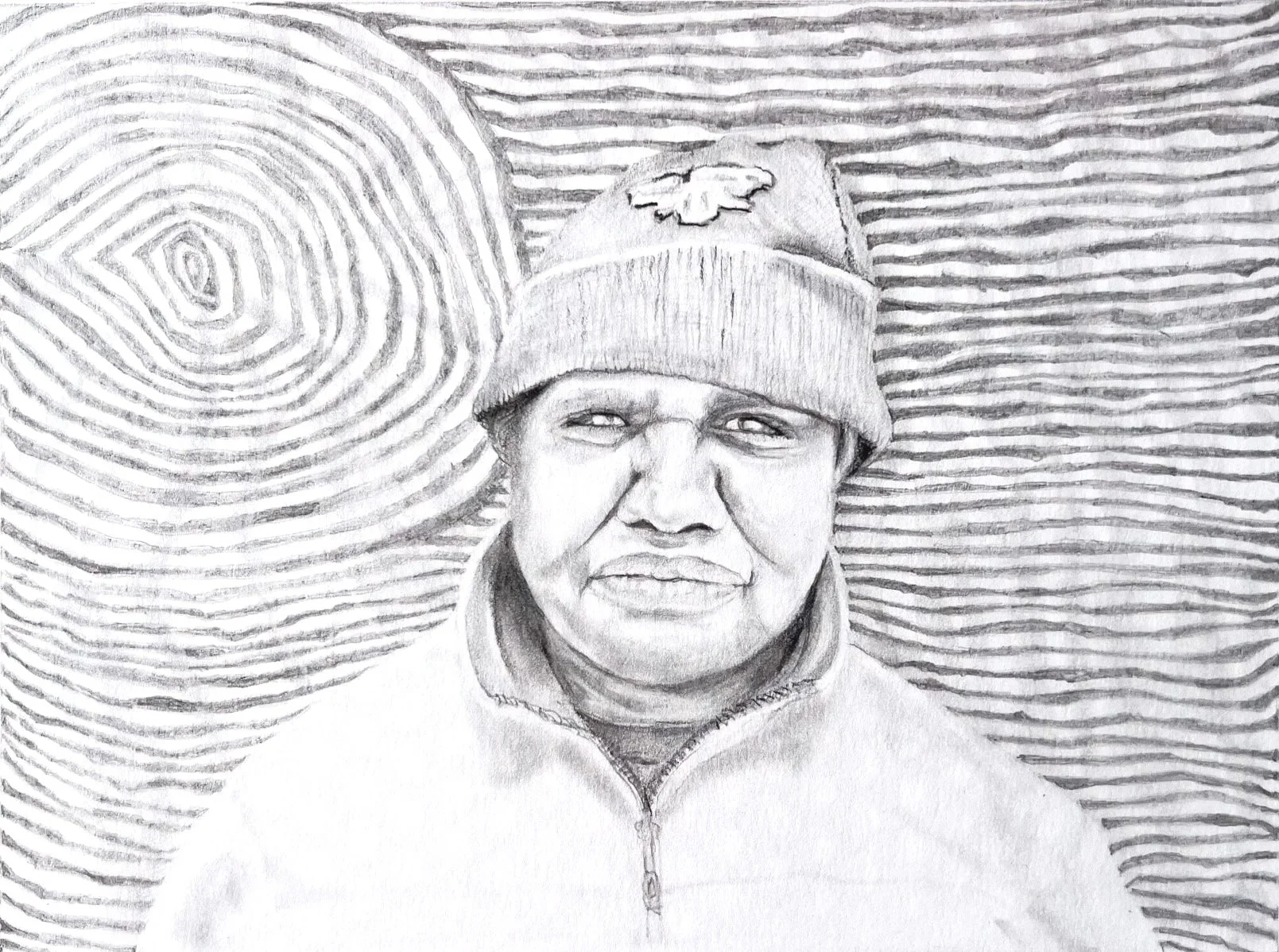
Yukultji Napangati
Yukultji Napangati est née vers 1970 à Marrapinti, un site cérémoniel sacré pour les femmes situé près de Wilkinkarra (lac Mackay), dans le désert de Gibson. Jusqu’à l’apparition spectaculaire de sa famille en 1984 au sein du célèbre groupe des « Pintupi Nine » (notamment avec Thomas, Walala et Warlimpirringa Tjapaltjarri) , elle a vécu selon un mode de vie nomade traditionnel, apprenant intimement les rythmes et les secrets du paysage désertique.
Elle a commencé à peindre avec Papunya Tula Artists en 1996, devenant l’une des femmes pionnières du mouvement artistique du Désert occidental. Avec le temps, Yukultji s’est imposée comme l’une des représentantes vivantes les plus recherchées du minimalisme du Désert occidental.
Son œuvre est réputée pour son abstraction linéaire et optique: de saisissants champs de lignes sinueuses et pointillées qui évoquent le miroitement des dunes de sable (tali), les points d’eau et les pistes du Temps du Rêve à travers le paysage désertique. Minimalistes dans leur palette mais riches en rythme visuel, ses toiles transmettent un savoir ancestral transmis par les femmes à travers les récits et la mémoire culturelle.
Yukultji a reçu plusieurs distinctions prestigieuses, tel que le Wynne Prize du paysage en 2018. Son travail a été largement exposé: au Salon 94 (New York, 2019) ou Utopia Art (Sydney, 2014). Elle a également participé à des expositions collectives à la Gagosian Gallery, dans les collections Desert Painters, ainsi qu’à l’exposition itinérante Marking the Infinite: Contemporary Women Artists from Aboriginal Australia.
Ses œuvres figurent dans d’importants musées et institutions.
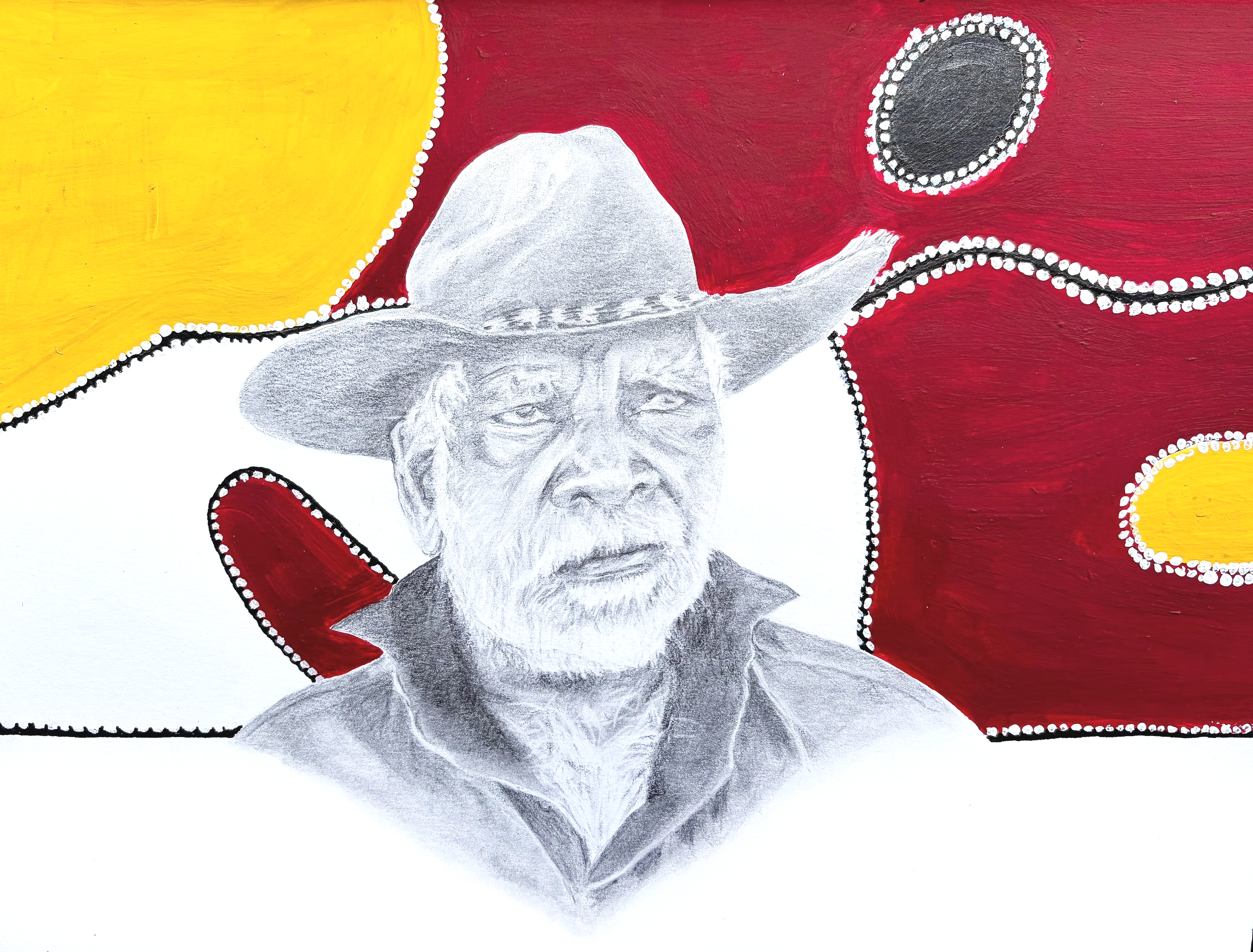
Freddie Timms
Freddie Timms nait en 1944 à Police Hole dans l’East-Kimberley. Enfant il suit ses parents dans plusieurs grandes exploitations d’élevage de la région puis, vers l’âge de 20 ans, à l’instar de beaucoup de ses contemporains, il est employé comme gardien de bétail, homme à tout faire et poseur de clôtures dans diverses fermes près de Kununurra. Il fait la connaissance de Rover Thomas lorsqu’ils travaillaient tous deux à Bow River Station et Texas Downs.
En 1985, Freddie Timms s’installe à Warmun avec sa seconde épouse Beryline Mung. Il travaille un temps dans la mine de diamant d’Argyle, puis s’établit à Frog Hollow, une communauté fondée par son beau-frère Jack Britten. C’est alors qu’il entre en contact direct avec le mouvement artistique du Kimberley associé aux fameuses cérémonies du Gurirr Gurirr (Kuril Kuril) initiées par Rover Thomas et d’autres leaders Gija comme son beau-père George Mung Mung. Freddie Timms participe à ces cérémonies en tant que danseur et collaborateur, tout en observant les premières formes picturales qui émergent.
Son style, bien que rappelant celui de Thomas, est très personnel et immédiatement reconnaissable avec ses larges aplats bordés de points blancs. Beaucoup de ses œuvres ressemblent à des cartes aériennes représentant l’ossature du territoire où il a vécu et travaillé toute sa vie. Cette cartographie se situe à un niveau topographique — montrant des éléments du paysage tels que la terre noire, la terre rouge, les sols sableux, les collines, les ruisseaux et les points d’eau — mais aussi à un niveau historique et symbolique, représentant routes, habitats et lieux spirituels du Dreaming. Il se distingue aussi par l’utilisation de couleurs différentes qu’il appose de façon très fluide. Les couleurs foncées disparaissent peu à peu au profit des couleurs claires et lumineuses. Le succès est immédiat et aujourd’hui la renommée de Freddie a rejoint celles des précurseurs de ce mouvement.
Freddie est aussi l'un des rares artistes aborigènes issus d'un milieu traditionnel à avoir cherché à exprimer une opinion politique à travers son œuvre. En 1998, il devient un acteur-clé de la création de Jirrawun Aboriginal Corporation, dont il est élu président. Ce collectif vise à offrir aux artistes Gija du Kimberley une autonomie économique et artistique. Son œuvre prend alors une dimension plus explicitement politique. Il développe des récits liés à l’histoire coloniale, aux massacres et aux tensions entre populations aborigènes et non-aborigènes. Des œuvres comme Blackfella – Whitefella traduisent cette lecture critique du monde contemporain. Freddie est décédé en 2017.
Rachael Lionael Mipantjiti
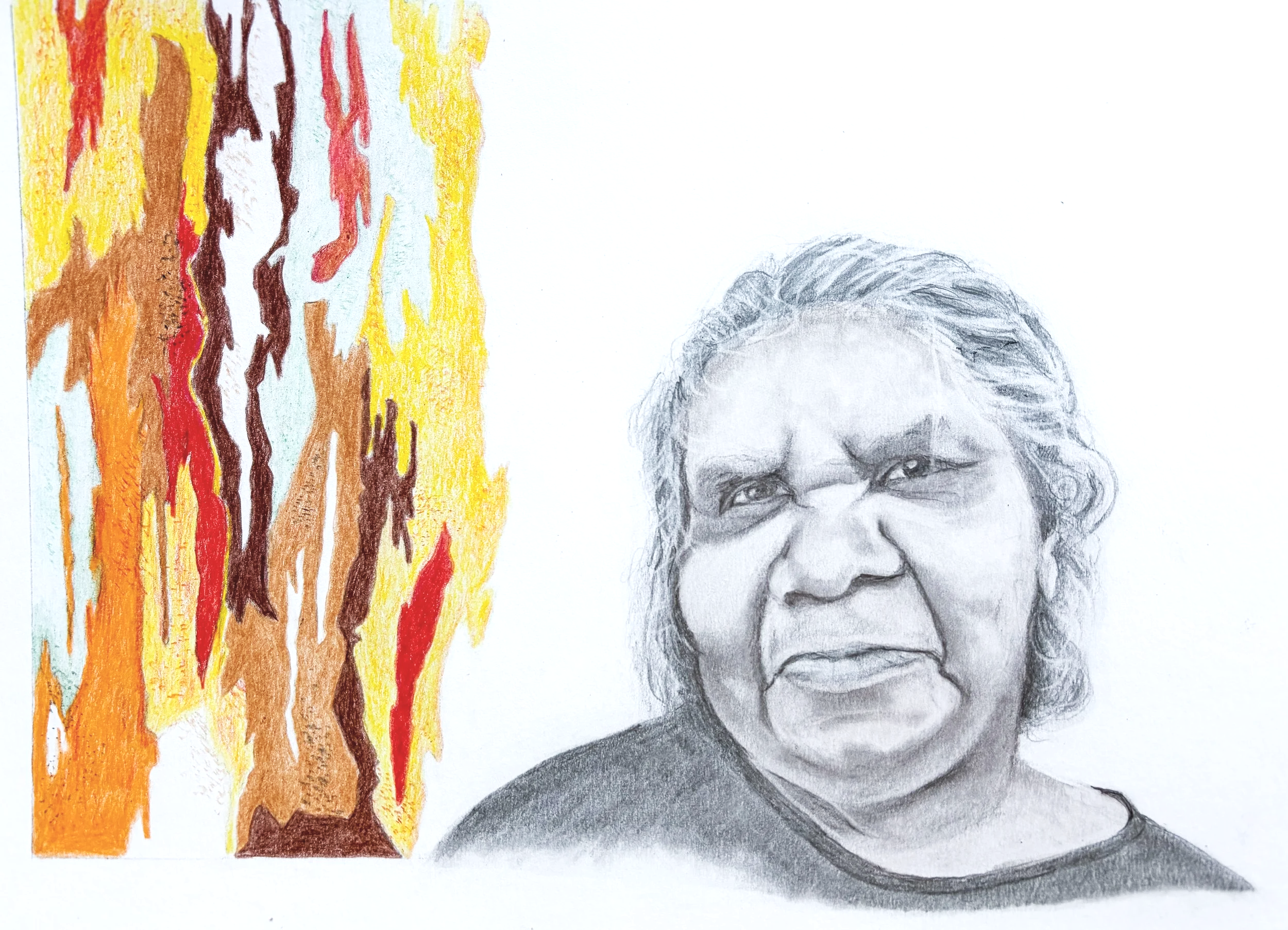
Rachael Lionael Mipantjiti est issue d'une famille d'artistes Ernabella de renom. Sa mère est Yurpiya Lionel, sa grand-mère était la célèbre Pantjiti Lionel (décédée) et sa sœur Alison est également une artiste très appréciée.
Rachael est née à Alice Springs et a fréquenté l'école Ernabella Anangu avant de commencer à peindre en 2006 pour Ernabella Arts, le plus ancien Centre d’Art autochtone encore en activité.
Elle peint les messages et les histoires qu'elle reçoit en rêve. En 2016, elle a collaboré avec six autres artistes d’Ernabella à la création d'une installation de céramique pour le Musée d'art de Shepparton. L'œuvre a ensuite été acquise par le Musée national d'Australie et présentée dans « Songlines : Sur les traces des Sept Sœurs », une exposition itinérante internationale. Rachael a été finaliste des prix Telstra NATSIAA en 2016 et 2023.
Rachael raconte : « Je remercie toujours ma grand-mère de nous avoir transmis son savoir. Pantjiti Lionel et Niningka Lewis nous ont appris à peindre. Il y a plus de vingt ans, alors qu'elles étaient au Centre d'Art, Alison et moi étions assises à ne rien faire, et notre grand-mère nous a dit : « Écoutez-moi bien avant que je ne parte. Que ferez-vous après ma mort ? Vous devez vous mettre au travail et trouver quelque chose d'unique. » Aujourd'hui, je suis très heureuse, car tout vient d'elle. J'ai commencé à peindre un motif, comme les autres artistes, et ma grand-mère m'a dit : « Non, pas comme ça. Il faut que ça vienne du cœur, pas de la tête. » Je me suis mise à peindre ainsi, et ça n'a jamais cessé. Je n'arrive pas à y croire. Tout est parti d'un rêve, et maintenant il est devenu réalité sur la toile. »