
Walala Tjapaltjarri : le géomètre du désert occidental
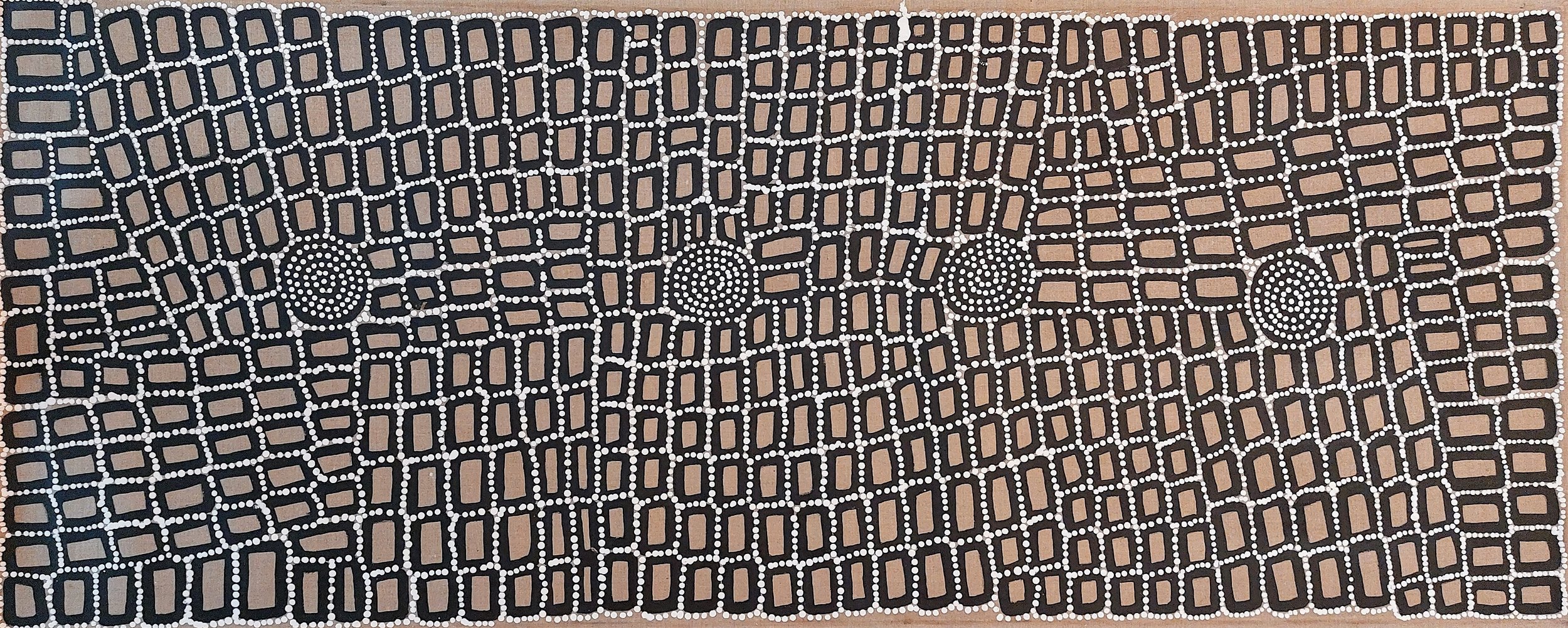
Des rectangles nets, posés comme des pierres sur la toile : le style de Walala Tjapaltjarri est le plus immédiatement reconnaissable du désert occidental. Derrière cette géométrie radicale, le cycle Tingari et l'histoire hors du commun des « Pintupi Nine ». Portrait du plus audacieux des frères Tjapaltjarri.
Thomas Tjapaltjarri : peintre du Tingari, l'un des derniers nomades du désert
Entré en contact avec la société australienne en 1984 avec les « Pintupi Nine », Thomas Tjapaltjarri est devenu, avec ses frères Warlimpirrnga et Walala, l'un des grands peintres du cycle Tingari. Découvrez son histoire, son style géométrique saisissant et la tradition pintupi qu'il incarne.
Les 7 sites sacrés les plus représentés dans l'art aborigène Pintupi
Sept sites sacrés dominent l'art aborigène Pintupi depuis 1971 : Wirrulnga, le site du pouvoir spirituel féminin où Ningura Napurrula créait ses cercles monumentaux ; Marrapinti, le carrefour des chemins Tingari que Bob Gibson peint avec ses réseaux interconnectés ; Yunala, les plaines de spinifex aux compositions horizontales ; Kiwirrkura, le cœur spirituel Pintupi et site du dernier contact en 1984 ; Lupul, avec ses acacias et ses motifs rayonnants ; Tjukula, les formations rocheuses spectaculaires aux compositions verticales ; et Mantarta, le lieu de confluence et de rassemblement social. Chaque cercle concentrique dans une peinture Pintupi représente un site réel du désert de Gibson, chargé d'histoires du Temps du Rêve transmises depuis des millénaires, ce qui transforme l'abstraction géométrique en une véritable cartographie spirituelle qui documente la géographie, la mythologie et les responsabilités culturelles des artistes. Comprendre ces sites enrichit l'appréciation des œuvres en révélant plusieurs niveaux de lecture : esthétique (le dot painting sophistiqué), géographique (la carte du territoire), culturel (les récits du Dreaming spécifiques), et spirituel (les dimensions sacrées réservées aux initiés). Les artistes majeurs peignent les sites selon leurs droits culturels légitimes : Ningura, Makinti et Wentja Morgan pour Wirrulnga féminin ; Bob Gibson et George Ward pour Marrapinti Tingari ; les artistes de Kiwirrkura qui bénéficient d'une authenticité exceptionnelle grâce à leur proximité avec le pays ancestral. Inma Galerie propose des œuvres authentifiées qui représentent ces sites sacrés, avec une documentation exhaustive, des certifications, des explications culturelles respectueuses, et un accompagnement pour une lecture à la fois informée et éthique.
Aboriginal art , Utopia APY Lands Aboriginal art : Which Style Should You Choose for Your Collection?
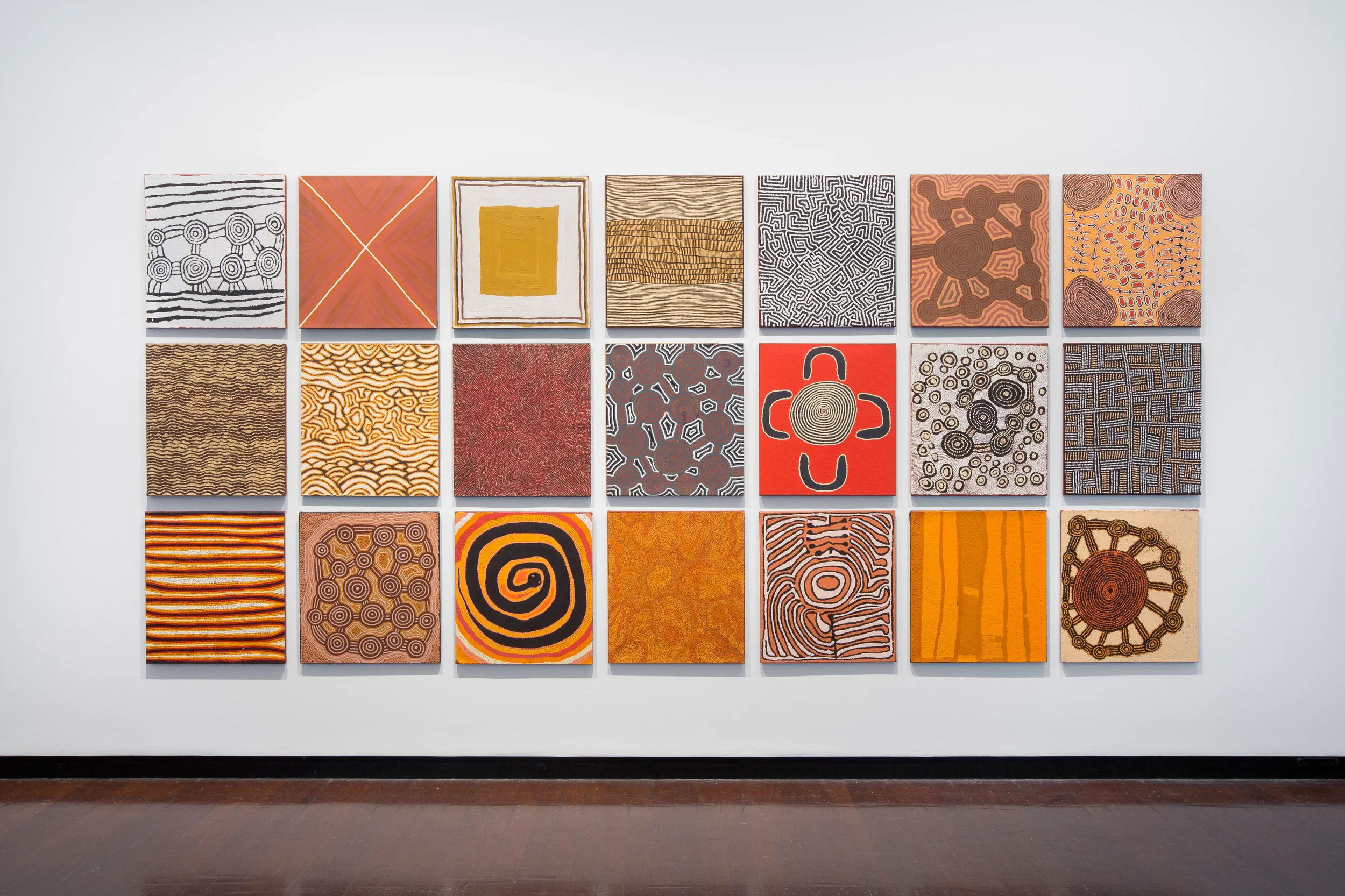
Choosing betweenPintupi, Utopia the APY Lands determines the aesthetic direction and investment strategy for your collection ofAboriginal art .Pintupi dense geometric dot painting, a subdued desert palette (ochres/blacks/whites), themes from the Tingari cycle, and a mature market with stable annual appreciation of 8–12% (artists: Bob Gibson, George Ward, Turkey Tolson; price ranges €3,000–€800,000+). Utopia for its frequent departure from dots in favor of free, expressive brushstrokes, a vibrant palette (greens/yellows/reds), Awelye ceremonies, and legendary masters such as Emily Kame (up to €2 million), Gloria Petyarre, and Minnie Pwerle (annual appreciation of 10–15%). APY Lands features accessible narrative, a varied luminous palette, stylistic diversity across communities, and excellent value for money (€2,000–€80,000, 5–15% appreciation potential but increased risk). Inma Galerie offers authenticated works from three regions with comparative expertise, personalized strategic advice based on aesthetic preferences, budget, and wealth management goals to build a cohesive collection that reflects the collector’s unique identity.
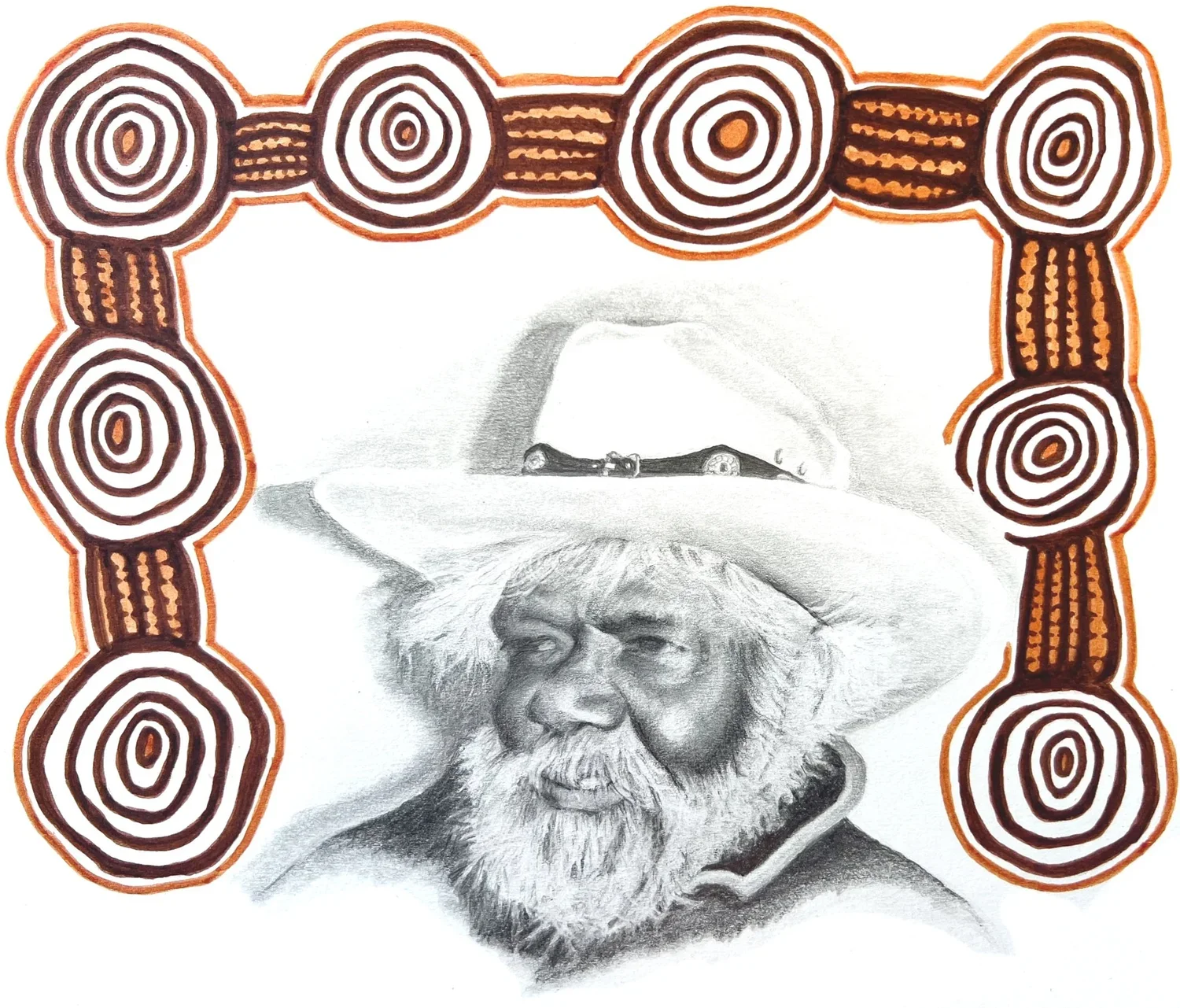
Barney Campbell Tjakamarra : Gardien des Ancêtres Tingari et maître de l'art aborigène Pintupi
Barney Campbell Tjakamarra (v. 1928-2012) représente l'une des figures les plus respectées de l'art aborigène contemporain, ayant consacré plus de quarante ans à transmettre les récits sacrés des Ancêtres Tingari du désert de Gibson. Artiste Pintupi membre de longue date de Papunya Tula Artists, il possédait une connaissance profonde du cycle Tingari acquise par initiation traditionnelle et vie nomade dans le désert occidental australien. Ses peintures aborigènes se caractérisent par des compositions géométriques équilibrées cartographiant les sites sacrés, une maîtrise exceptionnelle du dot painting, et une palette sobre évoquant le désert (ocres, rouges, noirs, blancs). Ses œuvres figurent dans les collections du National Gallery of Australia et du Musée du Quai Branly, avec une valorisation solide sur le marché (4 000€ - 60 000€ selon format et période). Inma Galerie propose des pièces authentiques de ce maître gardien des Ancêtres Tingari avec documentation complète et garantie d'authenticité.
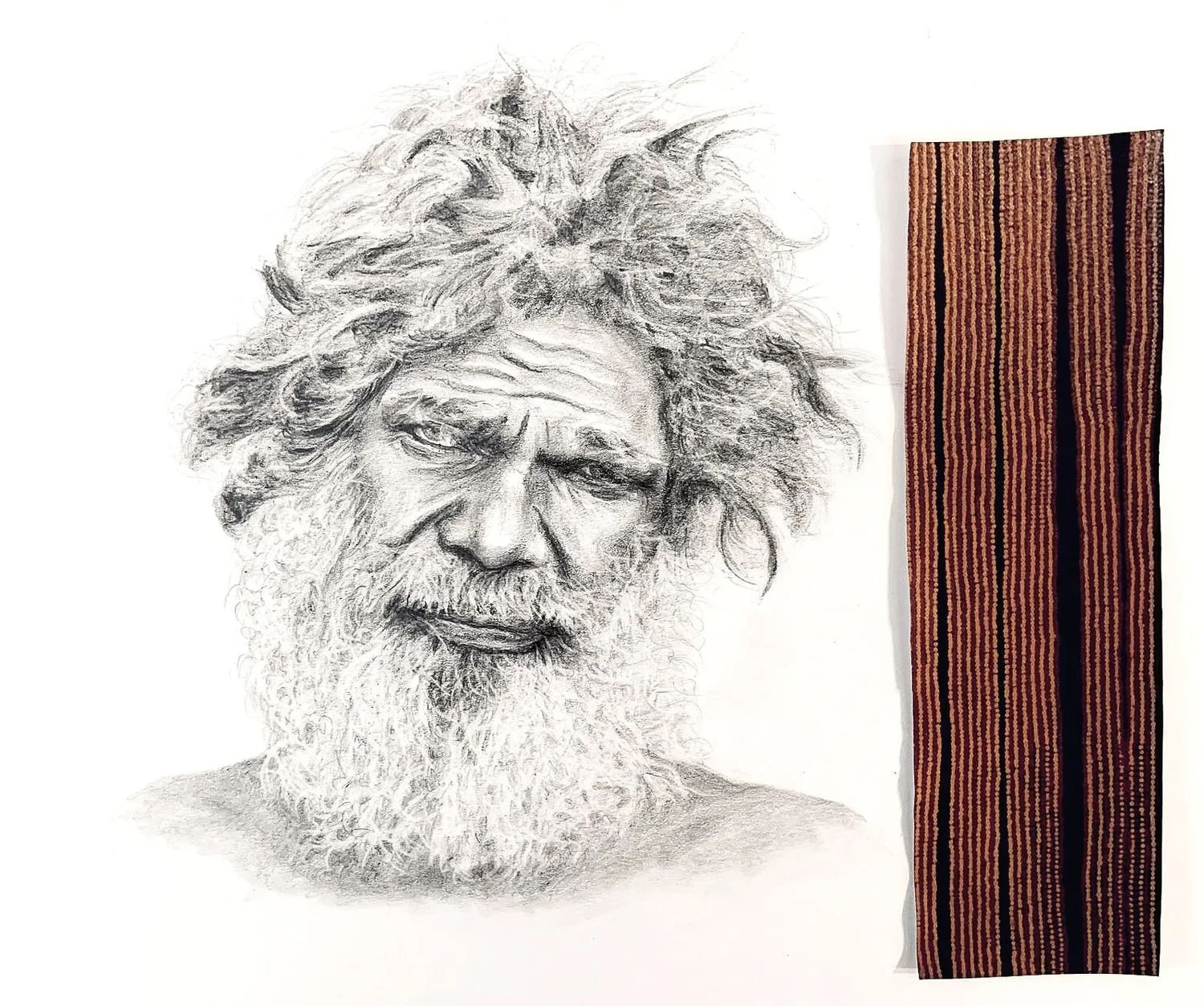
Turkey Tolson Tjupurrula : Innovateur de la représentation Tingari et pionnier de l'art aborigène
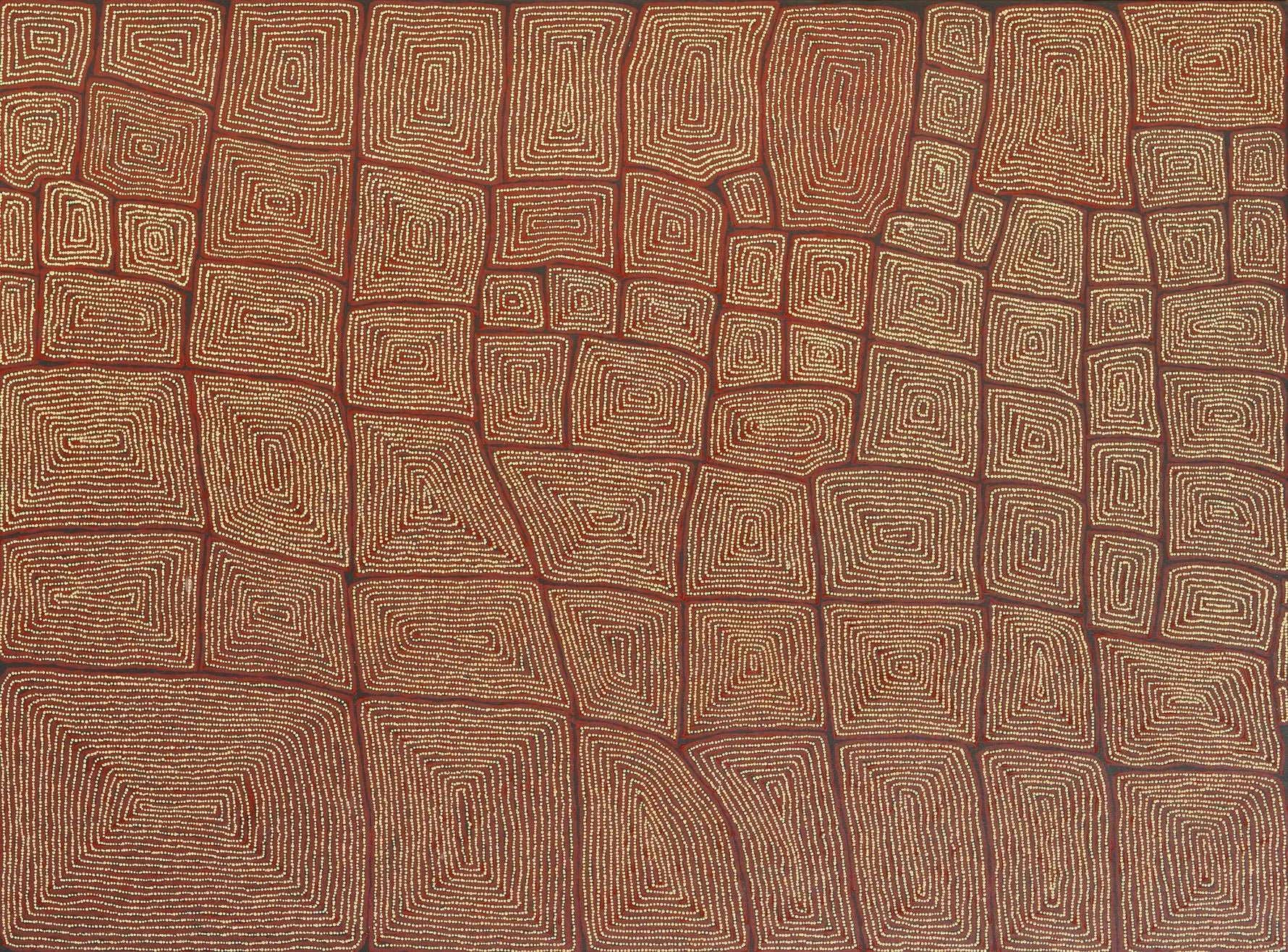
Turkey Tolson Tjupurrula (1943-2001) demeure l'un des innovateurs les plus audacieux de l'art aborigène contemporain, ayant révolutionné la représentation du cycle Tingari avec un style abstrait géométrique puissant. Artiste Pintupi pionnier du mouvement de Papunya en 1971, il a progressivement développé des compositions circulaires monumentales qui dialoguaient avec l'abstraction occidentale tout en préservant l'authenticité culturelle des récits sacrés du Temps du Rêve. Son style mature des années 1990 se caractérise par des cercles concentriques à grande échelle, une palette réduite dramatique (rouge ocre, noir, blanc), et une maîtrise exceptionnelle du dot painting créant des surfaces vibrantes hypnotiques. Ses œuvres figurent dans les collections du National Gallery of Australia, Musée du Quai Branly et autres institutions majeures, avec une valorisation constante sur le marché (40 000€ - 250 000€ pour œuvres majeures). Inma Galerie, partenaire de Papunya Tula Artists, propose occasionnellement des pièces rares de ce maître visionnaire avec authentification complète et documentation exhaustive.
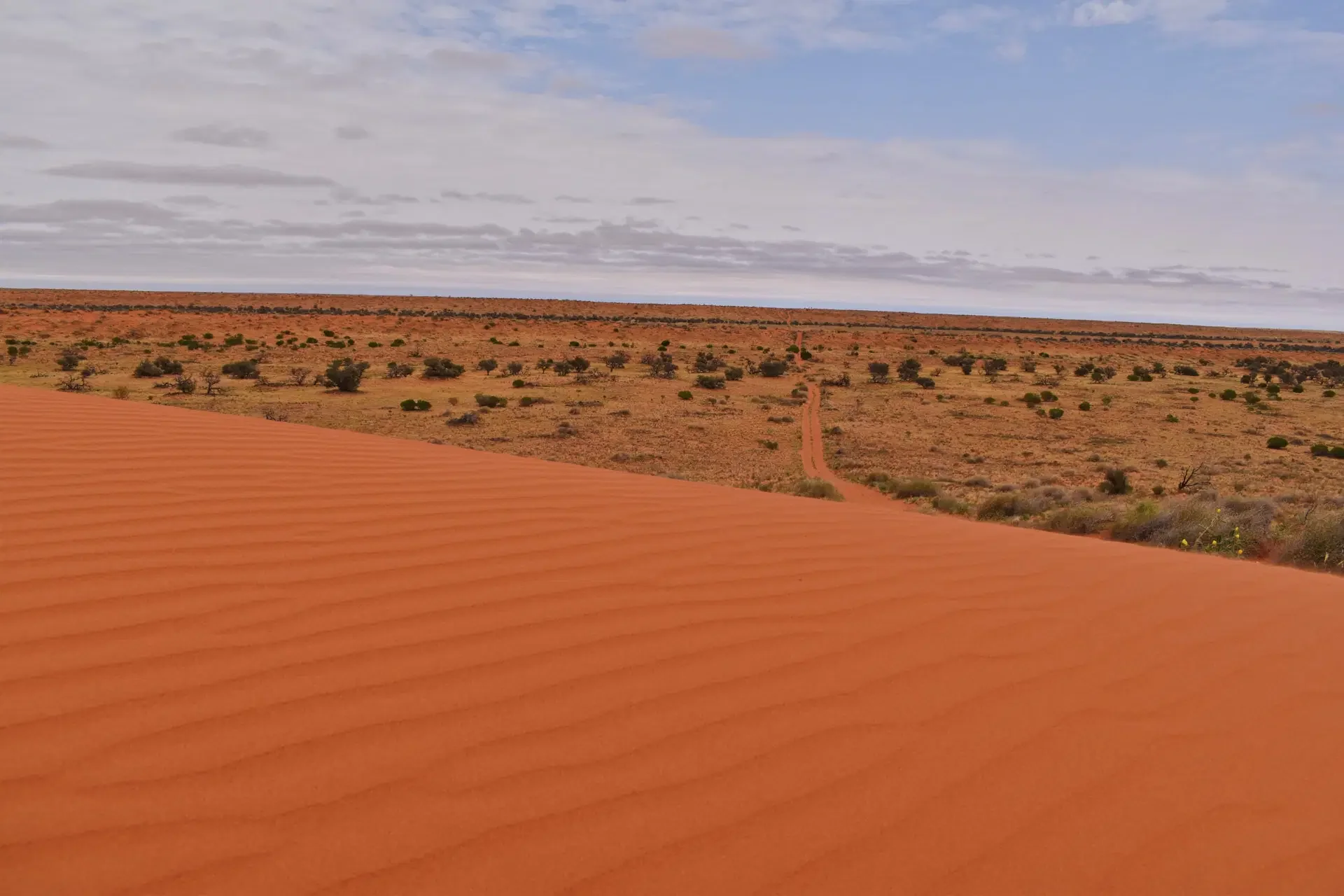
Gibson's Desert: A Spiritual Geography ofAboriginal art
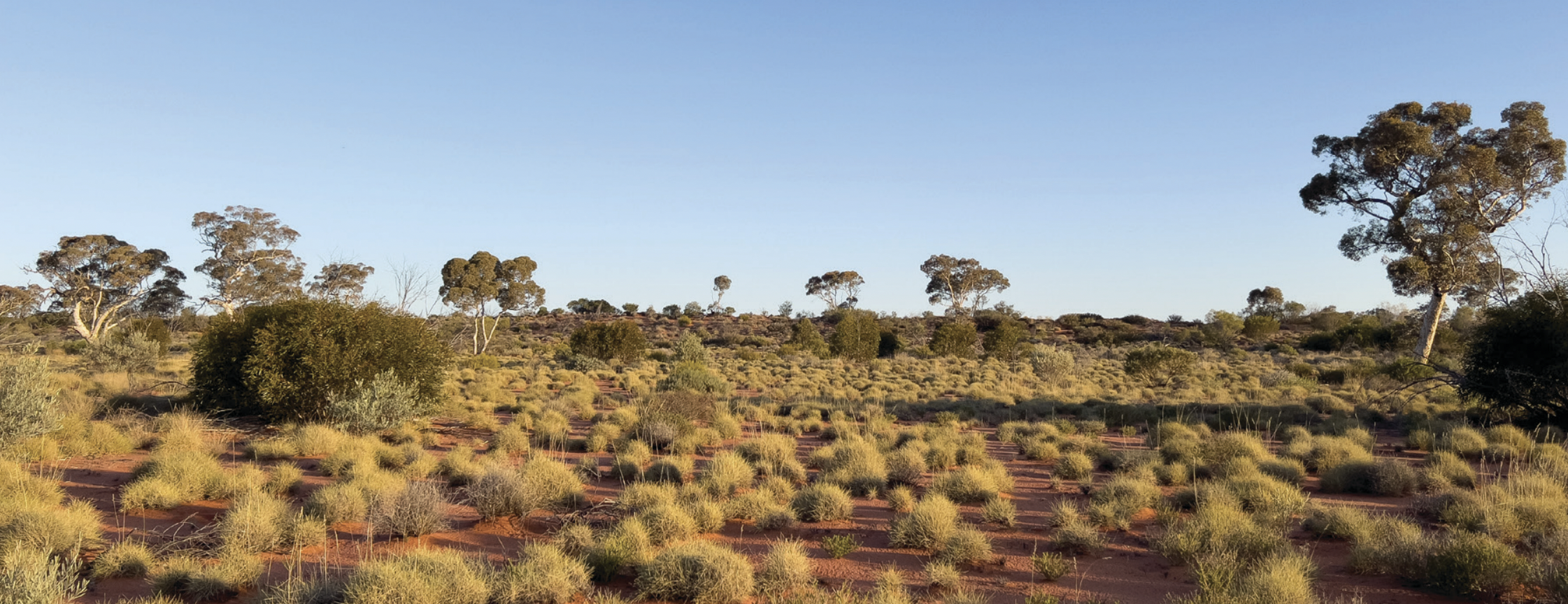
The Gibson Desert is much more than just an arid expanse in Western Australia: it is the spiritual heart of the Pintupi people Pintupi the birthplace of some of the greatest contemporary Aboriginal artists. This inhospitable region, with its extreme temperatures and scarcity of water, has shaped a culture of exceptional resilience and given rise to Aboriginal art unique spiritual depth. From Bob Gibson Tjungurrayi to George Ward Tjungurrayi, from Wentja Morgan Napaltjarri to Turkey Tolson Tjupurrula, the masters of the Gibson Desert have transformed their intimate knowledge of this land into paintings that captivate collectors around the world.
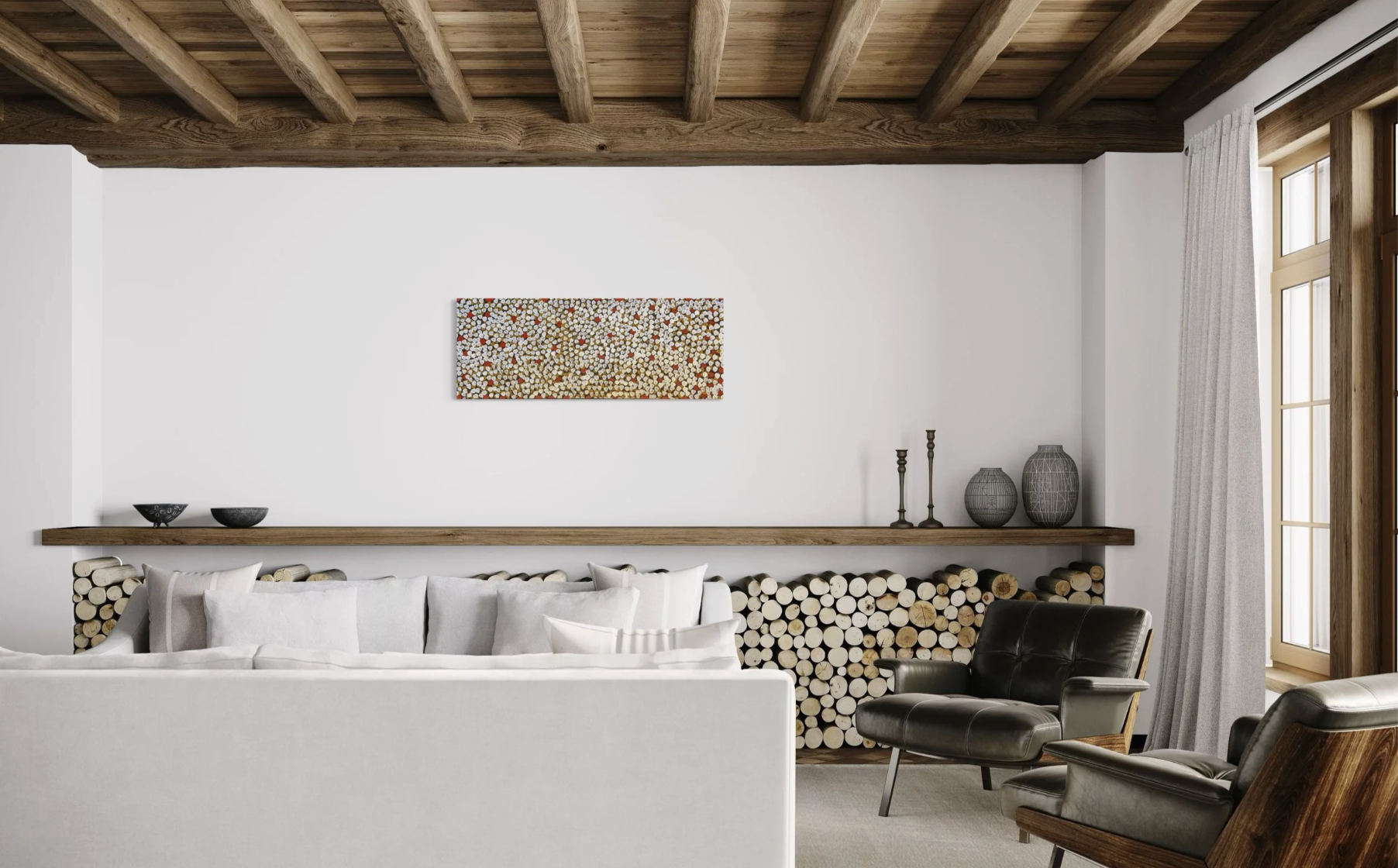
Old Mick Wallankari Tjakamarra: Pioneer ofAboriginal art guardian of the Dreaming
Old Mick Wallankari Tjakamarra (c. 1925–1998) was one of the most important founding artists of theAboriginal art movement launched in Papunya in 1971. A respected member of the Pintupi people, he played a crucial role in transforming the sacred stories of the Dreamtime into revolutionary acrylic paintings. Born in the Western Desert and having lived according to Pintupi nomadic traditions Pintupi adulthood, Old Mick possessed an authentic knowledge of Dreaming stories and ancestral ceremonies. In 1971, alongside Geoffrey Bardon and pioneers such as Clifford Possum Tjapaltjarri and Johnny Warangkula Tjupurrula, he participated in the early experiments that created the visual language ofAboriginal art . Old Mick contributed to the development of the dot painting technique, which became the iconic signature of CentralAboriginal art . His Aboriginal paintings are characterized by narrative compositions mapping the sacred sites and ancestral journeys of the Tingari cycle. A founding member of Papunya Tula Artists 1972, he participated in the historic exhibitions of the 1970s and 1980s that introducedAboriginal art the world. His Aboriginal paintings are included in the permanent collections of the National Gallery of Australia, the Art Gallery of NSW, and other prestigious institutions. Old Mick’s works possess exceptional heritage value as direct testimonies to the emergence ofAboriginal art . Inma Galerie, a specialist inAboriginal art , occasionally offers these rare historical works with Papunya Tula Artists authentication Papunya Tula Artists comprehensive documentation.
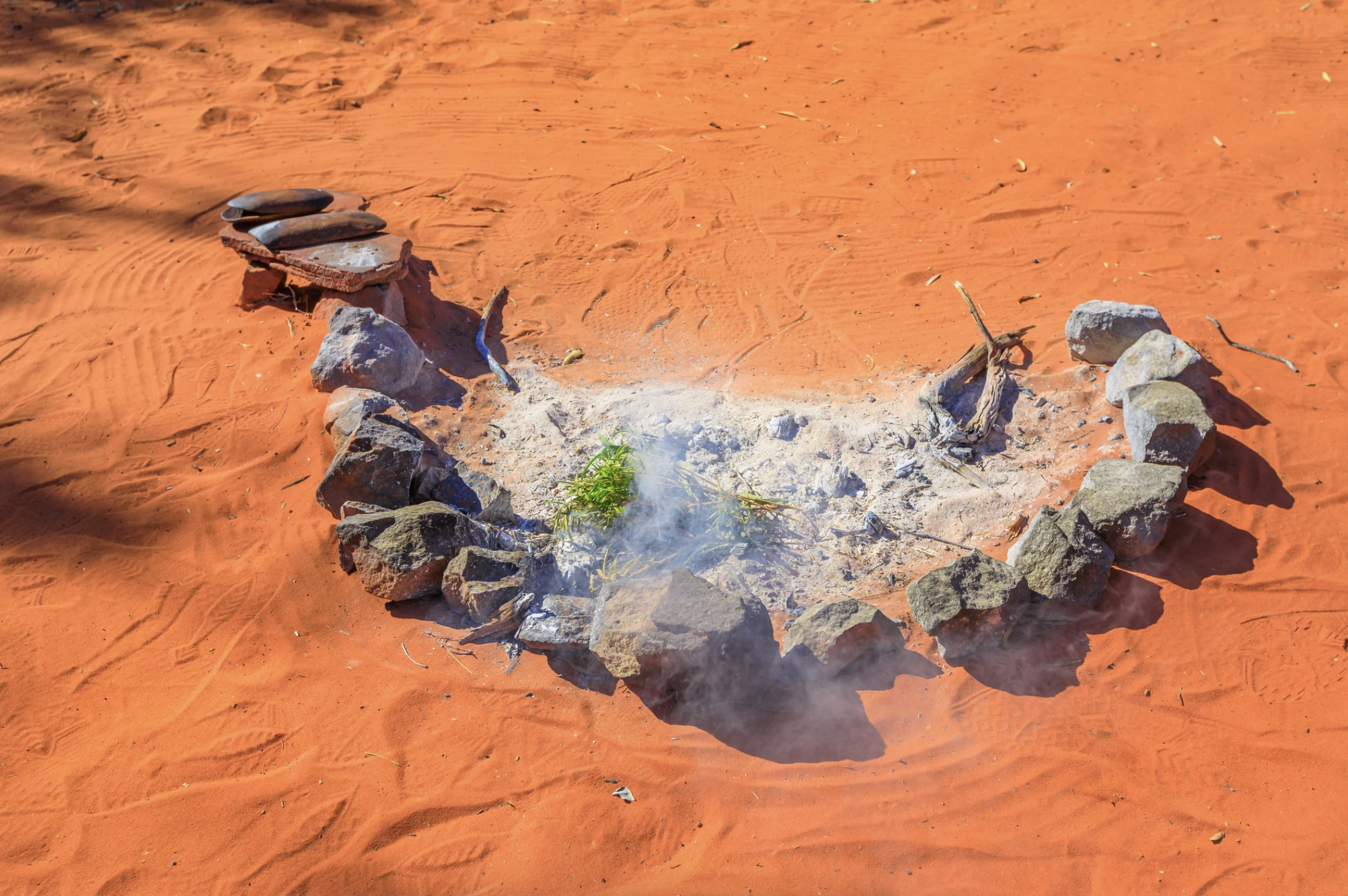
The Tingari Cycle Tingari Sacred Stories of the Pintupi People Pintupi Their Expression inAboriginal art
The Tingari Cycle Tingari one of the most sacred and complex sets of stories in the Aboriginal Dreamtime, specific to the Pintupi people Pintupi Australia’s central desert. These ancestral stories recount the epic journeys of groups of creator Ancestors who traversed the desert during the time of creation, shaping the landscape, establishing waterholes, and instituting the social laws that still structure Aboriginal culture today. The Tingari cycle Tingari a multi-layered structure of knowledge, revealed progressively during male initiations, ensuring that the most sacred aspects remain protected. InAboriginal art , the Tingari cycle Tingari a major source of inspiration since the Papunya movement in 1971. Aboriginal artists such as Bob Gibson Tjungurrayi, George Ward Tjungurrayi, Wentja Morgan Napaltjarri, and Turkey Tolson Tjupurrula have dedicated their careers to visually conveying these sacred stories through their exceptional Aboriginal paintings. Aboriginal paintings of the Tingari cycle Tingari characterized by concentric circles representing sacred sites, lines indicating ancestral journeys, and a dot painting technique that creates depth and texture. These works function simultaneously as art, spiritual maps of the territory, and documents of cultural preservation. The Tingari Cycle Tingari a true system of Aboriginal laws governing the social organization, relationship to the land, and ceremonial practices of the Pintupi people. Inma Galerie, a specialist inAboriginal art , offers an exclusive collection of authentic paintings from the Tingari Cycle, complete Tingari documentation and a guarantee of authenticity. Collecting a work from the Tingari cycle means becoming a guardian of a fragment of ancestral knowledge and actively participating in the preservation of this intangible cultural heritage of humanity.
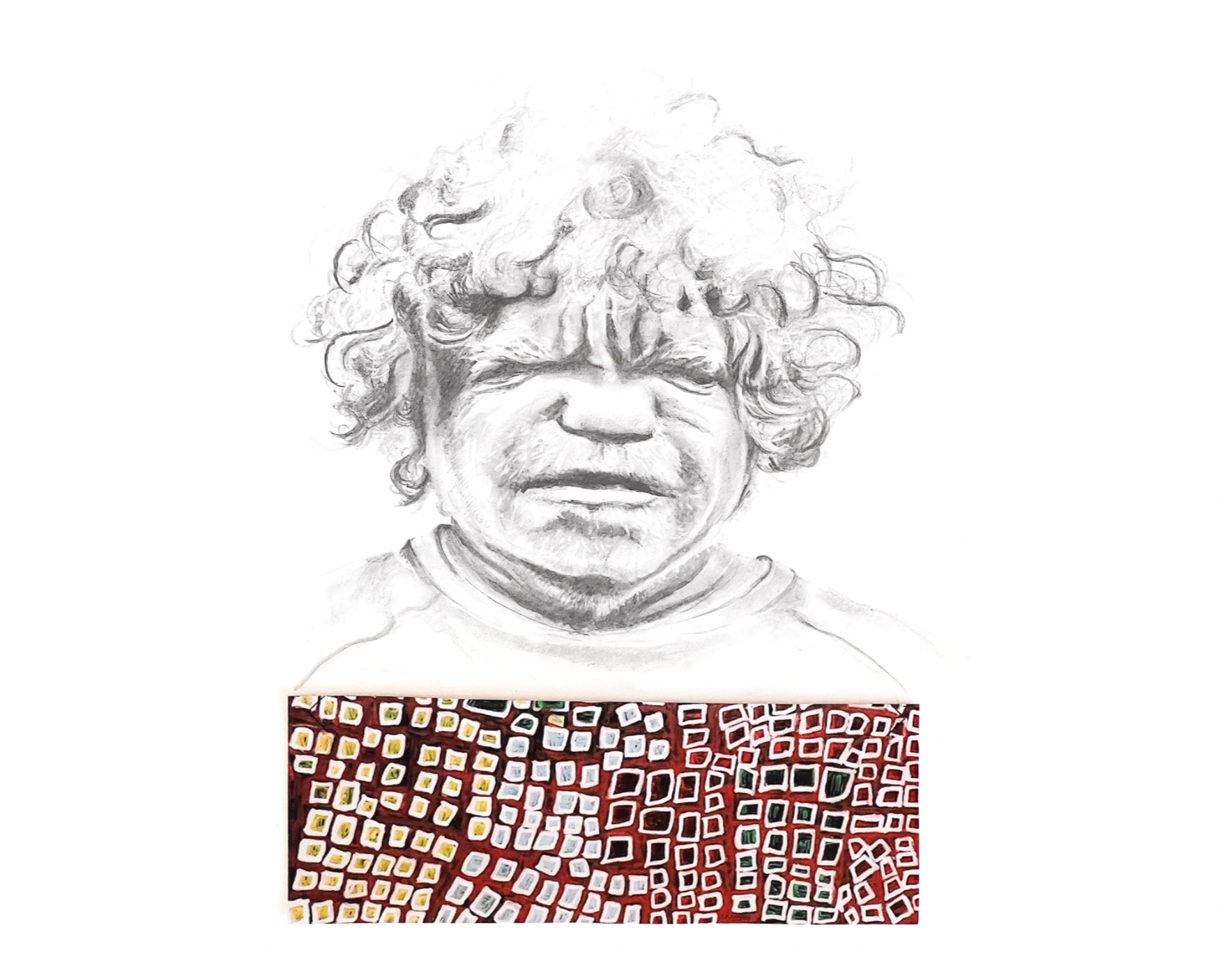
Bob Gibson Tjungurrayi: Master ofAboriginal art guardian of the Pintupi Dreaming
Bob Gibson Tjungurrayi (born around 1940) is one of the most important figures in contemporaryAboriginal art . A respected member of the Pintupi people, he embodies the generation of Aboriginal artists who transformed the sacred stories of the Dreamtime into a globally recognized artistic movement. Born in the Australian outback, Bob Gibson spent his early years living the traditional Pintupi nomadic lifestyle, which imparted to him a deep knowledge of Dreaming stories and sacred sites. The central theme of his Aboriginal art the Tingari cycle, a complex set of stories specific to the Pintupi people Pintupi the journeys of the creator Ancestors across the Gibson Desert. A longtime member of Papunya Tula Artists, the historic organization founded in 1972, Bob Gibson has developed a distinctive style characterized by balanced geometric compositions and an exceptional mastery of dot painting. His Aboriginal paintings use a subdued palette evoking the natural colors of the desert and accurately depict sacred sites and essential waterholes. Bob Gibson Tjungurrayi’s Aboriginal paintings are featured in the permanent collections of prestigious institutions such as the National Gallery of Australia and the Musée du Quai Branly. As a respected elder, he plays a crucial role in passing on artistic knowledge to younger generations Pintupi. Inma Galerie, a recognized specialist inAboriginal art , offers authentic works by Bob Gibson with full documentation via Papunya Tula Artists. Each acquisition represents a significant cultural investment and an active contribution to the preservation of millennia-old Aboriginal heritage.
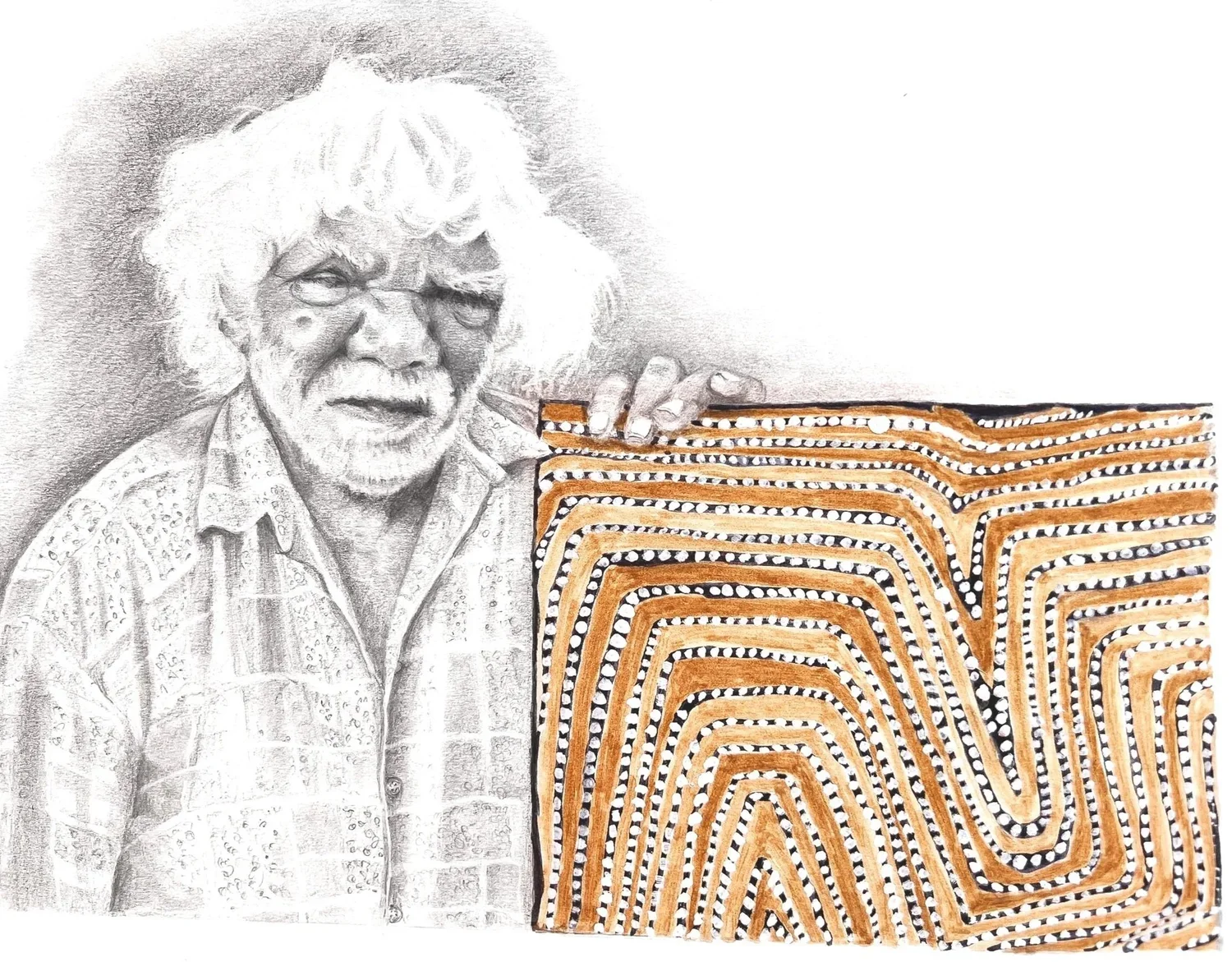
George Ward Tjungurrayi: Master of Central Australian Aboriginal Art
George Ward Tjungurrayi (c. 1943–2020) is one of the most respected Aboriginal artists in the AustralianAboriginal art movement. A member of the Pintupi people, he dedicated his life to passing down the sacred stories of the Dreamtime through his exceptional Aboriginal paintings. Born in the Gibson Desert, one of Australia’s most remote regions, George Ward Tjungurrayi lived according to ancestral traditions before becoming a pillar of the artistic community in Kintore and Kiwirrkura. His Aboriginal art a deep understanding of the land and the ancestral stories that shape it. The dominant theme of his work is the Tingari cycle, a complex set of Dreaming narratives unique to the Pintupi people Pintupi the journeys of the creator Ancestors across the desert. His style is distinguished by balanced geometric compositions, a subdued palette evoking the colors of the desert, and an exceptional mastery of dot painting (Aboriginal pointillism). George Ward Tjungurrayi’s Aboriginal paintings are featured in major international collections, from the National Gallery of Australia to the Musée du Quai Branly. His sister, Lorna Ward Napanangka, is also a renowned artist, illustrating the family’s transmission of artistic knowledge. Inma Galerie, a specialist inAboriginal art , offers authentic works by this master artist with complete documentation and a guarantee of authenticity. Each painting tells a story from the Dreaming, keeping alive the spiritual connection to the Central Desert.

George Hairbrush Tjungurrayi : maître du minimalisme et de l'abstraction dans l'art aborigène
George Hairbrush Tjungurrayi, né vers 1947 à Kiwirrkurra près de Kintore dans le désert central australien, est reconnu comme l'un des maîtres absolus de l'art aborigène contemporain. Arrivé à Papunya en 1962, berceau du mouvement de peinture aborigène moderne, il ne commence à peindre pour lui-même que dans les années 1976-1980. Ses premières œuvres, consacrées au cycle sacré Tingari, utilisent l'iconographie classique : cercles en pointillés et lignes de traverse. Dans les années 1990, avec son frère Willy, Turkey Tolson Tjupurrula, Ronnie Tjampitjinpa et Mick Namarari, il révolutionne l'art aborigène en développant un style minimaliste abstrait. Ses compositions aux lignes parallèles créent un effet optique saisissant qui dialogue avec le minimalisme occidental tout en préservant la profondeur spirituelle de la tradition aborigène.