
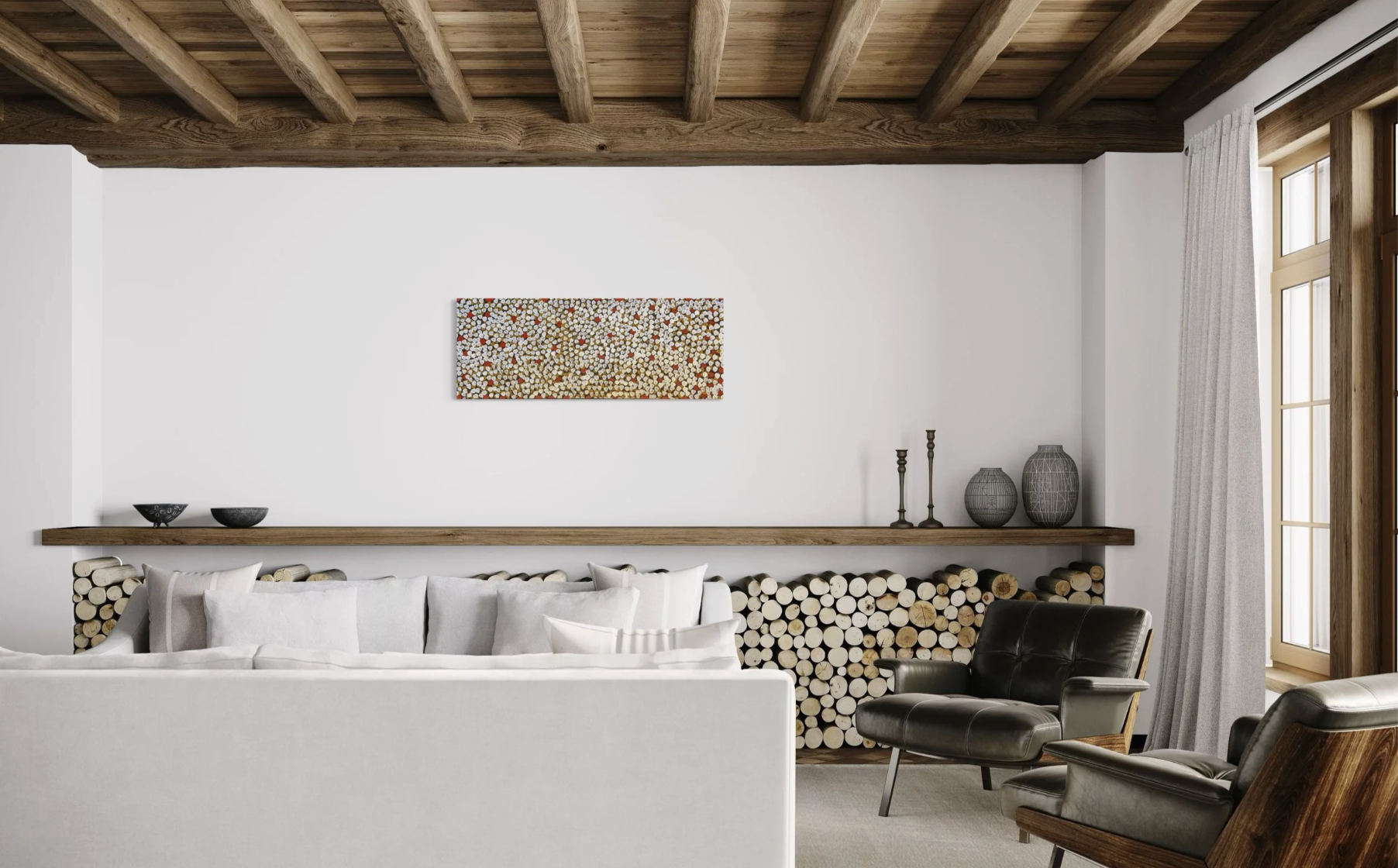
Old Mick Wallankari Tjakamarra: Pioneer ofAboriginal art guardian of the Dreaming
Old Mick Wallankari Tjakamarra (c. 1925–1998) was one of the most important founding artists of theAboriginal art movement launched in Papunya in 1971. A respected member of the Pintupi people, he played a crucial role in transforming the sacred stories of the Dreamtime into revolutionary acrylic paintings. Born in the Western Desert and having lived according to Pintupi nomadic traditions Pintupi adulthood, Old Mick possessed an authentic knowledge of Dreaming stories and ancestral ceremonies. In 1971, alongside Geoffrey Bardon and pioneers such as Clifford Possum Tjapaltjarri and Johnny Warangkula Tjupurrula, he participated in the early experiments that created the visual language ofAboriginal art . Old Mick contributed to the development of the dot painting technique, which became the iconic signature of CentralAboriginal art . His Aboriginal paintings are characterized by narrative compositions mapping the sacred sites and ancestral journeys of the Tingari cycle. A founding member of Papunya Tula Artists 1972, he participated in the historic exhibitions of the 1970s and 1980s that introducedAboriginal art the world. His Aboriginal paintings are included in the permanent collections of the National Gallery of Australia, the Art Gallery of NSW, and other prestigious institutions. Old Mick’s works possess exceptional heritage value as direct testimonies to the emergence ofAboriginal art . Inma Galerie, a specialist inAboriginal art , occasionally offers these rare historical works with Papunya Tula Artists authentication Papunya Tula Artists comprehensive documentation.
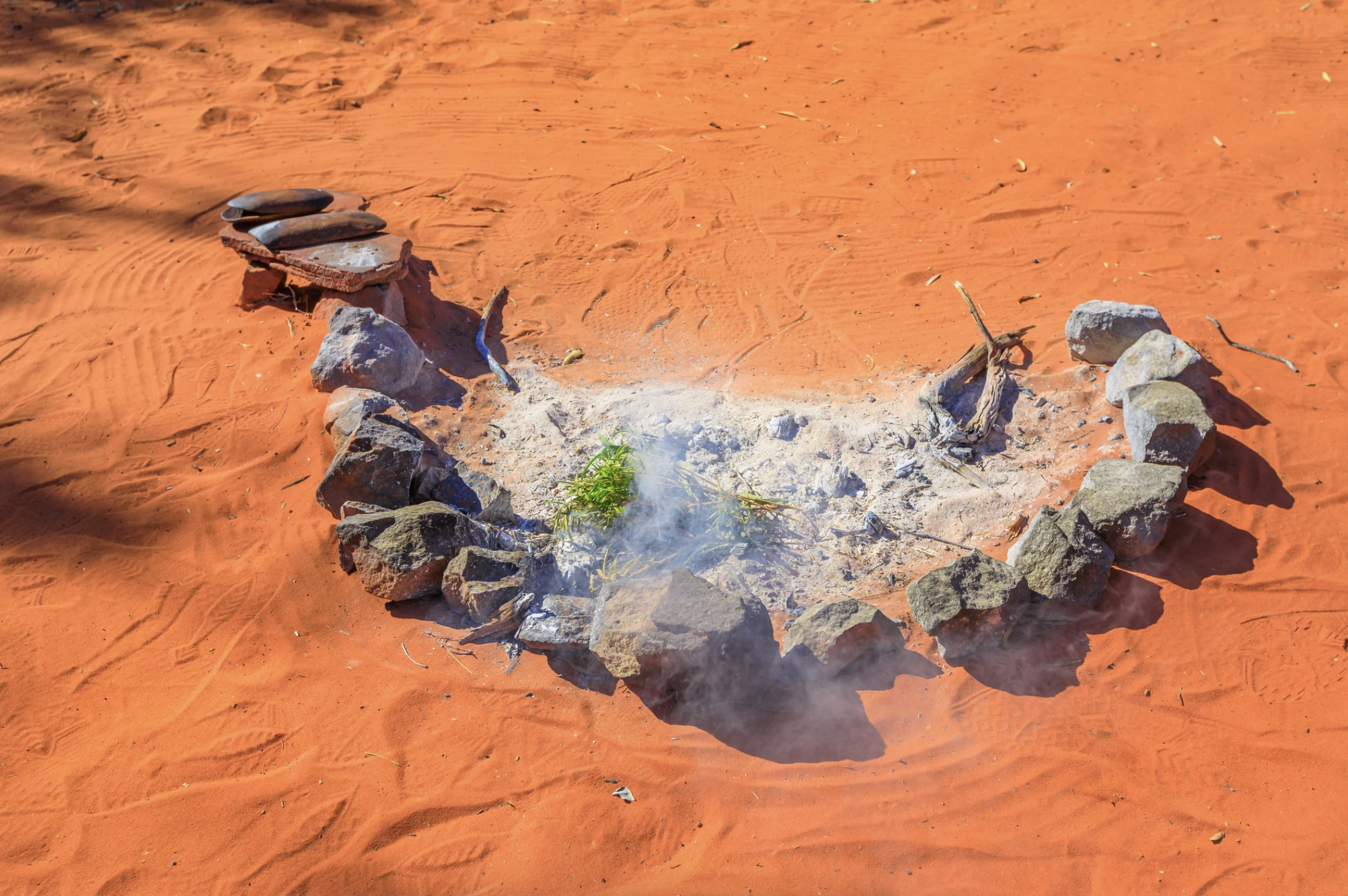
The Tingari Cycle Tingari Sacred Stories of the Pintupi People Pintupi Their Expression inAboriginal art
The Tingari Cycle Tingari one of the most sacred and complex sets of stories in the Aboriginal Dreamtime, specific to the Pintupi people Pintupi Australia’s central desert. These ancestral stories recount the epic journeys of groups of creator Ancestors who traversed the desert during the time of creation, shaping the landscape, establishing waterholes, and instituting the social laws that still structure Aboriginal culture today. The Tingari cycle Tingari a multi-layered structure of knowledge, revealed progressively during male initiations, ensuring that the most sacred aspects remain protected. InAboriginal art , the Tingari cycle Tingari a major source of inspiration since the Papunya movement in 1971. Aboriginal artists such as Bob Gibson Tjungurrayi, George Ward Tjungurrayi, Wentja Morgan Napaltjarri, and Turkey Tolson Tjupurrula have dedicated their careers to visually conveying these sacred stories through their exceptional Aboriginal paintings. Aboriginal paintings of the Tingari cycle Tingari characterized by concentric circles representing sacred sites, lines indicating ancestral journeys, and a dot painting technique that creates depth and texture. These works function simultaneously as art, spiritual maps of the territory, and documents of cultural preservation. The Tingari Cycle Tingari a true system of Aboriginal laws governing the social organization, relationship to the land, and ceremonial practices of the Pintupi people. Inma Galerie, a specialist inAboriginal art , offers an exclusive collection of authentic paintings from the Tingari Cycle, complete Tingari documentation and a guarantee of authenticity. Collecting a work from the Tingari cycle means becoming a guardian of a fragment of ancestral knowledge and actively participating in the preservation of this intangible cultural heritage of humanity.
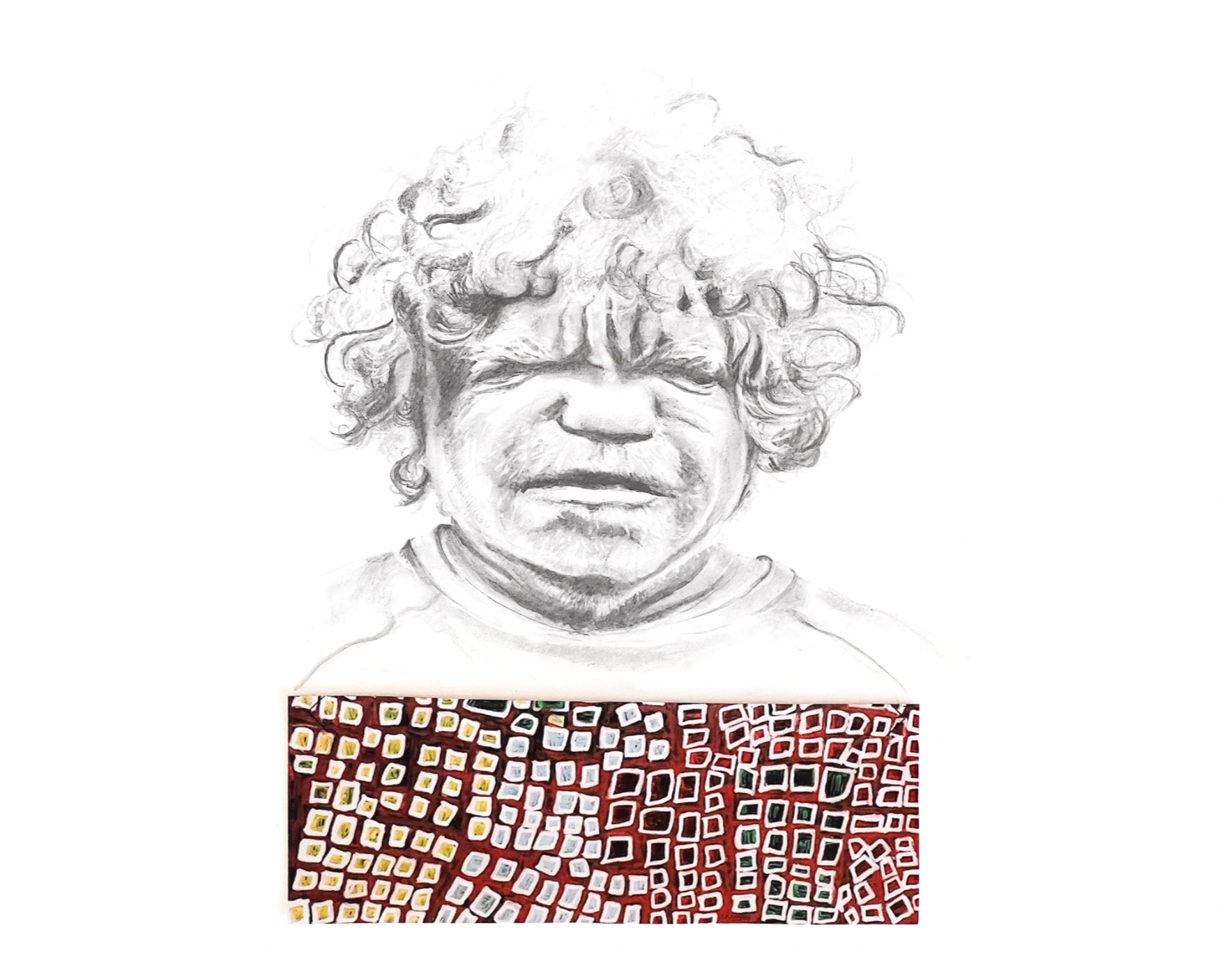
Bob Gibson Tjungurrayi: Master ofAboriginal art guardian of the Pintupi Dreaming
Bob Gibson Tjungurrayi (born around 1940) is one of the most important figures in contemporaryAboriginal art . A respected member of the Pintupi people, he embodies the generation of Aboriginal artists who transformed the sacred stories of the Dreamtime into a globally recognized artistic movement. Born in the Australian outback, Bob Gibson spent his early years living the traditional Pintupi nomadic lifestyle, which imparted to him a deep knowledge of Dreaming stories and sacred sites. The central theme of his Aboriginal art the Tingari cycle, a complex set of stories specific to the Pintupi people Pintupi the journeys of the creator Ancestors across the Gibson Desert. A longtime member of Papunya Tula Artists, the historic organization founded in 1972, Bob Gibson has developed a distinctive style characterized by balanced geometric compositions and an exceptional mastery of dot painting. His Aboriginal paintings use a subdued palette evoking the natural colors of the desert and accurately depict sacred sites and essential waterholes. Bob Gibson Tjungurrayi’s Aboriginal paintings are featured in the permanent collections of prestigious institutions such as the National Gallery of Australia and the Musée du Quai Branly. As a respected elder, he plays a crucial role in passing on artistic knowledge to younger generations Pintupi. Inma Galerie, a recognized specialist inAboriginal art , offers authentic works by Bob Gibson with full documentation via Papunya Tula Artists. Each acquisition represents a significant cultural investment and an active contribution to the preservation of millennia-old Aboriginal heritage.
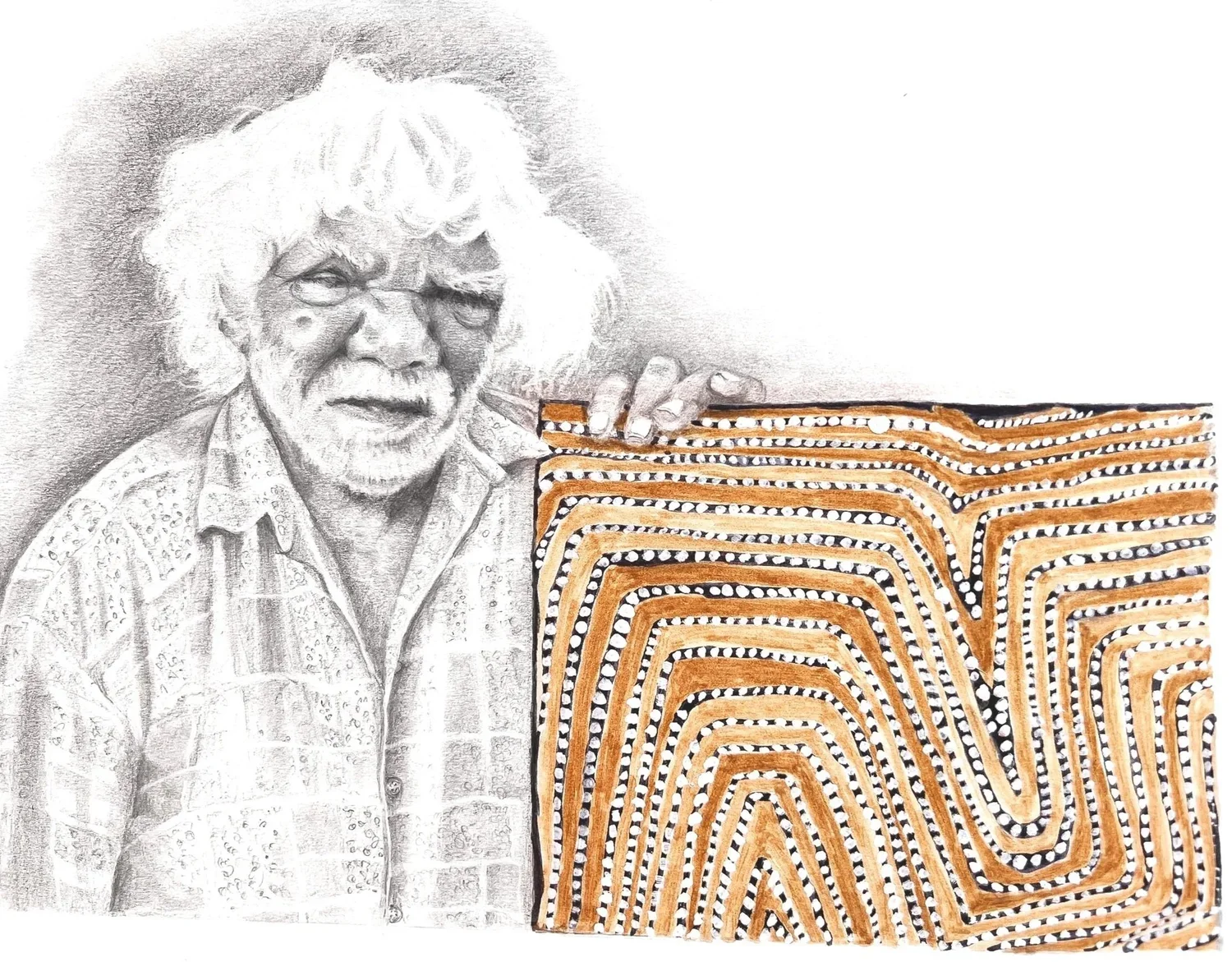
George Ward Tjungurrayi: Master of Central Australian Aboriginal Art
George Ward Tjungurrayi (c. 1943–2020) is one of the most respected Aboriginal artists in the AustralianAboriginal art movement. A member of the Pintupi people, he dedicated his life to passing down the sacred stories of the Dreamtime through his exceptional Aboriginal paintings. Born in the Gibson Desert, one of Australia’s most remote regions, George Ward Tjungurrayi lived according to ancestral traditions before becoming a pillar of the artistic community in Kintore and Kiwirrkura. His Aboriginal art a deep understanding of the land and the ancestral stories that shape it. The dominant theme of his work is the Tingari cycle, a complex set of Dreaming narratives unique to the Pintupi people Pintupi the journeys of the creator Ancestors across the desert. His style is distinguished by balanced geometric compositions, a subdued palette evoking the colors of the desert, and an exceptional mastery of dot painting (Aboriginal pointillism). George Ward Tjungurrayi’s Aboriginal paintings are featured in major international collections, from the National Gallery of Australia to the Musée du Quai Branly. His sister, Lorna Ward Napanangka, is also a renowned artist, illustrating the family’s transmission of artistic knowledge. Inma Galerie, a specialist inAboriginal art , offers authentic works by this master artist with complete documentation and a guarantee of authenticity. Each painting tells a story from the Dreaming, keeping alive the spiritual connection to the Central Desert.
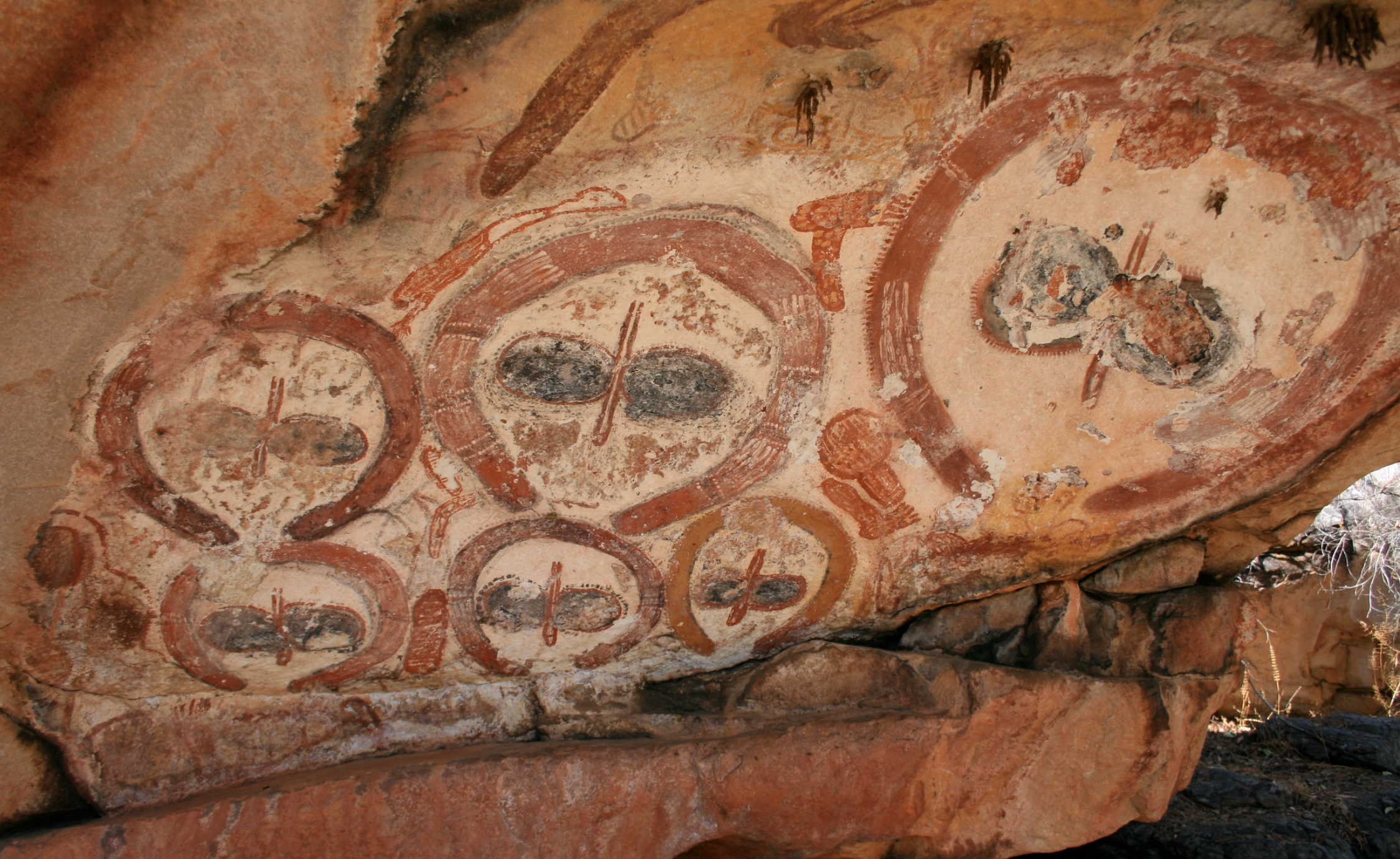
Symbols in Aboriginal Art: Decoding the Ancestral Visual Language
Les symboles aborigènes constituent un langage visuel sophistiqué qui a permis aux peuples autochtones australiens de transmettre histoires, lois et savoirs pendant plus de 65 000 ans. Chaque peinture aborigène est bien plus qu'une composition esthétique : c'est un récit codifié où chaque motif, chaque forme, chaque couleur possède une signification précise ancrée dans le Dreaming (Temps du Rêve). Le cercle est sans doute le symbole le plus emblématique de l'art aborigène, représentant les points d'eau sacrés, sites cérémoniels et lieux de campement créés par les Ancêtres. Les cercles concentriques amplifient cette signification, indiquant des points d'eau profonds et permanents ou des sites de grande puissance spirituelle. Les lignes dans les peintures aborigènes possèdent de multiples significations : chemins parcourus par les Ancêtres créateurs, rivières créées par le Serpent Arc-en-ciel, pluie tombant du ciel ou racines souterraines de plantes sacrées. La technique du dot painting (pointillisme aborigène) est devenue l'esthétique la plus reconnaissable de l'art aborigène contemporain, les dots représentant graines, étoiles, feu ou empreintes. Comprendre ces symboles dans l'art aborigène transforme radicalement l'expérience du spectateur : ce qui pourrait sembler abstrait révèle soudain des cartes spirituelles, des récits mythologiques et des connaissances écologiques millénaires. Chez Inma Galerie, spécialiste de l'art aborigène australien, chaque tableau aborigène est accompagné d'une documentation détaillée expliquant les symboles et le récit du Dreaming représenté.
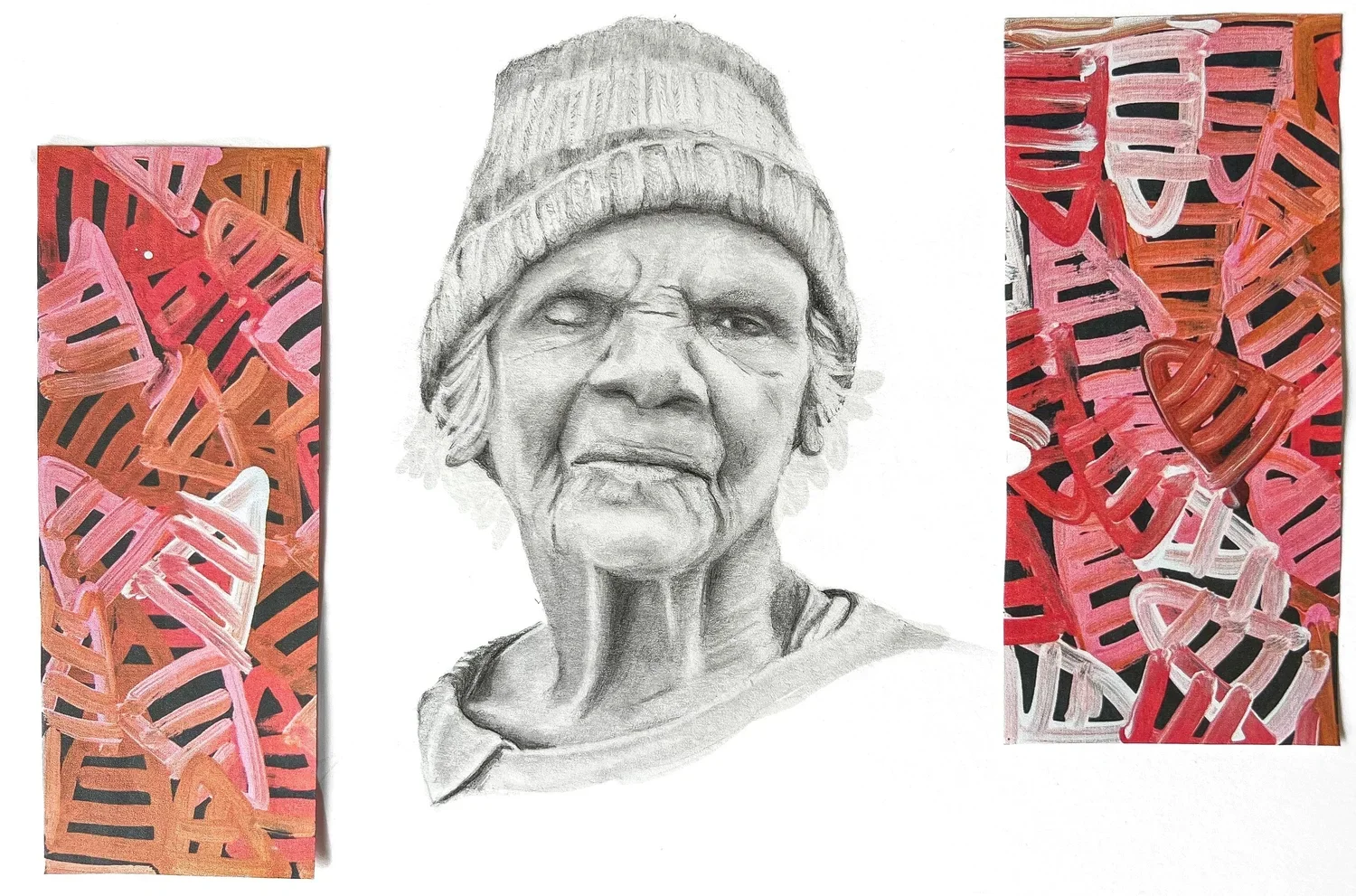
Emily Pwerle: Guardian of Awelye ceremonies and master of Aboriginal art from Utopia
Emily Pwerle (née entre 1922 et 1930) incarne la force créatrice des femmes aborigènes d'Utopia. Née dans cette communauté légendaire située à environ 350 km au nord-est d'Alice Springs dans le Territoire du Nord, elle appartient aux peuples Anmatyerre et Alyawarre, deux groupes linguistiques majeurs du désert central australien. Son art aborigène puissant et spirituellement chargé témoigne de la richesse des traditions féminines ancestrales. Emily Pwerle appartient à l'une des familles les plus illustres de l'art aborigène australien. Sa sœur aînée, Minnie Pwerle (v. 1910-2006), est une figure légendaire de l'art aborigène contemporain. C'est sous l'impulsion de sa nièce Barbara Weir qu'Emily a commencé à peindre de manière professionnelle au début des années 2000. L'art aborigène d'Emily Pwerle est profondément ancré dans les traditions spirituelles de son peuple, se rapportant le plus souvent aux cérémonies féminines Awelye Atnwengerrp, rituels sacrés réservés aux femmes. Les peintures aborigènes d'Emily évoquent avec force les motifs corporels rituels peints sur les corps des femmes lors des cérémonies. L'art aborigène d'Emily Pwerle se caractérise par des lignes dynamiques et expressives qui traversent la toile avec une énergie palpable. Le résultat de ces techniques est une explosion vibrante de couleurs qui captive immédiatement le regard.

Wentja Morgan Napaltjarri : l'héritière du désert de Gibson et du Dreaming Tingari
Wentja Morgan Napaltjarri (1944-2021) est une figure majeure de l'art aborigène contemporain. Originaire du désert de Gibson, cette artiste exceptionnelle a porté dans ses peintures aborigènes la sagesse ancestrale du peuple Pintupi et la mémoire du Dreaming Tingari.
Fille de Shorty Lungkata Tjungurrayi, fondateur du mouvement de peinture aborigène, Wentja a grandi en suivant les traces des Hommes Emeu Ancestraux à travers le désert. Déracinée en 1948, elle et sa famille ne retournèrent jamais sur leurs terres. Ce déracinement alimensa profondément son art.
Sa carrière débuta seulement en 1995-96 à Mt Liebig, mais son ascension fut fulgurante. Elle devint rapidement l'une des artistes aborigènes les plus recherchées.
Wentja représentait son totem principal par des cercles concentriques symbolisant les points d'eau et sites sacrés. L'espace rempli de dots entre ces cercles représente les graines - symbole d'abondance dans le désert.
Le mystère demeure au cœur de son art : beaucoup d'informations restent volontairement cachées, accessibles uniquement aux initiés du Dreaming Pintupi.

George Hairbrush Tjungurrayi : maître du minimalisme et de l'abstraction dans l'art aborigène
George Hairbrush Tjungurrayi, né vers 1947 à Kiwirrkurra près de Kintore dans le désert central australien, est reconnu comme l'un des maîtres absolus de l'art aborigène contemporain. Arrivé à Papunya en 1962, berceau du mouvement de peinture aborigène moderne, il ne commence à peindre pour lui-même que dans les années 1976-1980. Ses premières œuvres, consacrées au cycle sacré Tingari, utilisent l'iconographie classique : cercles en pointillés et lignes de traverse. Dans les années 1990, avec son frère Willy, Turkey Tolson Tjupurrula, Ronnie Tjampitjinpa et Mick Namarari, il révolutionne l'art aborigène en développant un style minimaliste abstrait. Ses compositions aux lignes parallèles créent un effet optique saisissant qui dialogue avec le minimalisme occidental tout en préservant la profondeur spirituelle de la tradition aborigène.

Gloria Petyarre : pionnière et icône de l'art aborigène australien
Gloria Petyarre (1942-2021) est l'une des figures majeures de l'art aborigène australien contemporain. Artiste prolifique originaire d'Utopia, elle a marqué l'histoire en devenant en 1999 la première artiste autochtone à remporter le prestigieux Wynne Prize for Landscape, transformant à jamais la reconnaissance de l'art aborigène sur la scène internationale.
Membre de la légendaire fratrie des sept sœurs Petyarre, Gloria a débuté sa carrière avec le batik dans les années 1970 avant de se consacrer à la peinture acrylique à partir de 1988. Son évolution artistique l'a menée des peintures corporelles traditionnelles vers une abstraction sophistiquée, explorant de multiples récits du Dreaming : Graines d'Herbe, Igname Crayon, Émeu, Haricot.
Les vingt dernières années de sa carrière ont été dédiées au thème qui l'a rendue mondialement célèbre : les Bush Leaves (feuilles du bush). Ces peintures aborigènes, représentant les plantes médicinales et sacrées du désert australien, sont aujourd'hui présentes dans les plus grandes collections internationales. Inma Galerie, spécialiste de l'art aborigène contemporain, propose une sélection exclusive d'œuvres authentiques de cette artiste légendaire.
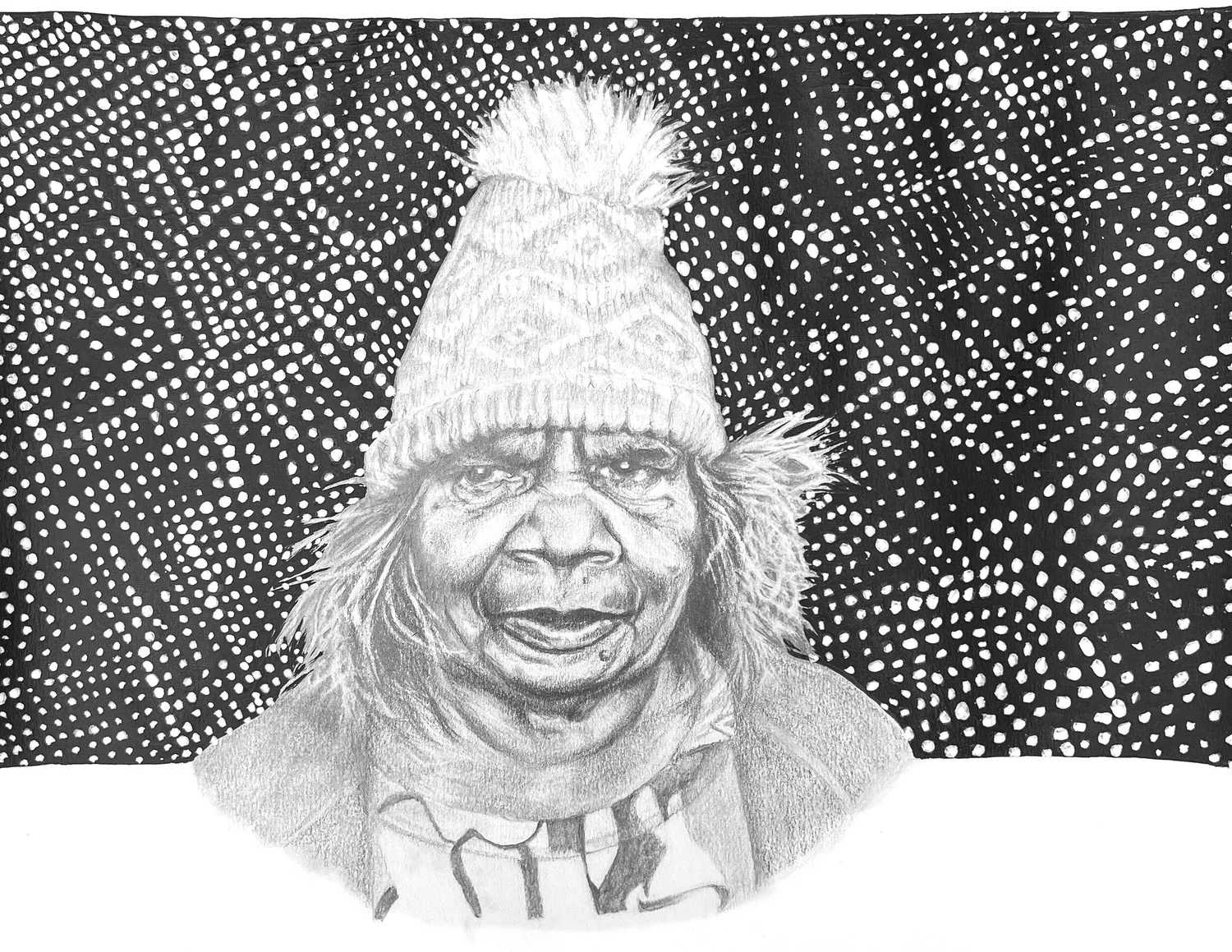
Lilly Kelly Napangardi : maîtresse des dunes de sable dans l'art aborigène contemporain
Découvrez Lilly Kelly Napangardi, artiste aborigène Warlpiri née en 1948, célèbre pour ses peintures "Tali" (dunes de sable) au pointillisme hypnotique. Collection exclusive d'œuvres authentifiées chez Inma Galerie, spécialiste de l'art aborigène australien contemporain. Investissement patrimonial et beauté ancestrale garantis.
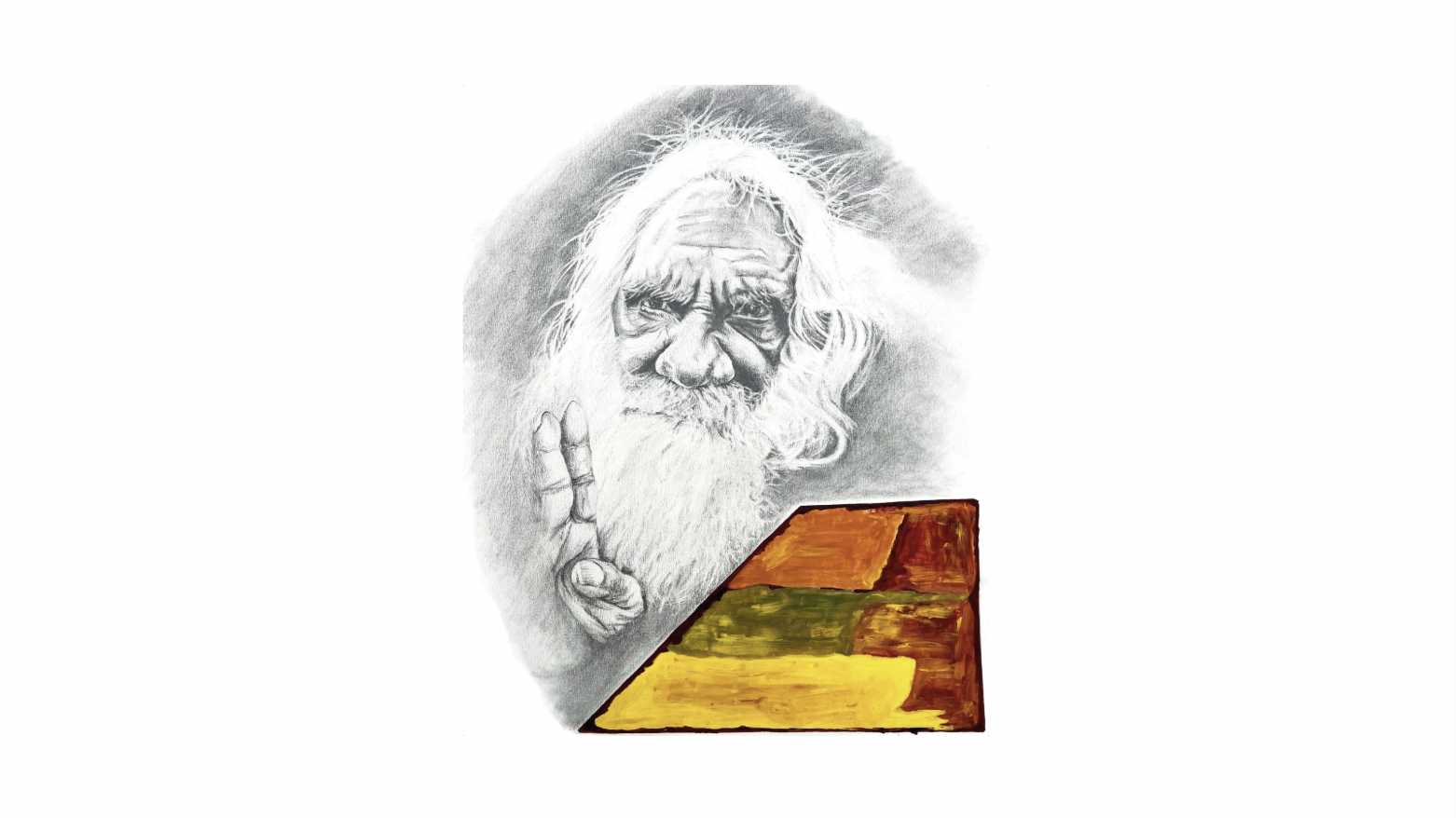
Kudditji Kngwarreye : maître de l'art aborigène contemporain d'Utopia
Kudditji Kngwarreye (1928-2017) a révolutionné l'art aborigène australien par son approche unique de la peinture contemporaine. Né dans la communauté d'Utopia au cœur du désert central, ce maître de l'art aborigène a abandonné le pointillisme traditionnel pour développer une technique à la brosse qui offre une vision aérienne saisissante de son territoire ancestral.
Gardien de sites cérémoniels sacrés et héritier de multiples "rêves" aborigènes, Kudditji transforme ses toiles en fenêtres spirituelles sur l'âme du désert australien. Ses œuvres "My Country", aux compositions colorées qui rappellent les abstractions de Rothko, sont aujourd'hui présentes dans les plus grandes collections internationales.
Inma Galerie vous propose de découvrir l'univers fascinant de cet artiste d'exception à travers une sélection exclusive d'œuvres authentifiées. Un investissement patrimonial qui vous connecte à l'art aborigène contemporain le plus innovant.