
Australian Aboriginal artists
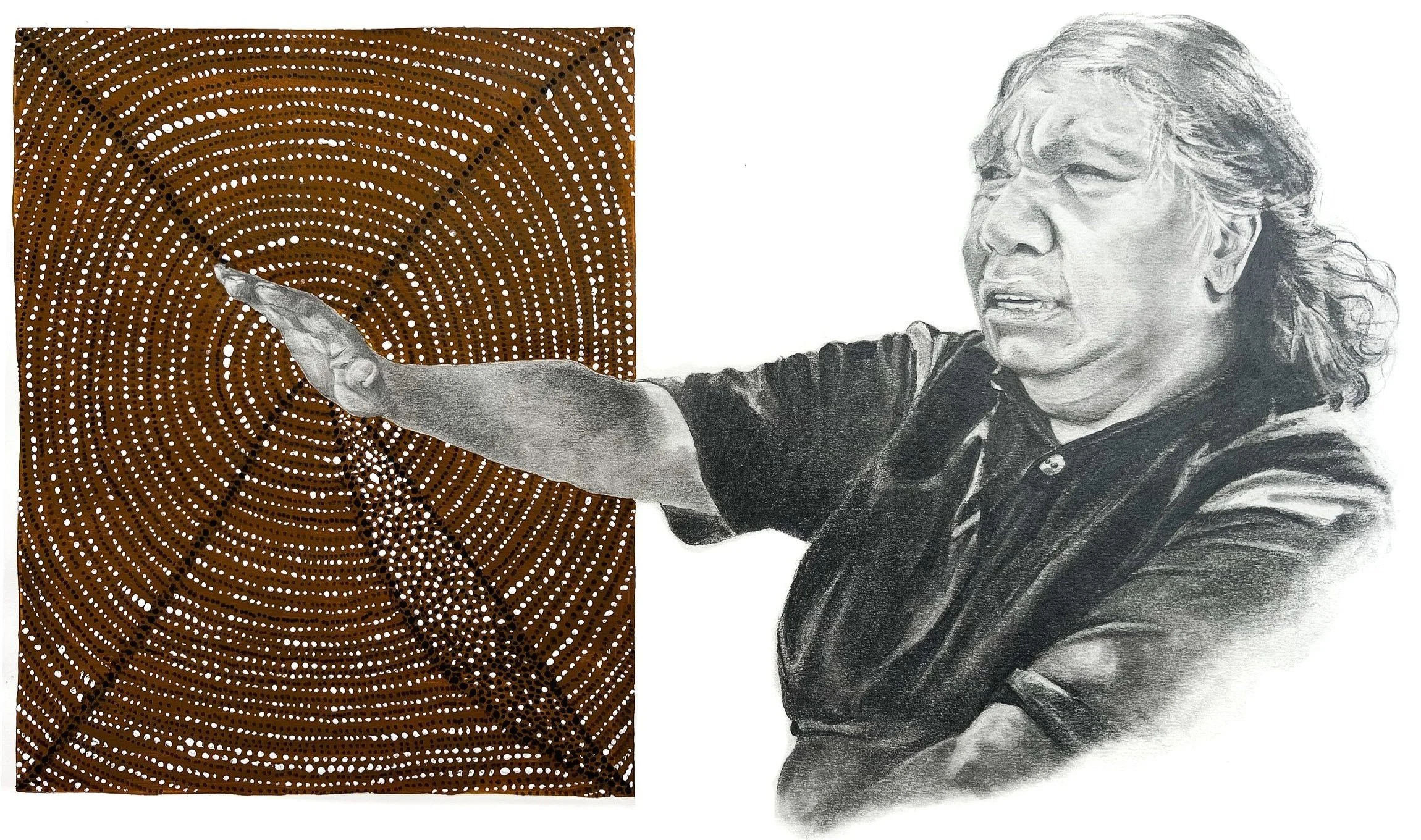
Kathleen Petyarre
Kathleen Petyarre is one of the most prominent Aboriginal artists. Featured in numerous museums, including the Quai Branly in Paris and the Confluences in Lyon, she has enjoyed growing success since her first paintings in the mid-1980s.
In 1996, she received the Telstra National Aboriginal Art Award, the most prestigious accolade awarded to an Aboriginal painter, propelling her onto the international stage.
Born in 1940 in Utopia, approximately 250 km northwest of Alice Springs, Kathleen inherited the stories and rights from her parents of which she is the custodian, reproducing them in her distinctive style of filling canvases with small dots arranged in complex, refined compositions.
Among the "dreams" and sites referenced in her work are the Bush Seed Dreaming (often titled "My Country"), the Dingo Dreaming, and above all the Mountain Devil Lizard Dreaming (linked to her birthplace, Atnangker), which forms the core theme of her art.
Kathleen – who passed away in 2018 – is the sister of Gloria Petyarre and the grandmother of Abie Loy Kemarre, whom she helped mentor.
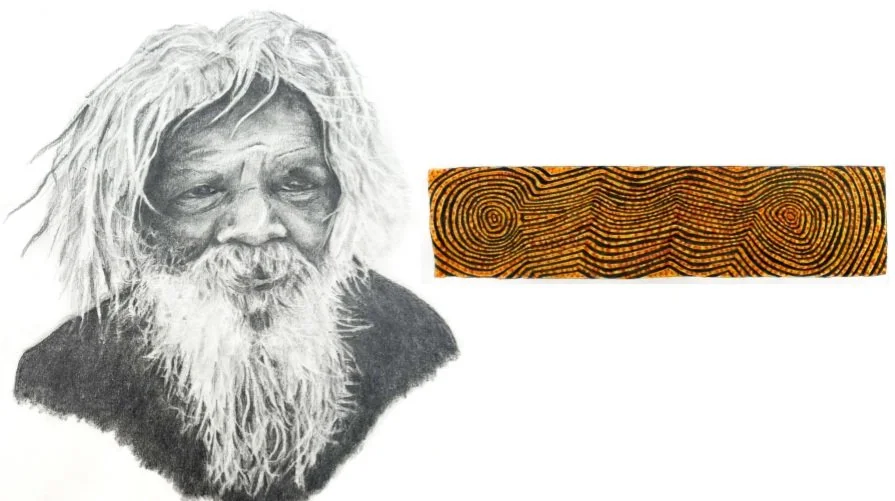
Charlie Tjapangati
Charlie Tjapangati, known as "Charley," was born around 1949 near Juniper Well in the Western Desert. In 1946, his group was brought to Papunya under the assimilation policy, enabling him from a very young age to become familiar with the early works of those who would later be known as the Desert Painters.
Following his initiation, he married Numida Nampitjinpa, the daughter of Uta Uta Tjangala, with whom he collaborated on a celebrated canvas depicting the site of Umari, east of Mount Webb.
Charley painted his first canvases starting in 1978 and quickly gained renown, which allowed him to accompany artist Billy Stockman Tjapaljarri for an exhibition in the United States. He settled in Kintore in 1982.
Known for his meticulous work and complex linear patterns with sumptuous optical effects, Charlie paints "stories" or "dreams" related to the Tingari ceremonial cycle and, as an initiated man, participates in large-scale men's collaborative works.
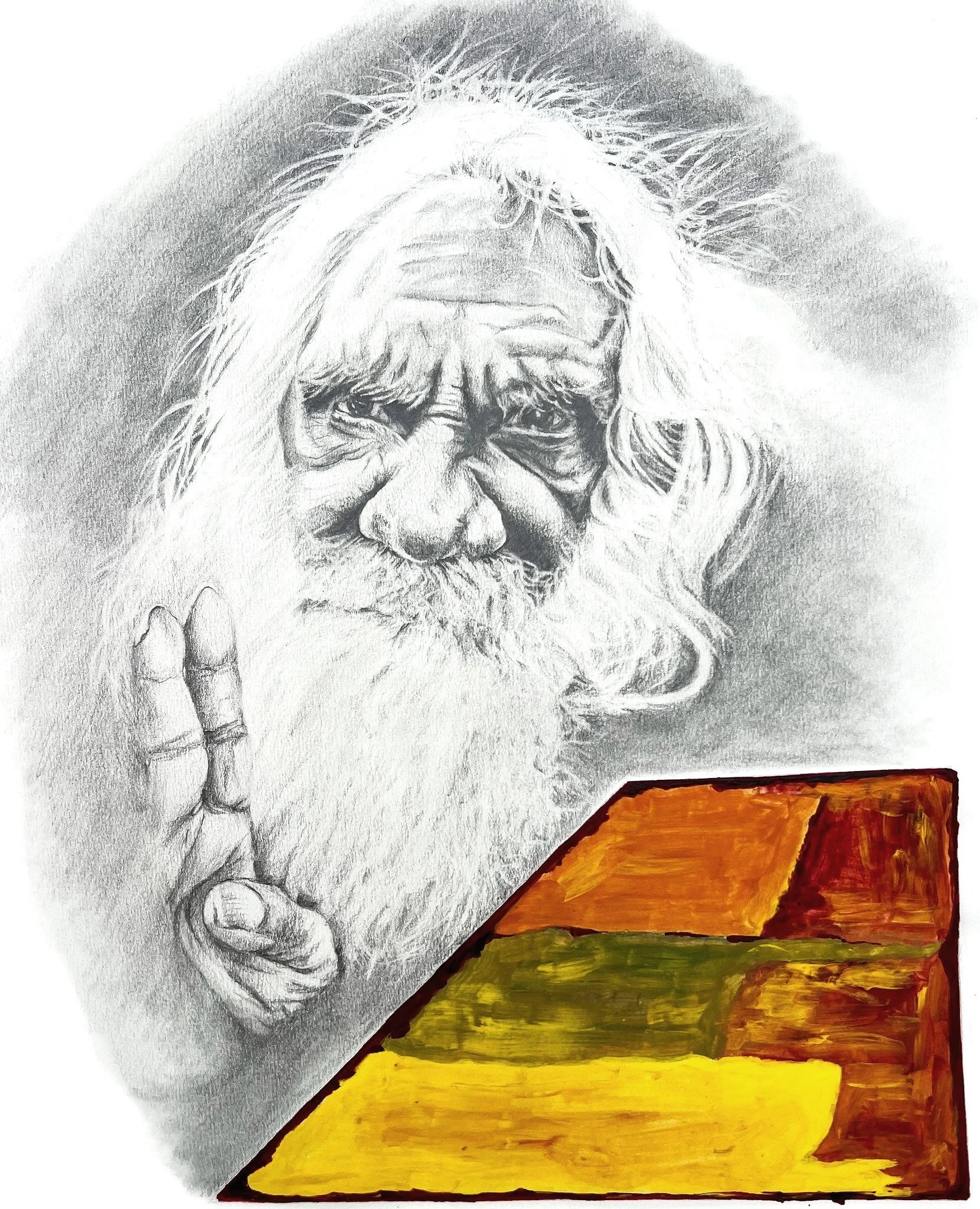
Kudditji Kngwarreye
Kudditji Kngwarreye holds a unique place within the Desert Aboriginal art movement.
Born around 1928 in Utopia, he had a traditional bush childhood and first worked as a stockman and then as a gold miner.
Kudditji (phonetically Goo-beh-Chee) is the heir to several important "dreams" and the custodian of sacred ceremonial sites reserved for men's business. Most of his canvases reference these under the title My Country.
Although initially, when he began painting in 1986, his modern and intuitive style featuring broad blocks of color was not well-received by gallerists, he gradually came to be recognized as one of the most innovative artists. Working with a brush like his sister, the highly celebrated Emily Kame – who also moved away from dot painting – he offers a vision of his country seen from above through compositions where colors, chosen according to the seasons and locations, are harmoniously juxtaposed. The result is reminiscent of Rothko's expanses.
Deeply original and highly personal, his works are now found in all major collections. He passed away in 2017.
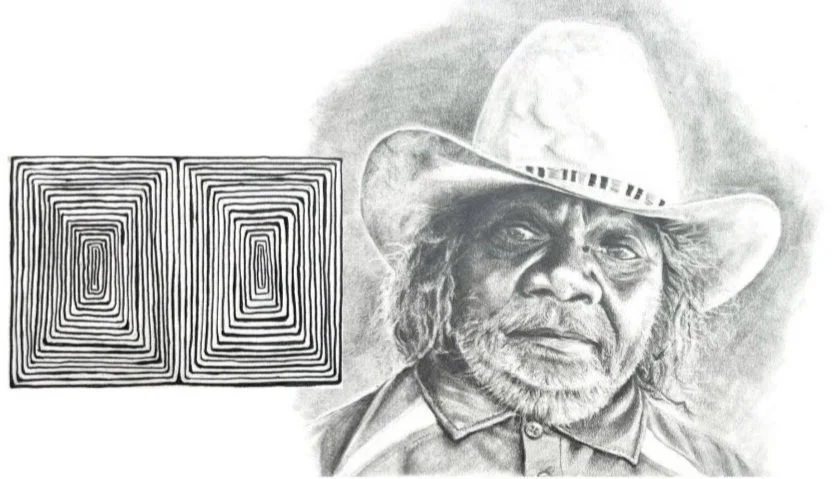
George Hairbrush Tjungurrayi
Born in Kiwirrkurra near Kintore around 1947, George Hairbrush Tjungurrayi arrived in Papunya in 1962. He did not begin painting for himself until the late 1970s.
In his early days, his work was quite classical, focusing on ceremonies and stories related to the journey of the Ancestors during the Tingari cycle. His paintings consist of dotted circles connected by intersecting lines.
In the 1990s, however, alongside his brother Willy and other major artists such as Turkey Tolson Tjupurrula, Ronnie Tjampitjinpa, and Mick Namarari, he ushered in a new phase of the desert painting movement.
He then developed a more personal minimalist and abstract style, characterized by parallel lines and geometric patterns that vibrate rhythmically, creating a striking optical effect.
The works of George Hairbrush Tjungurrayi are featured in all major museums dedicated to indigenous and tribal arts in Europe, America, and, of course, Australia.
He is one of the most sought-after contemporary masters.
Ningura Napurrula
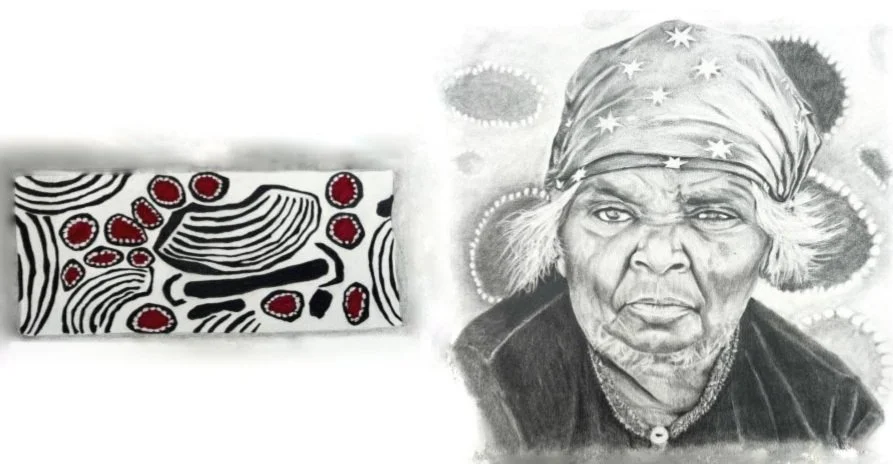
Ningura Napurrula, an iconic figure in Australian Aboriginal art, was born around 1938 in Watulka, in the Gibson Desert (Northern Territory). In 1962, she left her homeland with her husband, Yala Yala Gibbs Tjungurrayi, one of the six Papunya Movement artists chosen by Bardon to receive an Australian government grant to paint full-time. The couple settled permanently in Papunya in 1963.
Ningura did not start painting until the 1990s, influenced by her husband's vision, the inventor of the "Tingari" style. She also helped preserve and promote Pintupi traditions and women's themes, co-founding the Pintupi Women's Painting Movement, born at Pintore.
In 2002, she won the prestigious Alice Prize, and a few years later, inspired by her cherished symbols, she created the ceiling and wall design for the first floor of the Musée du Quai Branly, securing her international renown.
Ningura creates large-scale works, often in two colors – black and white, or red and white. Her white "dot" motifs form a lattice pattern standing out against the black background, creating a striking sense of depth. Her refinement and attention to detail make her a remarkable artist whose works have been exhibited in major cities across Australia, Asia, Europe, and the United States. She passed away in 2013.
Judy Watson Napangardi
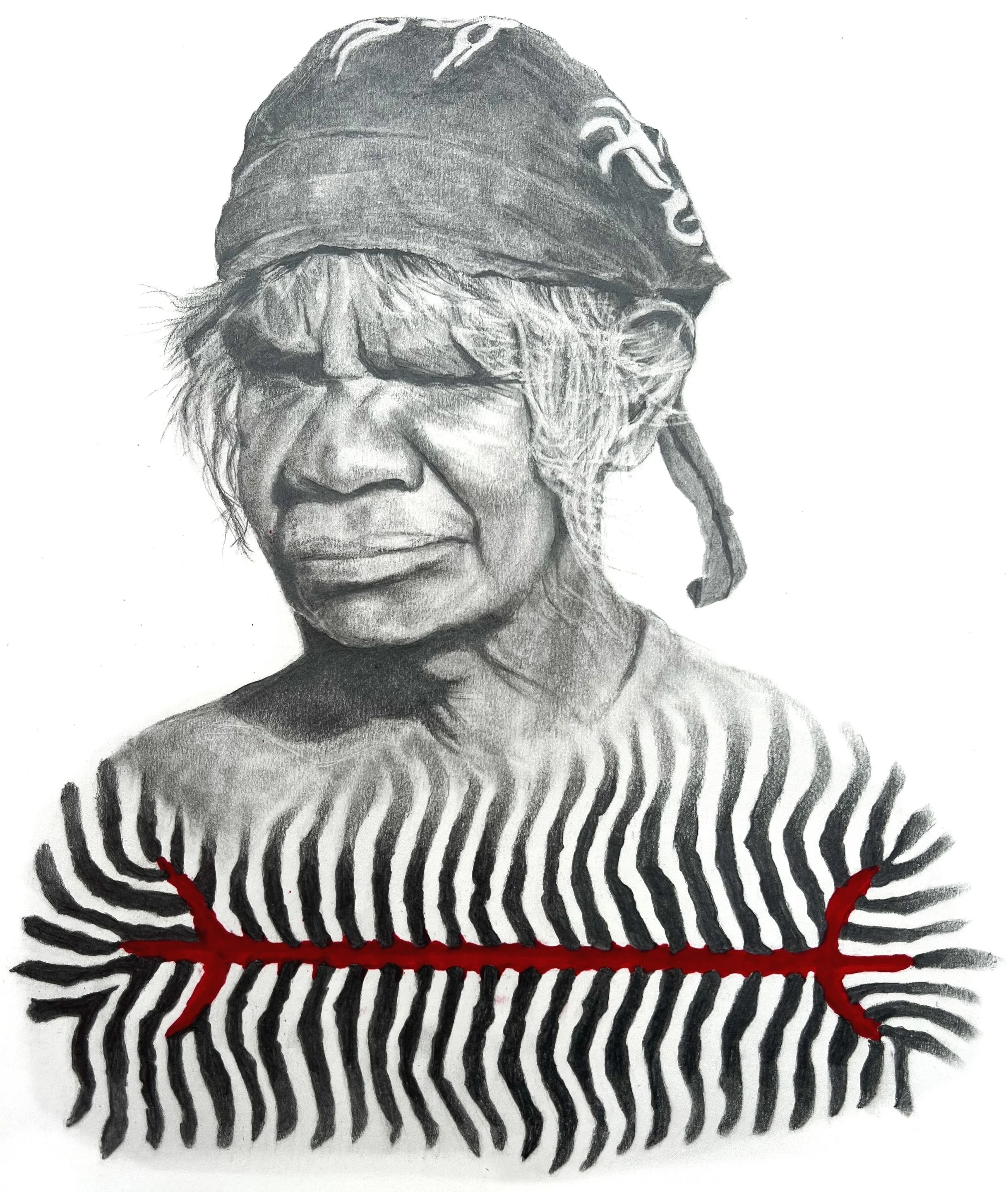
Born in the 1930–1935 period at Yarungkanji, northwest of Alice Springs, Judy Watson Napangardi initially led a traditional semi-nomadic hunter-gatherer life like many Warlpiri of her generation. She divided her time between Mina Mina and Yingipurlangu, ancestral lands located on the edge of the Gibson and Tanami deserts.
Renowned for her incredible energy, this woman raised 10 children in this desolate environment before settling in Yuendumu (the second village after Papunya to engage in the Western Desert painting movement) with her sister Maggie, who taught her to paint. In 1986, she began producing work for the community art centre and quickly became a prominent artist until her passing in 2016.
Her works, featuring complex and colorful patterns (sometimes in black and white), reveal a wealth of information about the history, rituals, and myths of the sites she depicts. Two themes dominate with remarkable force and movement: women's ceremonies at Mina Mina and the hairstrings worn during initiations.
Numida Nampitjinpa
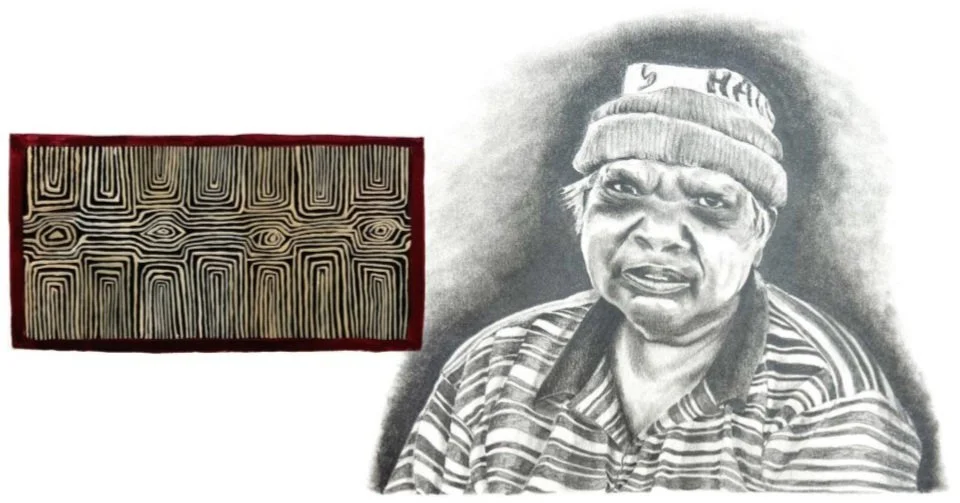
Born around 1954, Numida Nampitjinpa is the wife of Charlie Tjapangati, renowned for his depictions of the Tingari ceremonial cycle, and the daughter of Manbala Napanangka, one of the first women to join the Papunya Tula art movement. Rooted in a lineage of influential artists, Numida continues this rich cultural tradition.
Her work, notable for its remarkable finesse and delicacy, is distinguished by a geometry of meticulously drawn lines, often converging toward a central point or axis. This precision is accompanied by a subdued yet harmonious color palette, giving her pieces a timeless elegance.
Numida lives in Kiwirrkura, Western Australia, where she continues to produce works deeply rooted in Pintupi culture and her community's sacred stories.
Yinarupa Nangala
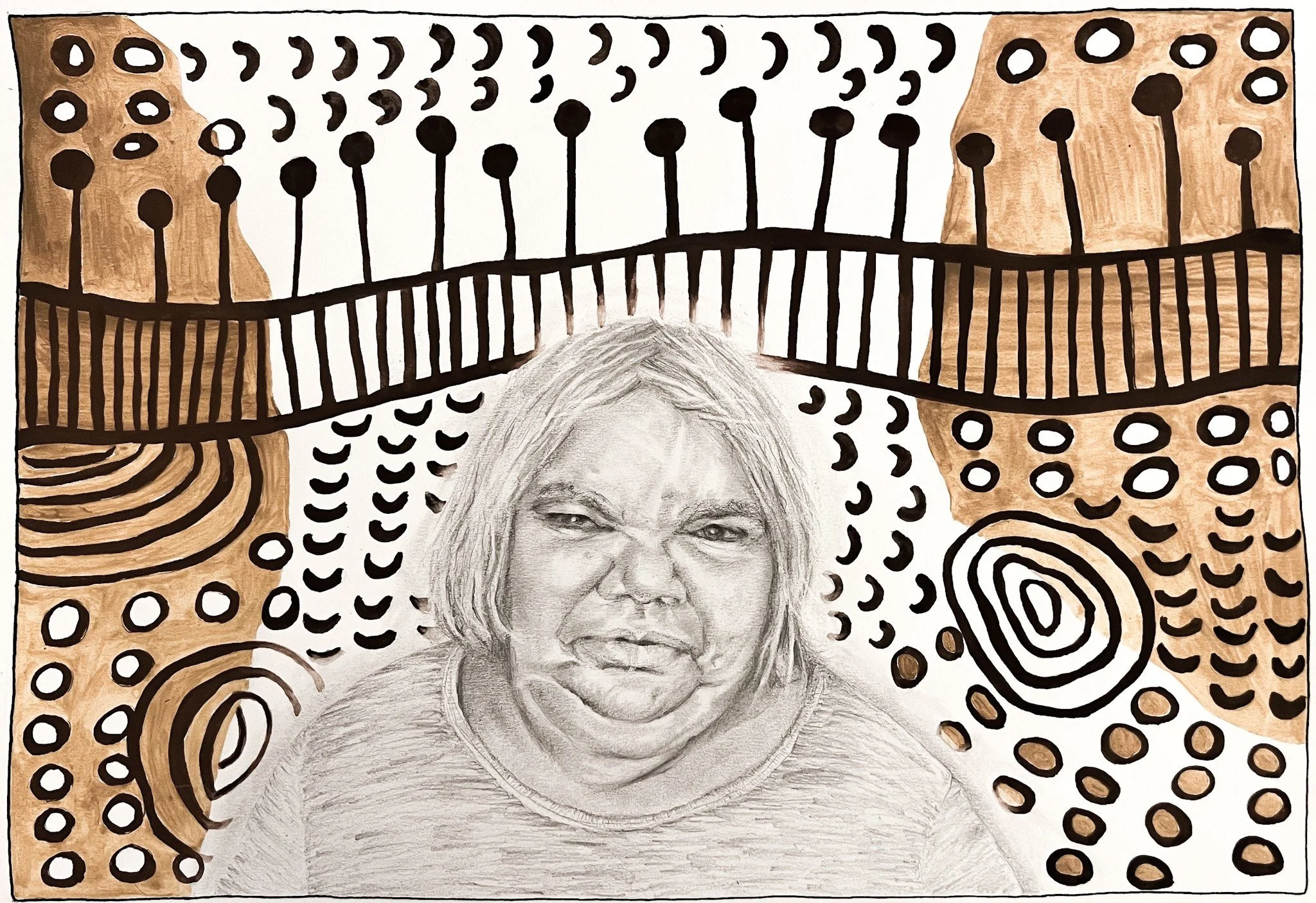
Yinarupa Nangala is a Pintupi woman born around 1960 near Mukula, Western Australia, in the region where the Kiwirrkurra community is located today. She was the co-wife (alongside Ningura Napurrula and others) of another great Papunya Tula artist, Yala Yala Gibbs Tjungurrayi. She is thus related by marriage to George Ward and Willy Tjungurrayi.
Yinarupa began painting in 1996, but her work initially received only moderate interest. Things changed gradually from 2005 onwards, when her rather austere style was recognized for what it is—classic Pintupi art—earning her numerous awards, including the prestigious Telstra Award (in 2009).
Using primarily black and white along with the dot technique, her works offer a lively, aerial view of her homeland in Mukula and particularly the sacred site of Ngamurru, a gathering place for women where numerous ceremonies take place.
The Ngamurru region is known for its abundance of wattle seeds, which are ground into flour and baked into damper to be consumed during ceremonial rites. In addition to the representation of women as 'U' shapes, the various elements featured in Yinarupa's canvases include landscape features such as waterholes and bush tucker (for example, kampararpa berries represented by hooks). The composition evokes with delicate detail the journeys of the ancestral women across this region during the Dreamtime.
Today, Yinarupa Nangala (also known as Yinarupa Gibson Nangala) divides her time between her community of Kiwirrkurra and Alice Springs. She is considered a key figure of the second generation of Aboriginal painters, undeniably destined to play a major role in the future development of Papunya Tula.

Ronnie Tjampitjinpa
Ronnie Tjampitjinpa paints motifs associated with the Tingari Cycle, but also tackles other themes, such as his impressive "Fire Dreaming" or his fascinating "Water Dreams." Initiated in his youth according to Pintupi tradition, he puts a precious part of his knowledge on canvas, symbolically evoking the journeys of the Tingari ancestors who shaped the landscapes of his country. This type of painting—simple in appearance with its parallel lines or cascading rectangles, yet strikingly rich upon closer inspection—has made him a sought-after artist. Through his works, he traces the paths followed by mythological heroes during the Dreamtime.
Born in 1943 near Kintore, about 500 km west of Alice Springs, Ronnie Tjampitjinpa joined the pictorial movement initiated by Geoffrey Bardon in the 1970s. He was among the first Pintupi men to embrace art not only as a mode of expression, but also as a powerful means of preserving and transmitting their cultural heritage. Thanks to his unique approach and the strength of his compositions, he quickly established himself as a prominent figure in the movement, influencing many artists.
Throughout her career, her talent has been celebrated for its unique blend of traditional and contemporary elements, bold geometric compositions, and innovative use of color. Hypnotic and deeply symbolic, her paintings are not only visually stunning but also anchored in the history and beliefs of her people. Through each work, she weaves a connection between past and present, the sacred and the aesthetic.
Ronnie passed away in June 2023, leaving a lasting mark on contemporary Aboriginal art. A respected figure within his community, he was nicknamed the "King of Kintore," a testament to the admiration he inspired. His legacy continues to inspire those who discover his works, perpetuating the history and memory of the Tingari ancestors through the universal language of art.

Gloria Petyarre
Gloria (1942–2021) is one of Utopia's most prolific and influential artists. A pioneer in many ways! She is part of the legendary sibling group of the 7 Petyarre sisters, all artists, including Kathleen, the most prominent, Nancy, Violet, and Ada Bird.
Like many others between 1975 and 1985, Gloria first gained recognition for her work with batik. She turned to acrylic and canvas painting in 1988 and became the first Indigenous artist to win a major Australian art prize, the highly prestigious "Wynne Prize for Landscape" (in 1999), forever altering the perception of and enthusiasm for Aboriginal art.
Her initial subject matter was inspired by body painting. She clearly depicted the designs painted on women's chests and shoulders during ceremonies. Subsequently, she expanded her style to higher levels of abstraction, continually experimenting with new techniques and multiplying the narratives she illustrated, such as the Grass Seed, Pencil Yam, Emu, Bean, or Small Brown Grass Dreamings.
Over the last 20 years of her career, she focused on the theme of 'Bush Leaves', medicinal and sacred plants, a theme that brought her worldwide renown and a place in all major collections. She leaves behind an exceptional artistic legacy that continues to inspire generations of Indigenous artists and captivate art lovers around the world.
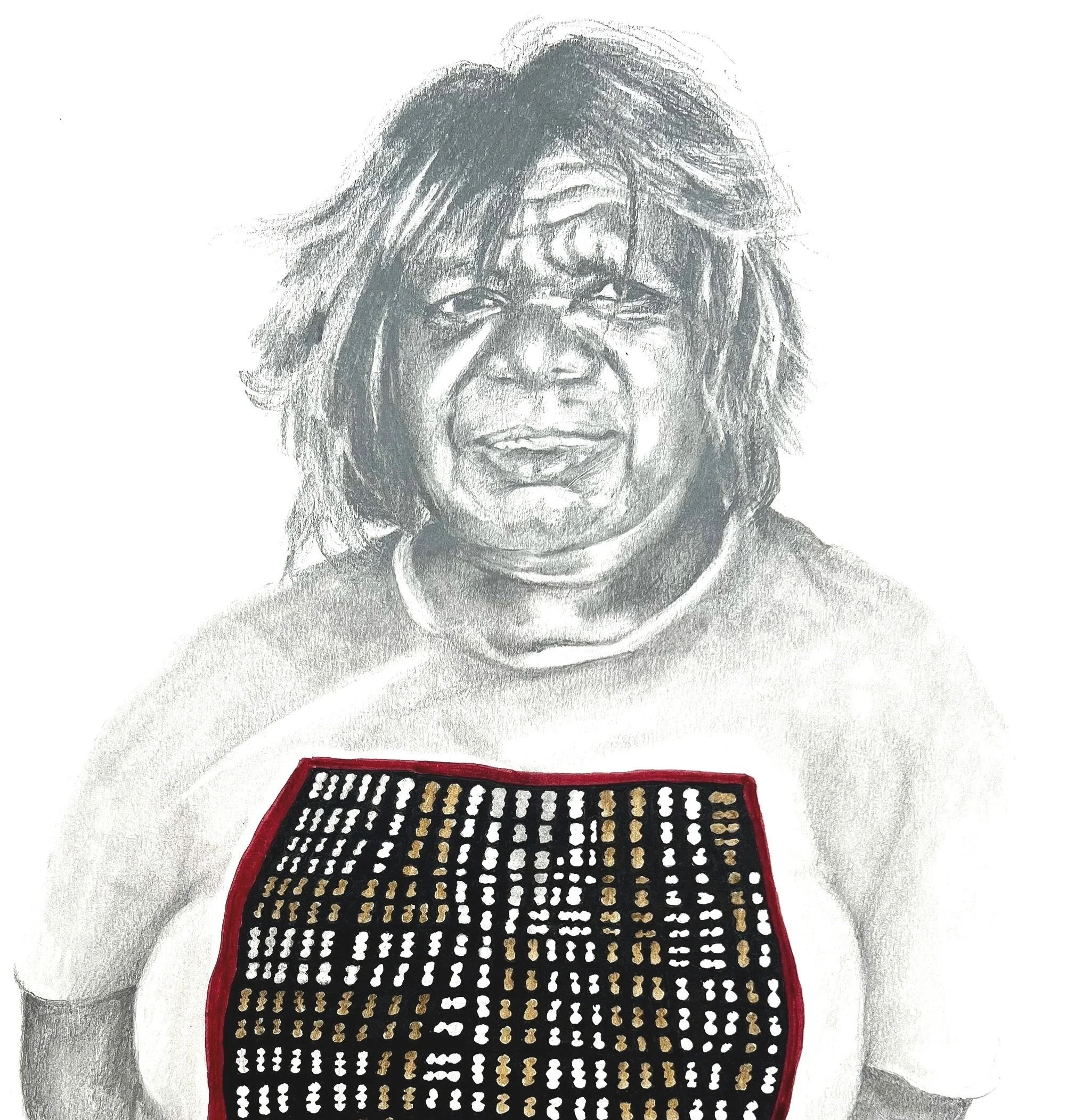
Lorna Ward Napanangka
Hundreds of fine brushstrokes, themselves made up of multiple dots, align next to each other across the canvas in a very loose grid, creating an impression of intense life. This painting illustrates events that originally took place at the Marrapinti rockhole. According to ancient stories, a group of female Ancestors camped there permanently and brought life to the place.
The grid-like motif literally represents a symbolic map of the region. The site is also associated with nose-piercing rituals for Pintupi women. It is a major theme for Lorna Ward Napanangka, who serves as its custodian and celebrates it in her own way through an extremely refined and rhythmic pictorial style.
Born in Papunya in 1961, Lorna is the daughter of first-generation artist Timmy Payungka Tjapangardi. She began painting in 1996 while living in Kintore, but her reputation grew after participating in the collaborative artwork Kiwirrkurra Women's Painting.
Lorna Ward Napanangka has exhibited her work since 2000 in Australia and abroad. Her work has often been compared to that of Dorothy Napangardi. Demonstrating a great mastery of space and surprisingly modern compositions, she is seen by many as a leading figure of her generation.
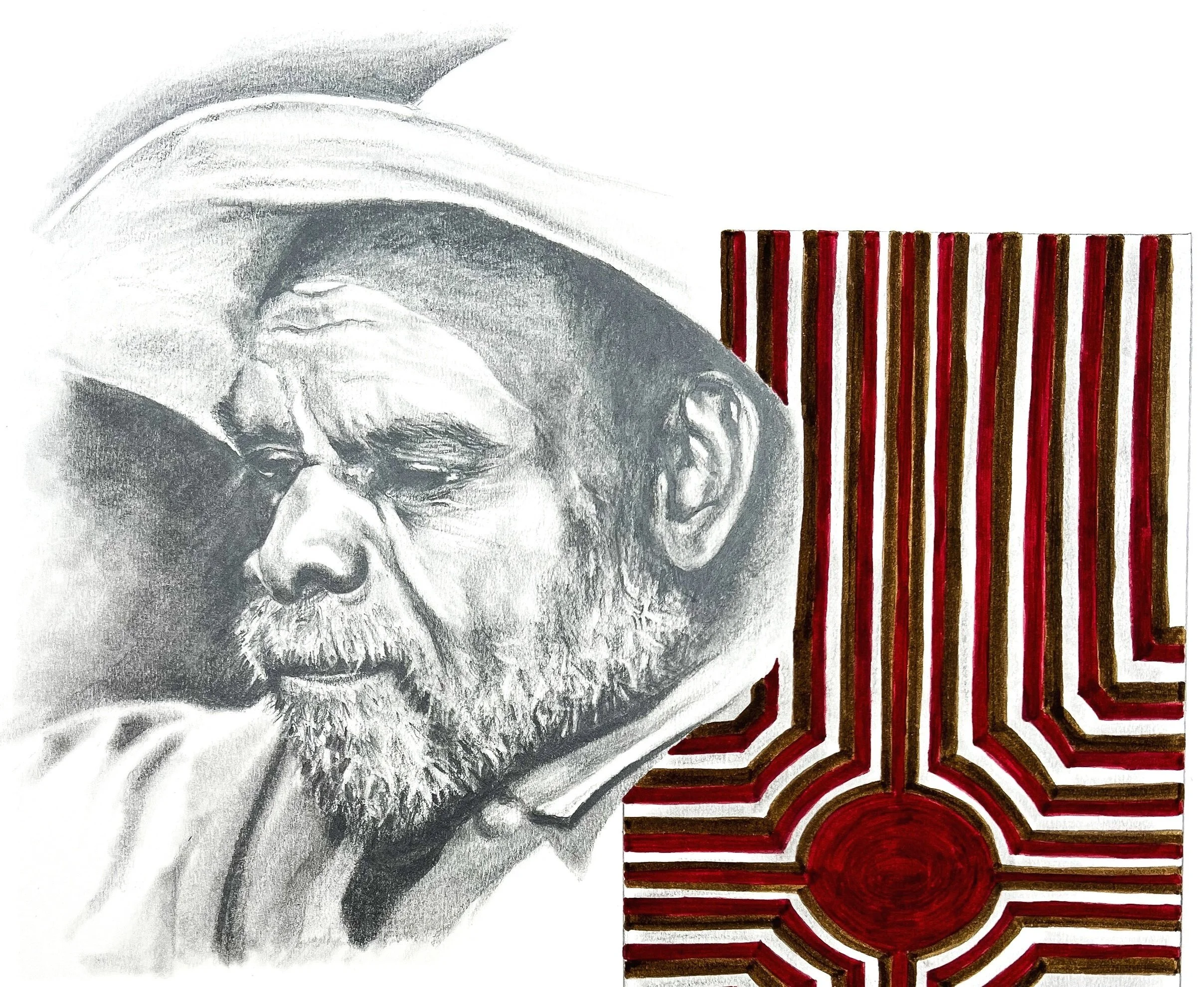
Mick Namarari Tjapaltjarri
A member of the Pintupi language group, Mick Namarari Tjapaltjarri (Marnpi 1926–Alice Springs 1998) was one of the founding artists of the Papunya Tula movement in 1971. Geoffrey Bardon, the Australian schoolteacher who played a decisive role in its birth, considered Mick Namarari a major contributor due to his deep knowledge of tradition and Aboriginal art.
After starting by exploring a figurative style that reproduced ceremonial ground paintings and sacred objects in detail and with fairly classic pointillism, Mick Namarari evolved towards creating large geometric patterns in the 1980s. He subsequently developed an even more minimalist linear style.
Until the end of his life, his work remained marked by the originality, richness, and complexity of his innovations.
This modest man is today considered one of the most brilliant and renowned Aboriginal artists.
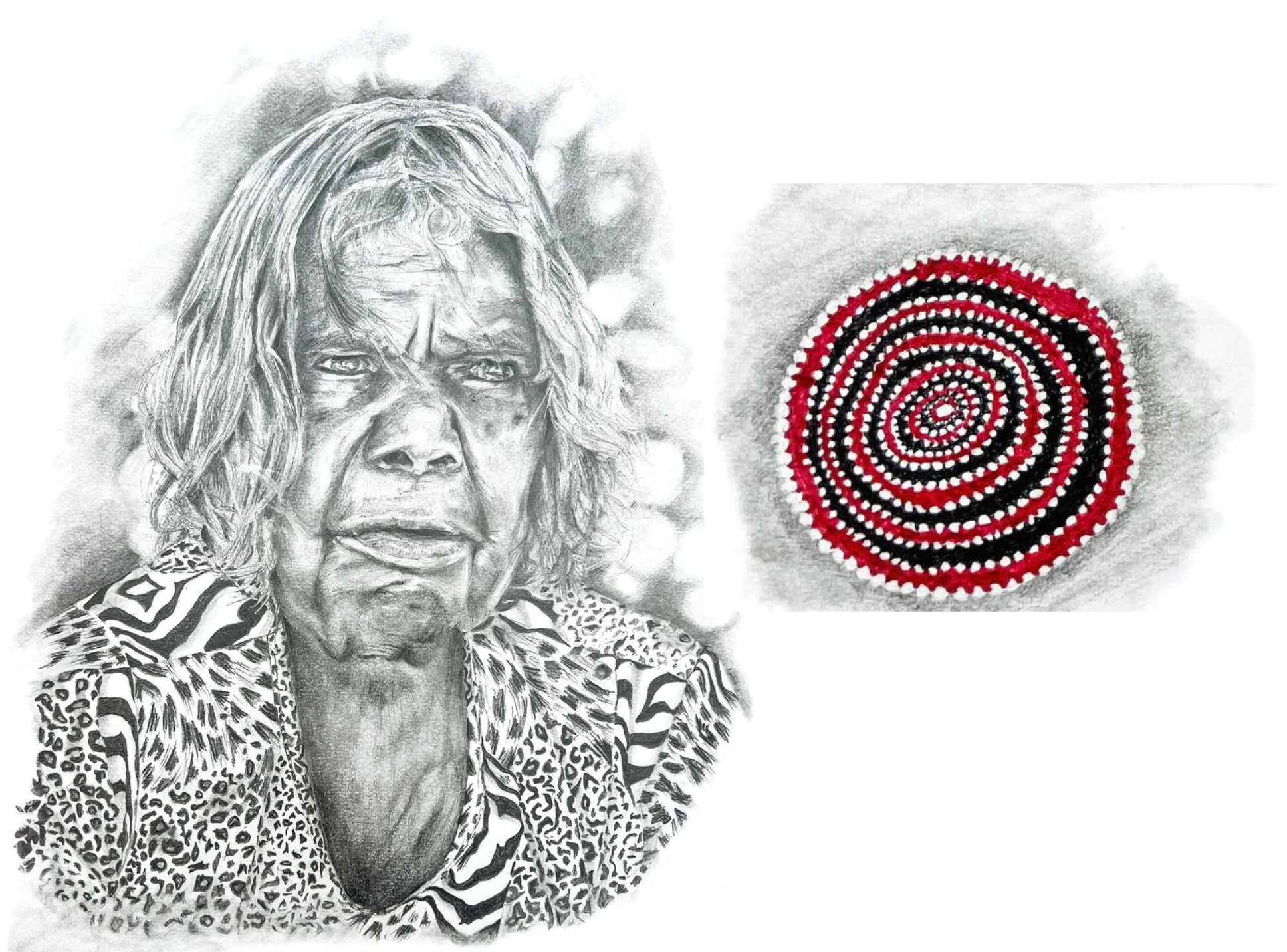
Wentja Morgan Napaltjarri
Wentja Morgan Napaltjarri often paints her father's ancestral country, located near Kintore in the Gibson Desert, although, as a child and like others before them, Wentja and her family were forced to leave the region to move much further east to Haasts Bluff. This happened in 1948. They never returned to their traditional lands.
Wentja's father, Shorty Lungkata Tjungurrayi, was a senior initiated man recognized for his skills as a hunter, healer, and a respected elder for his knowledge of Pintupi tradition. He was also one of the founding artists of the Aboriginal painting movement. When he made his journey across the desert with his brother and their respective families, walking from waterhole to waterhole, he followed the tracks of the Ancestral Emu Men. Only precise knowledge of the kapis (waters)—whether originating from simple holes in the rock, springs, or claypans—allowed them to survive.
This journey was clearly a defining episode in Wentja's life. Blended with other stories associated with the Tingari cycle, reinterpreted with "dreams" relating to her birthplace, it became a powerful source of inspiration when she began painting on her own. Indeed, after an apprenticeship under her father, followed by participation in collective works with other elders in her family, it was not until she arrived at Mt Liebig with her husband and children in the 1995–96 period that her own career took off rapidly, making her a highly sought-after artist.
One of Wentja's main totems is the "Blue-tongued Lizard," a painting formed by concentric circles illustrating water sources and/or ceremonial sites, with the dot-filled space between these circles representing the seeds eaten by the animal. However, much of the information contained in her paintings remains mysterious, which is precisely what makes them so powerful.
Wentja passed away in 2021.
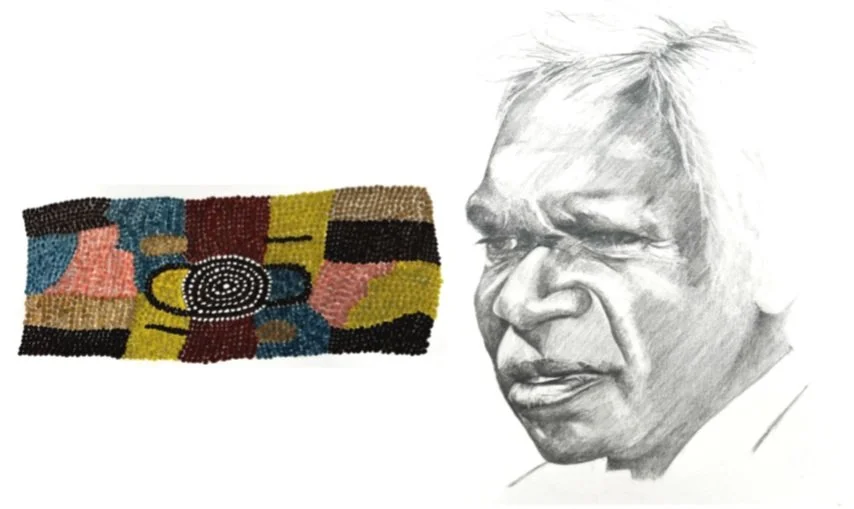
Billy Stockman Tjapaljarri
Billy Stockman Tjapaljarri was born around 1927 in Ilpitirri, in the Northern Territory. In 1928, his mother and other family members were killed during an Aboriginal massacre at Coniston—his father, out hunting that day, survived.
Billy started as a stockman, earning him the nickname "Stockman." In 1960, he became a cook in Papunya, then began wood carving with his cousin Clifford Possum for the Arts and Crafts Centre. At the request of Geoffrey Bardon, initiator of the Papunya art movement, he painted the famous "Honey Ant Dreaming" on the school wall.
In the 1970s, he was appointed a member of the Aboriginal Arts Board and chairman of Papunya Tula Artists. In 1988, he travelled to New York with Michael Nelson Jagamarra (creator of the famous painting Five Stories, which sold for the highest price ever achieved by a living Aboriginal painter and is considered a major work) to create a sand painting as part of an exhibition.
Over time, becoming one of the best-known leading artists of the Desert Art Movement, Billy divided his life between Ililly in the Western Territories and mainly Alice Springs, where he passed away in 2015.
Old Mick Wallankari Tjakamarra
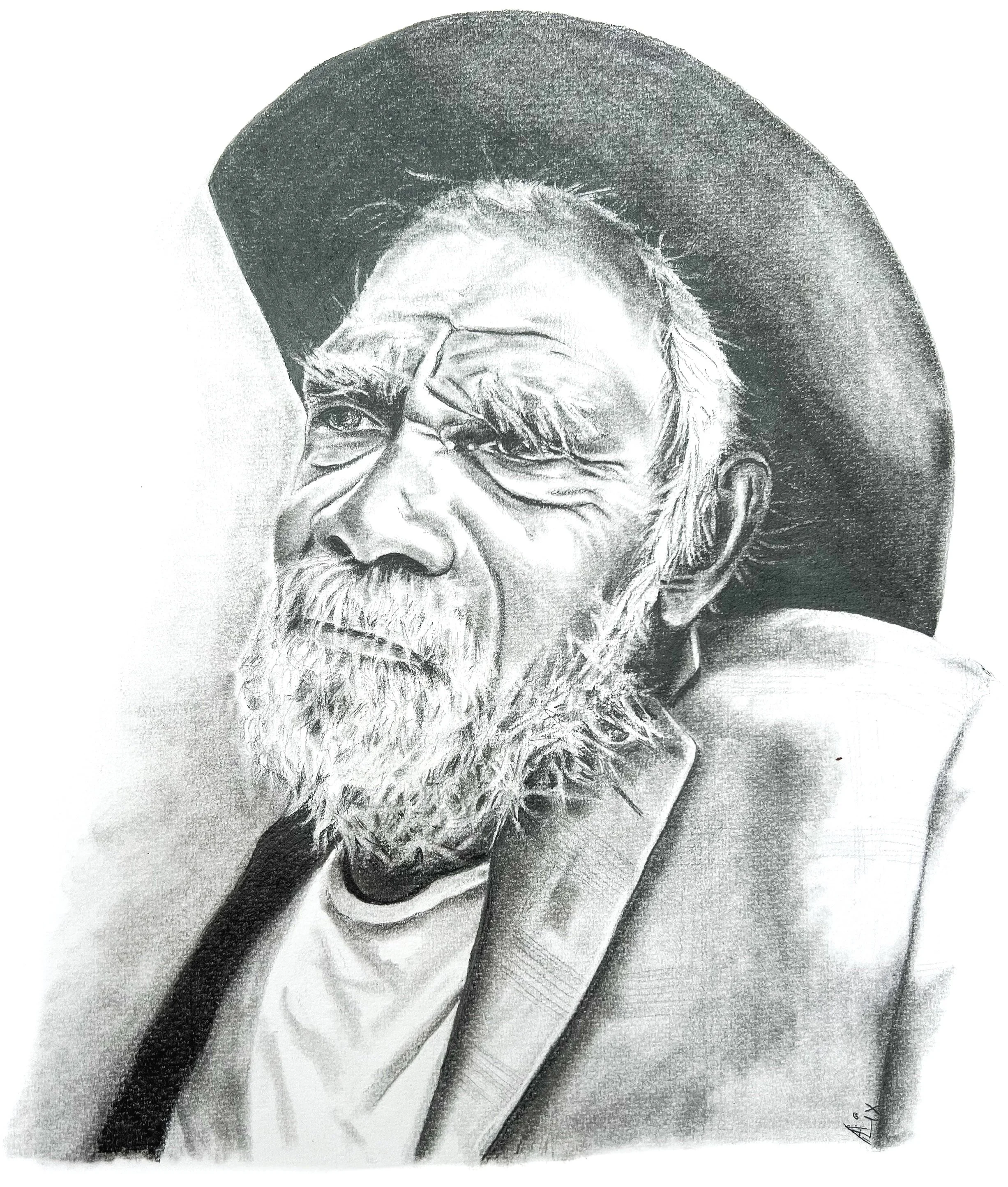
Old Mick Wallankari Tjakamarra was born around 1905/1910 in Watipikipinrri, near Mount Wedge, and passed away in 1996. He was reportedly one of the last survivors of the Kukatja clan that once inhabited the Central Desert region.
During his early years, Mick lived as a hunter-gatherer before being resettled, like many before him, in Papunya during the 1960s. Fluent in English, he often acted as an interpreter for other members of the community. But his role did not stop there—far from it. Recognized as an important ceremonial leader—hence his deep knowledge of traditional motifs—he was the one who, along with a small group of men, once handed Geoffrey Bardon a tiny piece of paper bearing a barely legible drawing. With this seemingly insignificant gesture, he granted permission to reproduce on a wall the traditional motifs that school children had been drawing in the sand. Thus was born the first Papunya mural, the "Honey Ant Dreaming," created by Billy Stockman and Long Jack under Kaapa's supervision.
This moment marked the beginning of a craze for the artistic reproduction of secret traditional designs as well as maps depicting waterholes and sacred sites.
Gradually, Geoffrey Bardon earned the trust of Mick who, as a spiritual leader, provided him with the keys to understanding the desert landscapes.
Mick's painting is not as precise as that of other artists, but its evocative power is all the greater and more revealing of its authenticity. He was able to tell the stories of his land through images in a raw and infinitely spiritual style. Some of his canvases can only be understood through the eyes of initiated individuals.
His painting career was cut short. Ill and nearly blind, he was forced to give up painting in the 1980s. Today, his art continues to influence the vision of contemporary Aboriginal artists.
Betty Club Mbitjana
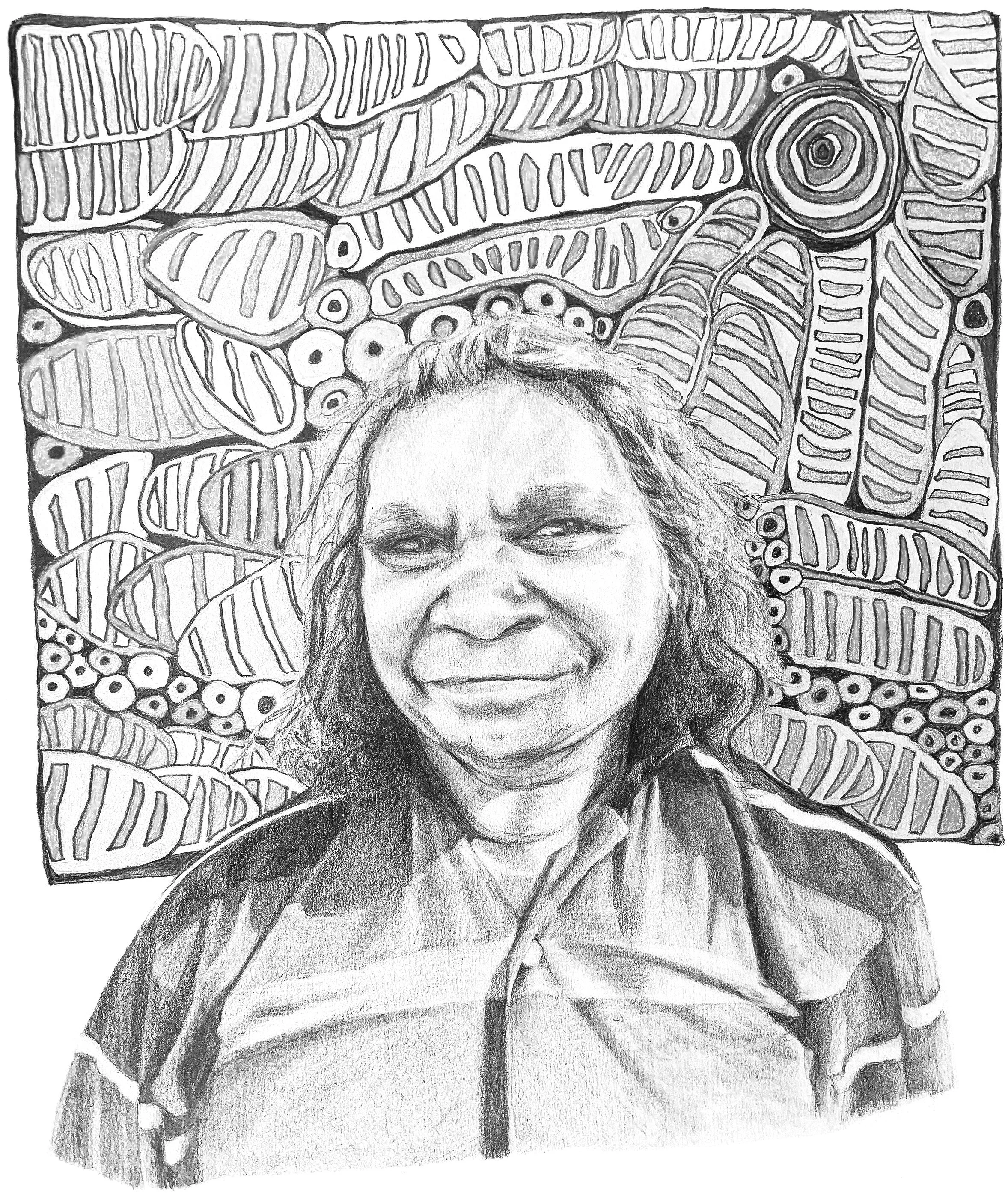
Betty Club Mbitjana (sometimes spelled Mpetyane) was born in 1954 or 1955 near Utopia in the Northern Territory. She spent her early years there, blending traditional life with a Western education.
As the daughter of world-renowned artist Minnie Pwerle and niece of Emily Pwerle, Betty and her sister Barbara Weir grew up watching the art movement blossom in and around Utopia. She began painting with the group of artists involved in the batik project, a period during which she travelled extensively across Australia. She later grew closer to her mother as her mother's fame grew.
Following the passing of Minnie Pwerle in 2006, Betty's career took off independently, gaining widespread recognition. She revived several ceremonial motifs inherited from her mother, such as the "Bush Melon Dreaming," depicting a dried fruit enjoyed by women during commemorations, or the "Awelye Dreaming," which refers to women's ceremonies, dances, and body paintings worn on those occasions.
With her distinct "bird's-eye view" painting technique, Betty Club offers a very personal interpretation of these ceremonies, sometimes combining multiple motifs in an energetic style full of movement. She passed away in 2023.
Lilly Kelly Napangardi
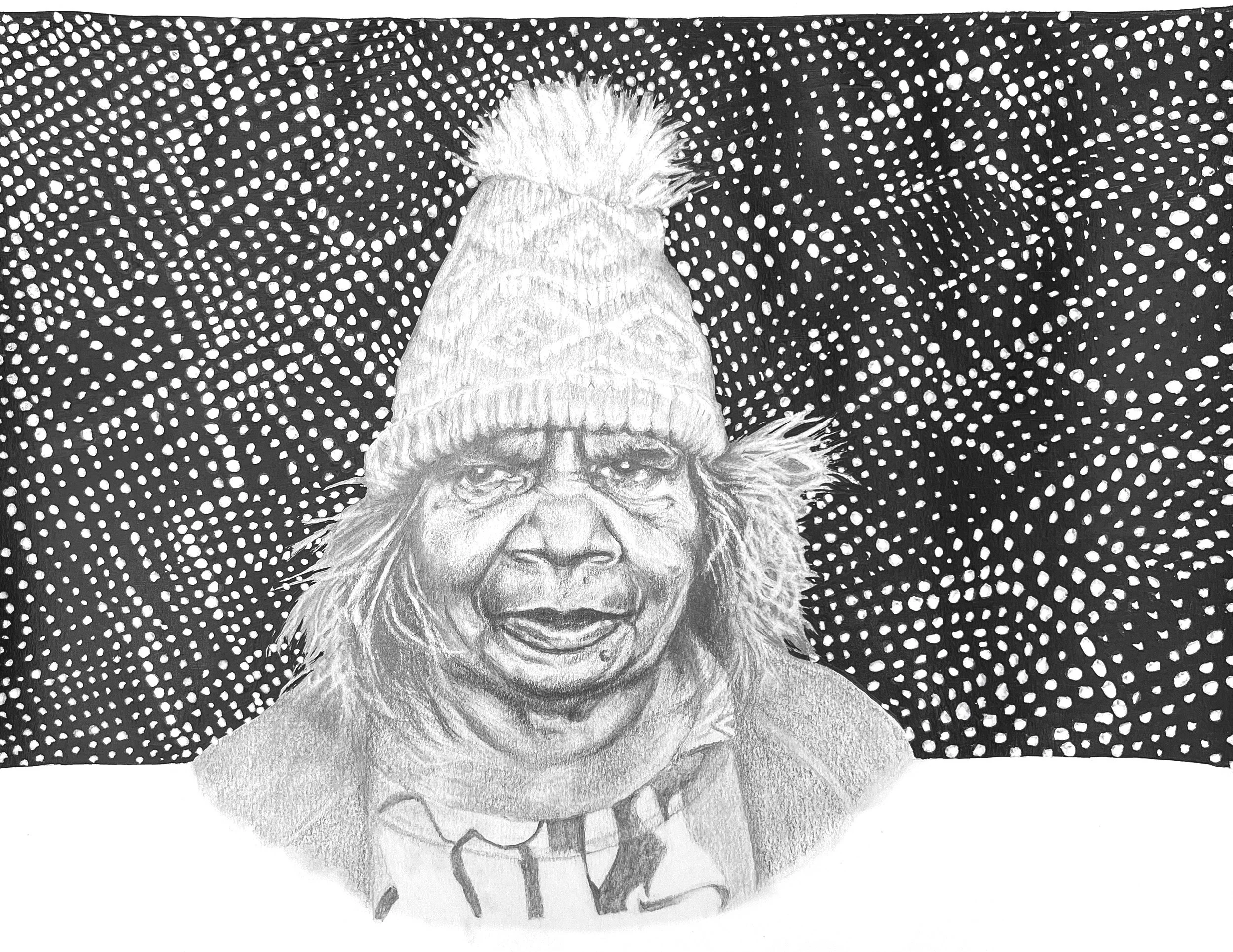
Lilly Kelly Napangardi was born in 1948 in the remote region of Haasts Bluff, about 250 km west of Alice Springs.
In the 1970s, she moved with her family to Papunya, where she was encouraged to take part in the painting movement. She is a respected law woman within the Warlpiri community to which she belongs, and she strives to defend her people both culturally and in terms of their rights.
Initiated very early into the ceremonies and traditional stories of her ancestors, she began painting in the 1980s.
Her work quickly attracted attention. It is characterized by complex geometric patterns—often series of dots of varying sizes that align repetitively, creating an impression of waves, curtains of rain, or hills depending on the subject. These patterns represent the landscapes and natural elements of the region where she grew up. This is particularly true of the theme of "Tali" (sand dunes), which has largely contributed to her renown.
Jake James Tjapaltjarri
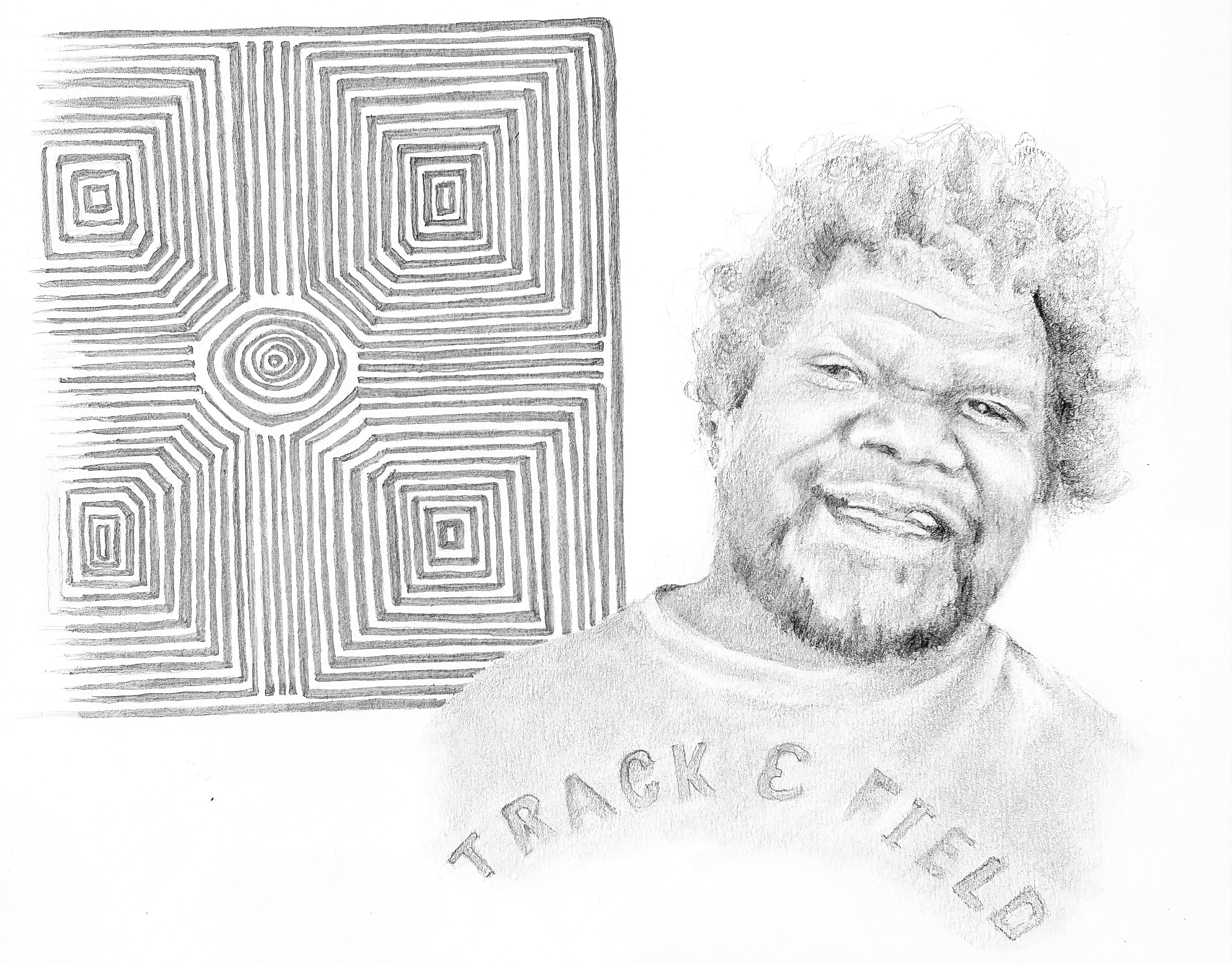
Jake James Tjapaltjarri was born in 1962 in Kiwirrkurra, Western Australia. He belongs to the Pintupi language group and lives in Kintore, Northern Territory. He is the son of George Hairbrush Tjungurrayi, from whom he learned the history and myths of the Tingari cycle.
Tingari dreams are of paramount importance to Pintupi culture and spirituality, as they encapsulate the creation stories of this people, recounting when the tribe's great heroes and ancestors travelled across their territory, shaping the landscapes and creating sacred sites. These dreams are enigmatic, secret, and sacred. They are never recounted to uninitiated men, children, women, or white people.
Like his father, Jake produces motifs belonging to this heritage. It was under his father's tutelage that he began painting in the early 2000s. In keeping with George Hairbrush's style, Jake paints with strong lines articulated in arabesques or geometric patterns. He uses contrasting colors, primarily black and white, as well as ochres (cream or orange) to create striking optical effects.
The sites for which he is custodian are located around Lake Mackay. His canvases, inspired by them, make him one of the most interesting talents of his generation.
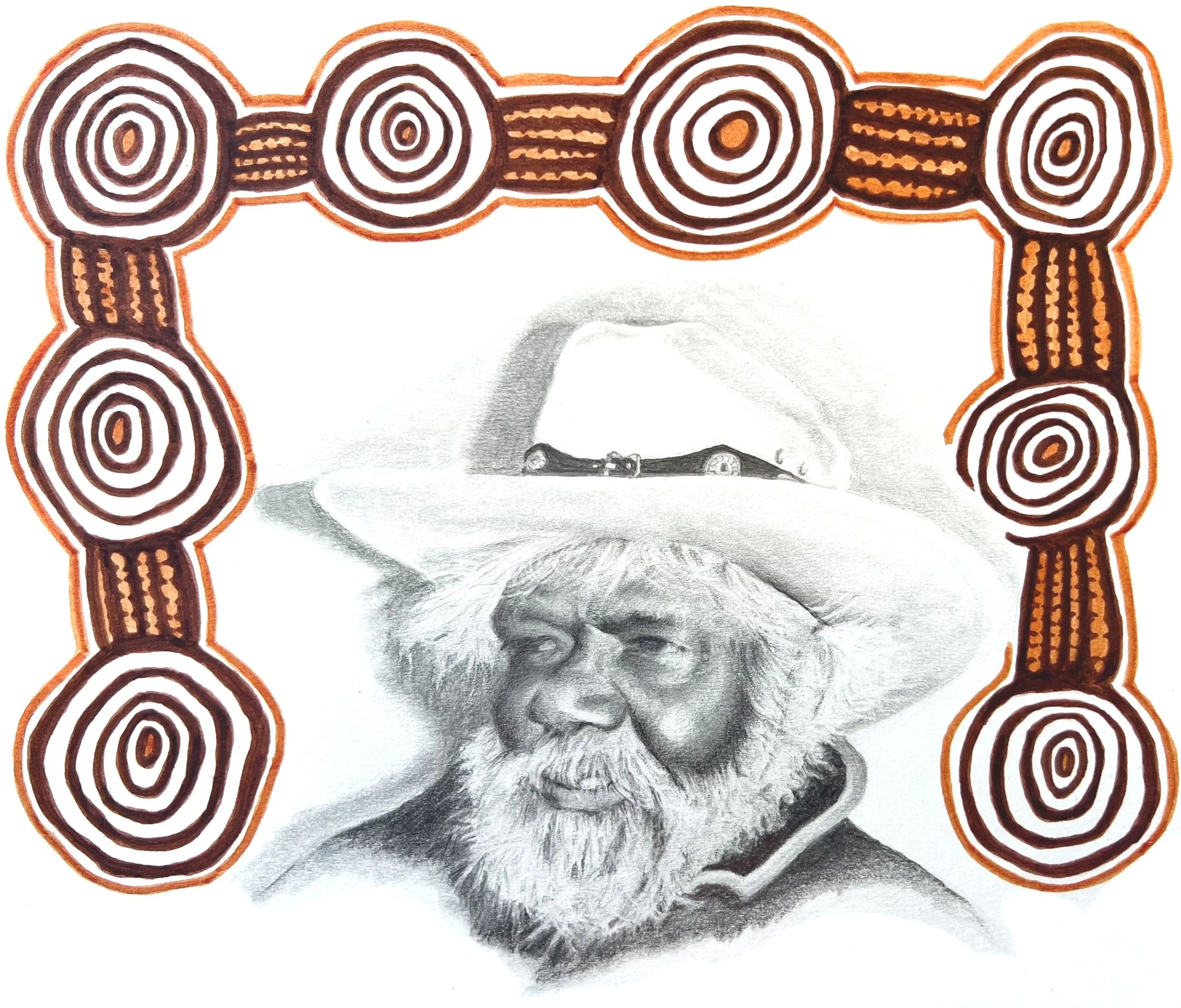
Barney Campbell Tjakamarra
Barney Campbell Tjakamarra belongs to the Pintupi language group. He was born in 1928 in the desert near Warburton, Western Australia. Orphaned at a very young age, he was raised by an uncle and his uncle's wife. They brought him to Papunya, though Barney would later return to live in his ancestral lands.
The latter spans roughly 150 km around the MacDonnell Ranges and includes numerous waterholes and salt lakes to the east and west of Kintore. Scattered across this vast territory are some twenty sacred sites over which Barney holds rights. As such, he is a highly respected member of his people and follows a deeply traditional way of life. Exceptionally knowledgeable and proud when speaking of his culture and traditions, he is authorised to illustrate the myths of the Tingari cycle, which form the core theme of his paintings.
Barney paints his dreamings with a striking naturalness and simplicity, imbued with a rare elegance that reflects his personality. While his early work appears fairly conventional—centred around dotted Tingari circles or ceremonial body designs—it later evolves into a more linear style akin to that of Ronnie Tampitjinpa or Willy Tjungurrayi. In fact, Barney would often work alongside the latter in Kintore.
Barney passed away in late 2006.
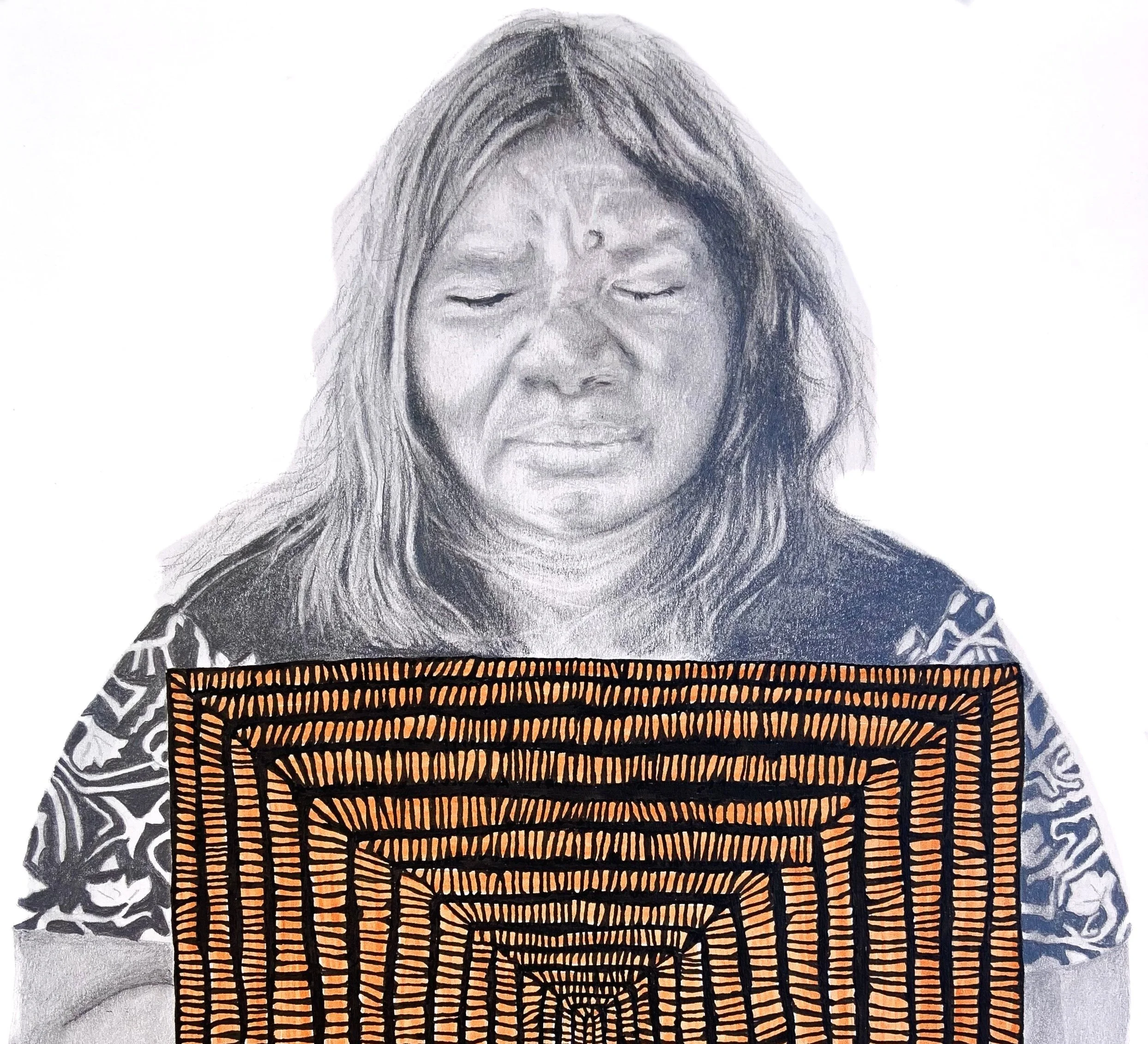
Monica Napaltjarri
Monica Napaltjarri, a Pintupi artist born in 1960 near Kiwirrkurra, 750 km west of Alice Springs, comes from a family deeply rooted in the Aboriginal art movement. Her half-brother, Joseph Jurra Tjapaltjarri, directed the Papunya Tula Art Centre, and her sisters Yakarri and Payu West Napaltjarri, as well as her daughter Maisie Gibson Napurrula, are also recognised painters.
Monica began painting in 1996, initially sporadically, and then regularly from the 2000s onwards. Inspired by the sacred sites passed down by her grandmother, such as the women's cave, her works recount the journeys of the Tingari Ancestors, pillars of Pintupi mythology and the spiritual life of her community.
Her paintings, featuring powerful geometric patterns, recall ceremonial body paint and tracings. Monica lives between Kintore and Alice Springs.
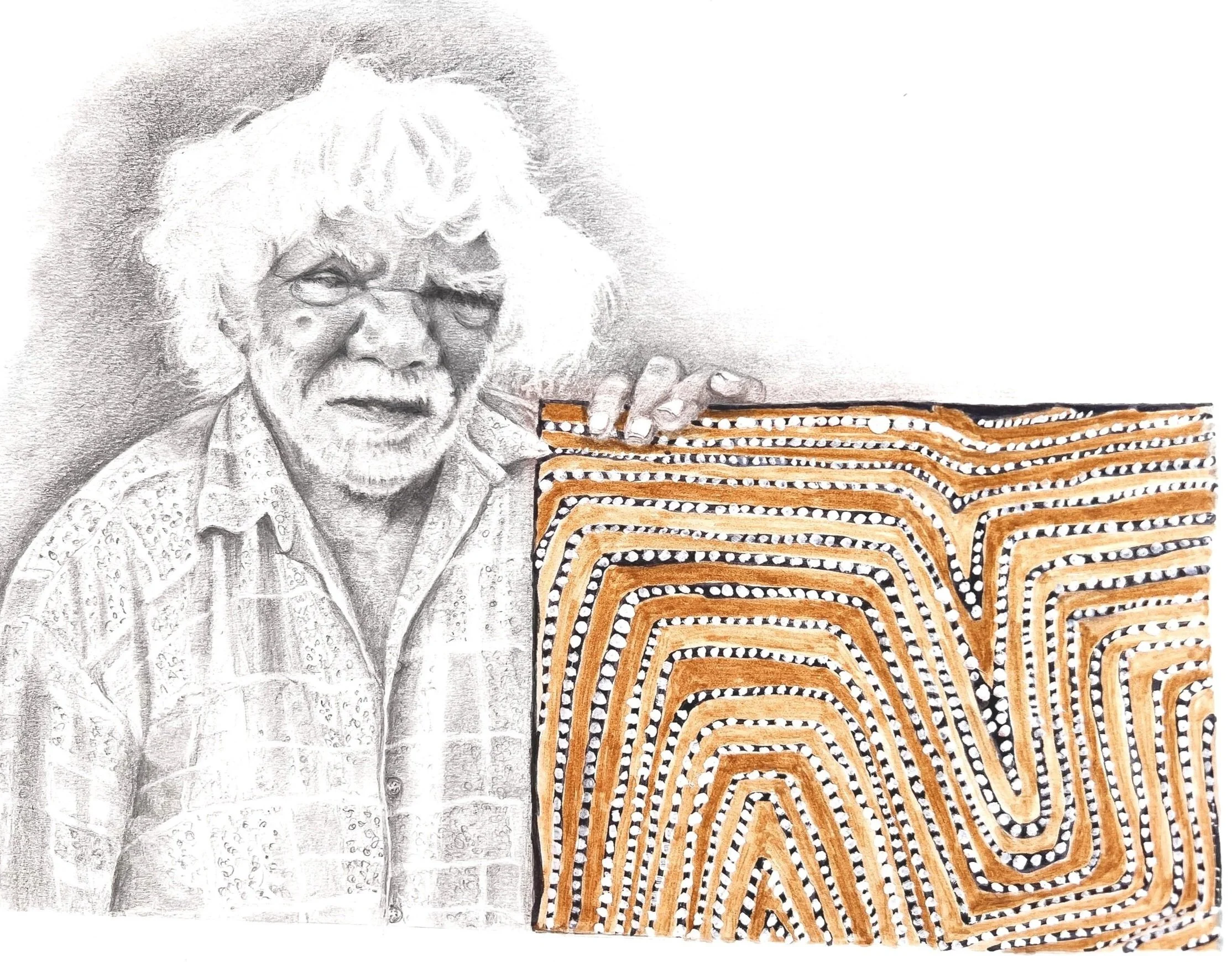
George Ward Tjungurrayi
George Ward Tjungurrayi remained until the end of his life a reserved and silent Western Desert man. He avoided photographs, was uncomfortable with English and with the hustle and bustle of large towns like Alice Springs. "I'm a bushman, me," he would insist, with a hint of pride in his voice.
Born in the 1940s in the highly isolated region of Kiwirrkura, he did not encounter white people until 1962, when a government welfare patrol tasked with bringing the last nomads into missions made contact with his family group. He and his kin were taken to Papunya, where George Ward worked for a time building fences and later in the community kitchens.
In 1981, George and his family settled in Kintore, a newly established Pintupi community created thanks to a political struggle led by Aboriginal people of the Northern Territory to reclaim their ancestral lands.
Following in the footsteps of his two half-brothers, Yala Yala Gibbs Tjungurrayi (one of the founders of the Papunya Tula art movement) and Willy Tjungurrayi (a major desert artist), he began painting in 1984, initially using "classic" geometric motifs before moving toward a style that remained meticulous yet more minimalist, with a palette inspired primarily by the red earth and sand colors of his country. A vibratory effect is a hallmark of his art.
In 2004, he won the prestigious Wynne Prize awarded by the Art Gallery of New South Wales in Sydney. His works, which frequently recount the stories of Tingari journeys near Lakes Macdonald and Mackay, are held in major private and public collections.
George Ward passed away in September 2023.

Turkey Tolson Tjupurrula
When he joined the founding group of Papunya Tula artists in 1972, Turkey Tolson Tjupurrula was one of its youngest members. Before taking up the brush himself, he observed the work of older men, notably Mick Namarari and Ray Inkamala.
Turkey Tolson's style evolved over time. His early works were small in format, modest, and adhered to the conventions established by Pintupi artists. By the end of the decade, however, Turkey had developed into an accomplished painter. He produced several large-scale, fairly conventional canvases blending concentric circles with dotted bands of mesmerizing perfection. The 1980s marked a period of exploration and innovation that his technical mastery, deep knowledge of traditional painting methods, and creativity allowed him to pursue.
In 1990, he painted Straightening the spears, a canvas now housed in the Art Gallery of Adelaide, which heralded a new phase in Papunya Tula art. From then on, he and a few others—such as Mick Namarari and Ronnie Tjampitjinpa—shifted toward a restrained, purer, and deliberately minimalist style composed of lines and rectangles. This work, reminiscent of modern abstract painting, secured his place for posterity.
Turkey Tolson, born in 1938 east of Haast Bluff and relocated with his family in 1959 to the site of Papunya, is also renowned for serving as Chairman of the Papunya Tula Artists Centre from 1985 to 1995, during the movement's defining years. His understanding of the white man's world and mastery of the English language placed him in a privileged position to act as an intermediary between his people—his elders and older companions—on one hand, and the non-Aboriginal public, galleries, and administration on the other. For this reason as well, he is considered a prominent figure of his generation. Turkey passed away in 2001.
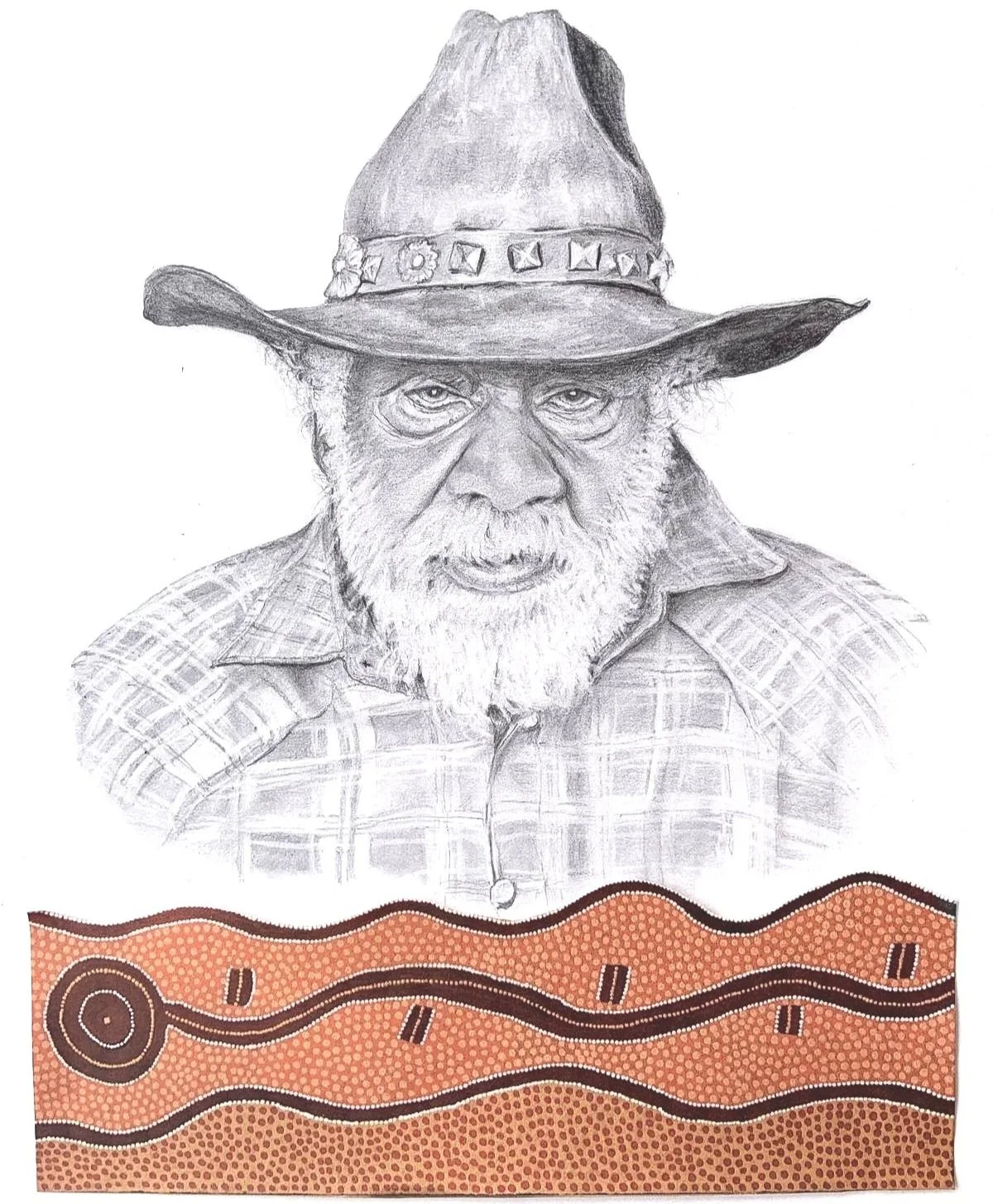
Long Jack Phillipus Tjakamarra
"A tall and handsome man"—hence his anglicised name—is how Geoffrey Bardon described him: Long Jack Phillipus Tjakamarra was part of the initial group of painters brought together by Bardon in the early 1970s.
At the time, Long Jack was employed as a school caretaker in Papunya alongside Billy Stockman. He was also a community advisor and, as such, played a key role in creating the famous mural that originated the Western Desert art movement. Having participated in secret discussions held by the elders, he reported to Bardon that the Honey Ant motif was a gift "offered to the white man's school" by the Aboriginal ceremonial leaders. He then helped his friends Kaapa Tjampinjinpa and Billy Stockman execute the mural.
A thoughtful man with a profound knowledge of tribal laws, Long Jack became a respected elder and exerted a great influence on the youth. Deeply Christian having been educated by Lutheran missionaries, like many members of the Anmatyerre and Warlpiri tribes from which he originates, he successfully blended his Christian faith (to the point of becoming a pastor in 1984) with his traditional beliefs.
His artistic oeuvre includes the Wallaby, Kingfisher, Dingo, Possum, and Emu Dreamings, alongside other subjects such as his Rain Dreaming, men's ceremonies, and stories of his homeland at the foot of Mount Singleton near Kintore. Born in 1932, he passed away in 2020.

Lindsay Bird Mpetyane
Lindsay Bird Mpetyane was born around 1935 at Mulga Bore near Utopia. For years, he worked as a stockman and herder. In the late 1970s, when the women of Utopia took an interest in batik, he was one of the few men to participate in this silk-painting project. He then began painting with acrylic on canvas in 1987.
He is a respected Elder and tribal leader of the Anmatyerre community. As such, and as a senior custodian, Lindsay Bird is able to evoke numerous themes related to men's law in his paintings. His works, often large in scale, stand out for their bold colour choices and harmonious composition. They recount the stories (the dreamings) of the Perentie lizard, the snake, the Mulga seed, the yam, and Charpa, the honey ant. They frequently depict the sacred ceremonial sites where men's business takes place—rendered in a circular style surrounded by hunting weapons symbolizing the spirits that protect the area. These paintings may appear simple in design, yet they carry profound significance. They reflect their creator's deep respect for the ceremonies held in those places.
Over the years, Lindsay Bird strove to raise awareness of his heritage. For him, painting was not merely a passion, but part of his mission to perpetuate his connection to the values of the land and share it with younger generations. He passed away in May 2024.
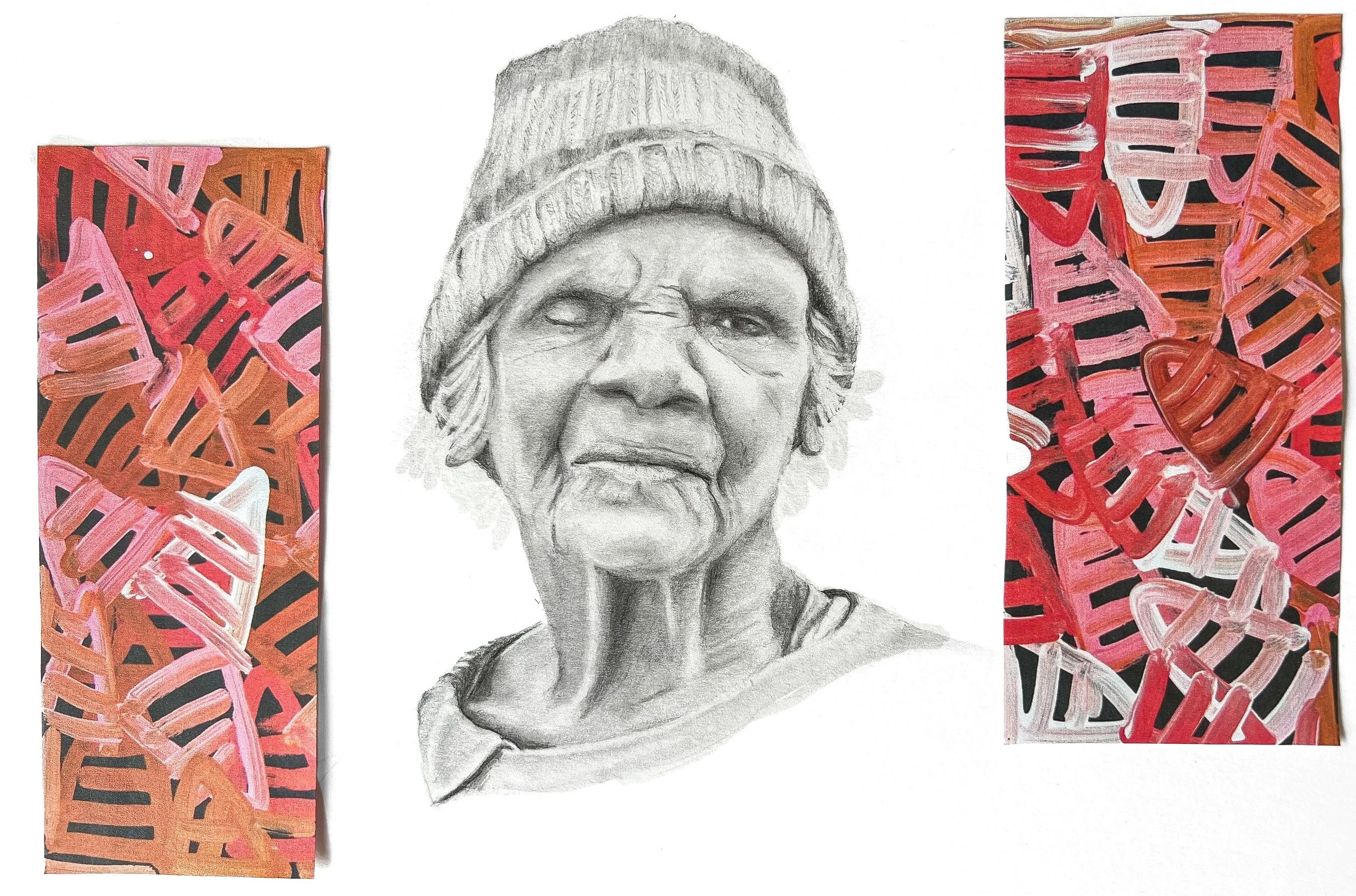
Emily Pwerle
Emily Pwerle was born between 1922 and 1930 (depending on sources) in the Utopia community, located about 350 km north-east of Alice Springs in the Northern Territory.
She belongs to the Anmatyerre and Alyawarre peoples, and many members of her extended family are prominent artists. Examples include her elder sister, the famous Minnie Pwerle, as well as her other two sisters, Molly and Gayla, Aileen and Betty Mpetyane, and of course her niece Barbara Weir. It was under the latter's encouragement that Emily began painting professionally in the early 2000s.
Although she exhibited less frequently than her sister Minnie, Emily quickly made a name for herself with her unique and powerful style.
Her art is deeply rooted in tradition and most frequently relates to the women's Awelye Atnwengerrp ceremonies. Consequently, her painting is characterised by dynamic and expressive lines evoking ritual body paint motifs, dance tracks left in the sand, and sacred sites connected to ceremonies. These patterns have been passed down from generation to generation, and only women of the Pwerle or Kemarre clans are permitted to paint them.
Emily Pwerle is now recognized for the spiritual and cultural power of her work. Featuring compositions made of a series of intersecting lines and symbols layered across the canvas to create a vibrant explosion of color, she established herself as a prolific and talented artist, much like her sister Minnie.
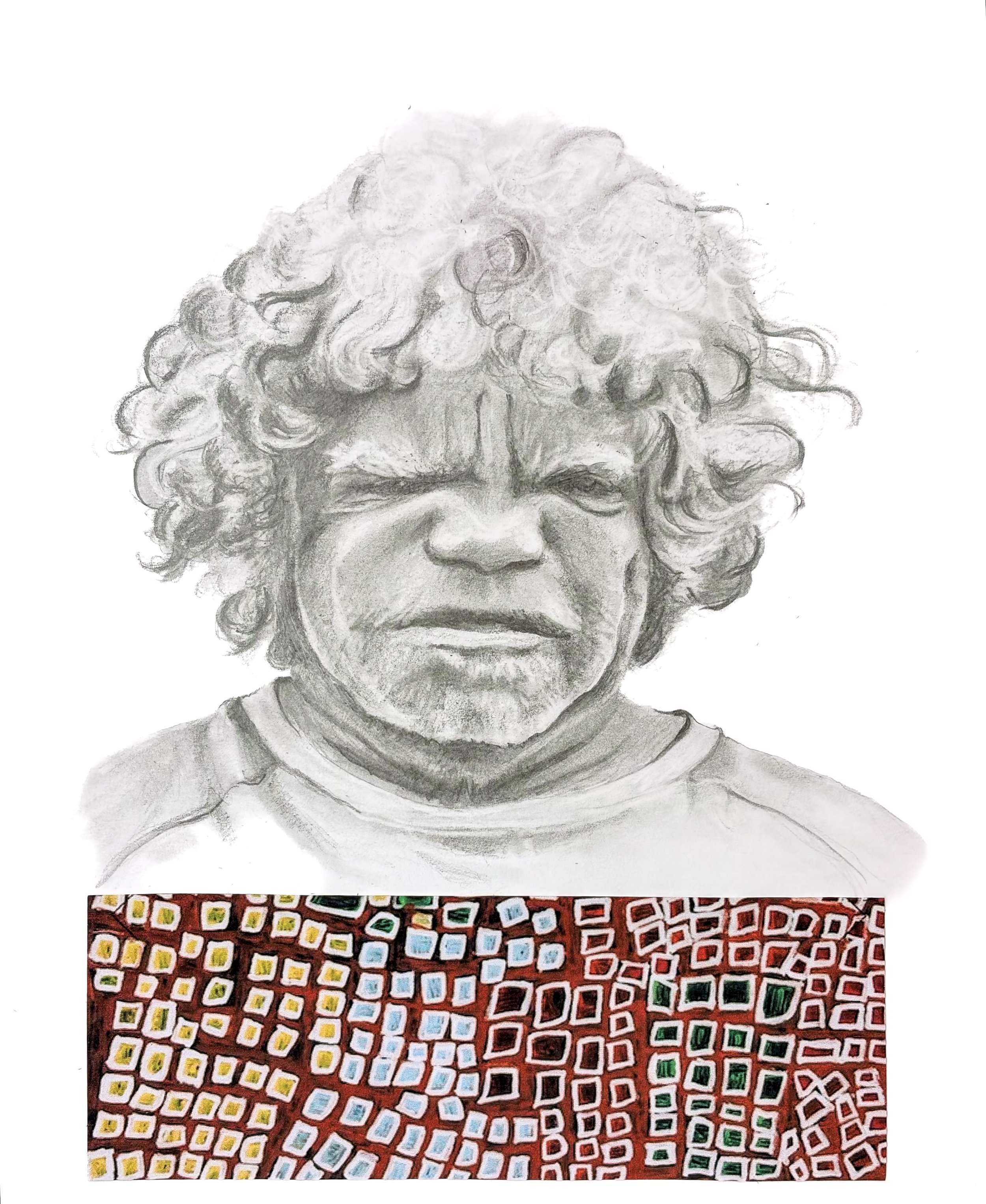
Bob Gibson Tjungurrayi
Born in Papunya in 1974, Bob Gibson Tjungurrayi belongs to the Ngaanyatjarra-Pintupi people. In the 1980s, he moved with his family to Tjukurla as part of the "homelands" movement, which allowed many families to return to live on their ancestral lands.
Bob began painting with the Tjarlirli Art centre in 2007 and quickly distinguished himself with a unique style: crisp flat planes of color, energetic shapes, rhythmic movements, and the juxtaposition of vivid hues. If he were to be compared to a Western painting movement, it might be Tachisme or the work of Friedensreich Hundertwasser.
His art blends ancient stories of the Tjukurrpa with contemporary abstraction. A proponent of bold colors and spontaneous gestures, his paintings reflect ceremonies such as the Tingari, while innovating in the visual transposition of desert landscapes, particularly those extending around Lake Hopkins associated with his heritage.
Described as a vibrant and warm personality, greatly appreciated by his community and admired for his dedication to his people, Bob is recognized today as one of the most sought-after emerging artists.
He is a rising figure in the renaissance of Aboriginal art, praised for his imaginative vision that bridges the tradition of an initiated elder with highly personal contemporary expression.
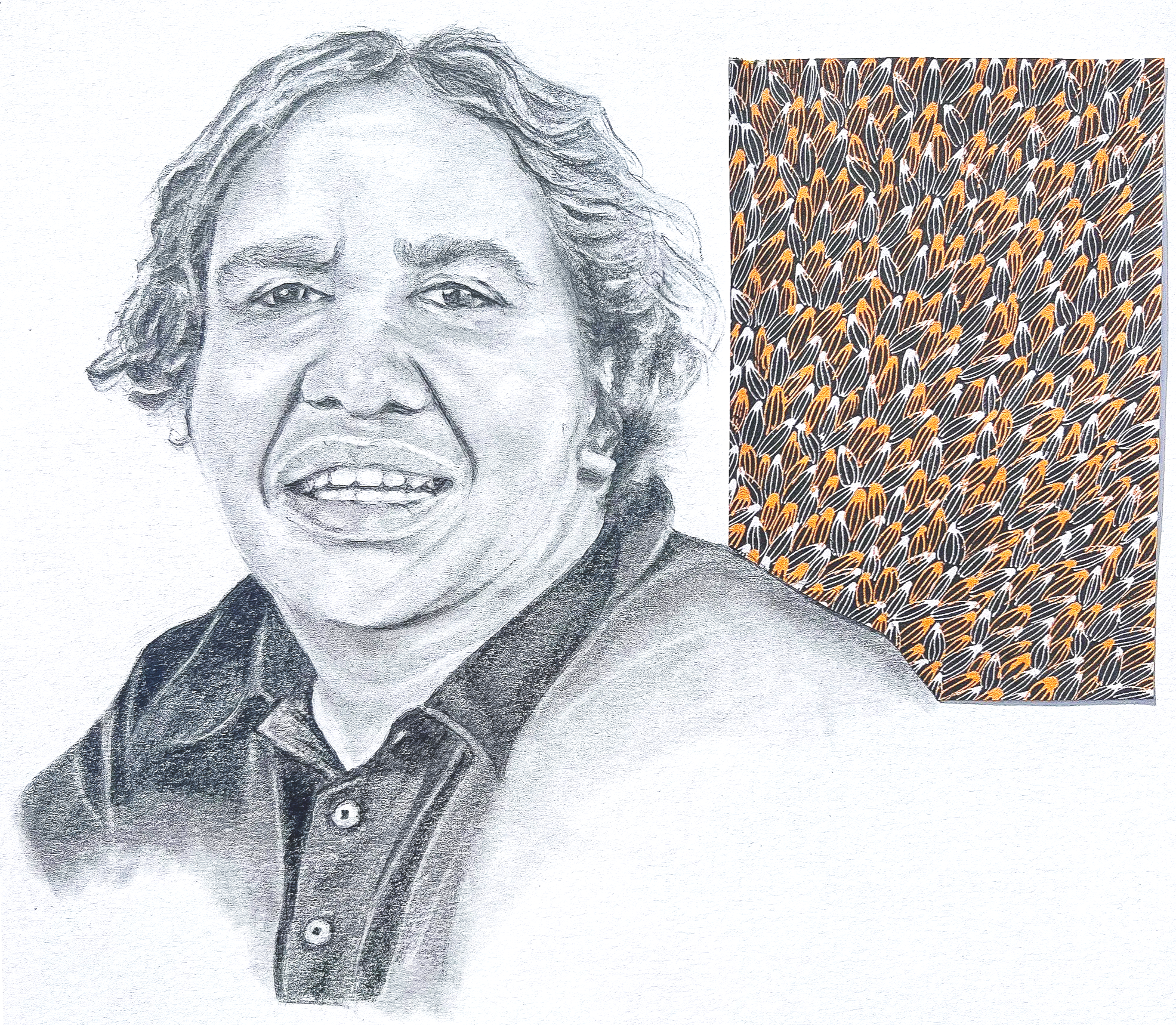
Abie Loy Kemarre
Abie Loy Kemarre was born in 1972 in Utopia, in the Northern Territory, into an illustrious lineage of Aboriginal artists. She is the granddaughter of Kathleen Petyarre, a major figure of the Utopia art movement who received the prestigious Telstra National Aboriginal Art Award in 1996, and the niece of Gloria Petyarre, the first Indigenous artist to win the Wynne Prize for Landscape in 1999.
As an heir to several generations of renowned female artists, Abie grew up immersed in artistic practice and Anmatyerre and Alyawarre cultural traditions. Trained from an early age by her grandmother Kathleen, she learned not only the technique of pointillist painting, but above all the transmission of sacred stories and ceremonial rights of which she has become a custodian.
Abie began painting professionally in the mid-1990s. Her work perpetuates ancestral themes passed down by the women in her family, notably the Bush Leaves Dreaming (Awelye Atnwengerrp), women's ceremonies, and ritual body paintings. Her works are distinguished by a contemporary approach while remaining deeply rooted in tradition: she uses vibrant and bold colors, creating dynamic compositions where traditional motifs transform into true chromatic explosions.
Through energetic canvases with saturated hues, Abie interprets the stories of the Dreamtime with her own creative freedom. Her style, while respectful of the teachings received, reflects a modern and personal artistic vision that sets her apart within her generation. Her paintings evoke Awelye ceremonies, bush seeds, medicinal plants, and the sacred sites of her homeland around Utopia.
Internationally recognized, Abie Loy Kemarre regularly exhibits in Australia, Europe, and the United States. Her works feature in major public and private collections. Today, she embodies the continuity of an exceptional family heritage while asserting a strong, contemporary artistic identity, cementing her place among the most influential Aboriginal artists of her generation.
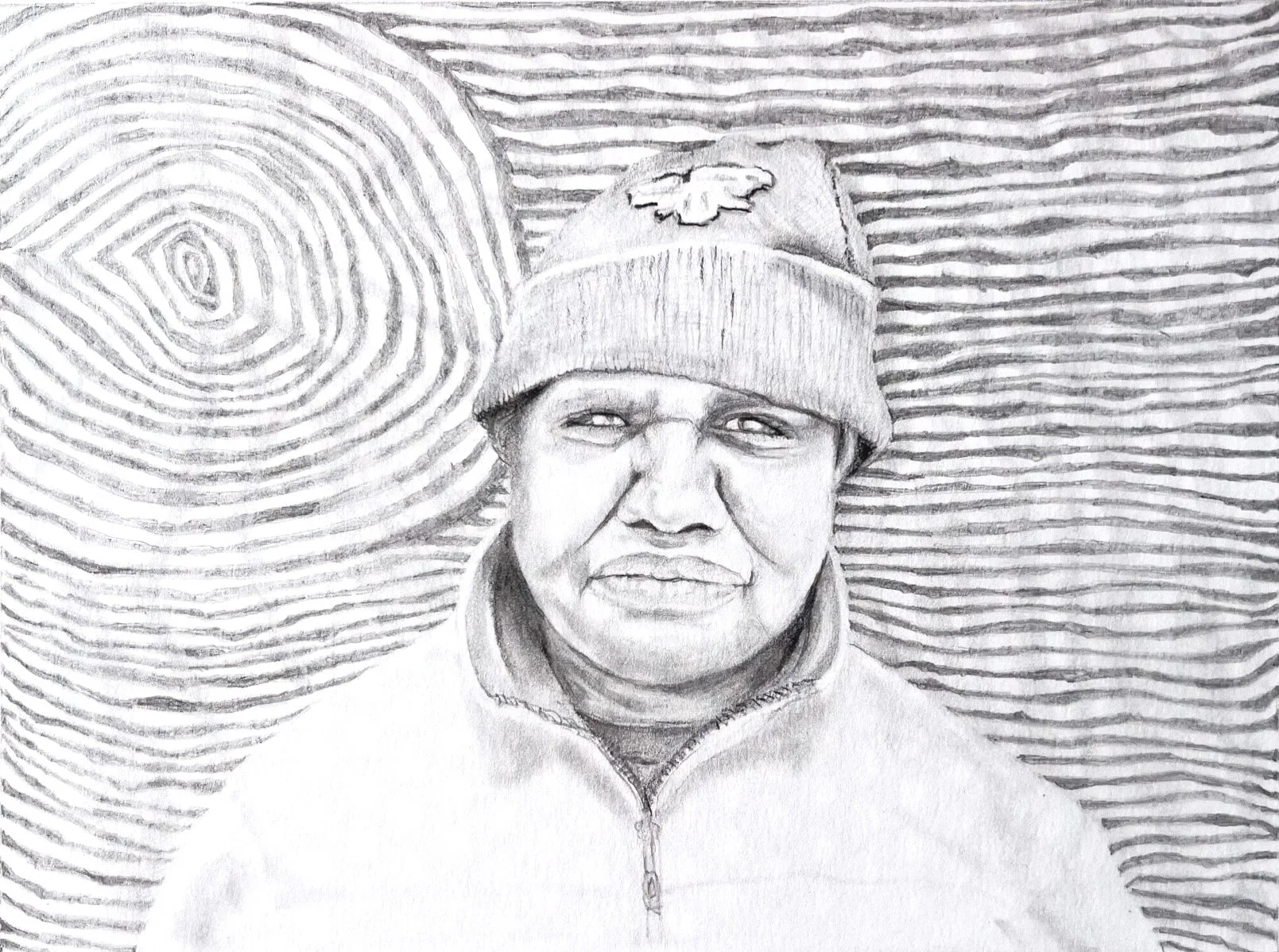
Yukultji Napangati
Yukultji Napangati was born around 1970 in Marrapinti, a sacred women's ceremonial site near Wilkinkarra (Lake Mackay) in the Gibson Desert. Until the dramatic emergence of her family in 1984 as part of the famous "Pintupi Nine" group (which included Thomas, Walala, and Warlimpirringa Tjapaltjarri), she lived a traditional nomadic lifestyle, intimately learning the rhythms and secrets of the desert landscape.
She began painting with Papunya Tula Artists in 1996, becoming one of the pioneering women of the Western Desert art movement. Over time, Yukultji has established herself as one of the most sought-after living exponents of Western Desert minimalism.
Her work is renowned for its linear and optical abstraction: striking fields of sinuous, dotted lines that evoke the shimmering sand dunes (tali), waterholes, and Dreamtime tracks across the desert landscape. Minimalist in palette yet rich in visual rhythm, her canvases convey ancestral knowledge passed down by women through stories and cultural memory.
Yukultji has received several prestigious accolades, such as the Wynne Prize for Landscape in 2018. Her work has been widely exhibited at Salon 94 (New York, 2019) and Utopia Art (Sydney, 2014). She has also participated in group exhibitions at the Gagosian Gallery, in the Desert Painters collections, and in the traveling exhibition Marking the Infinite: Contemporary Women Artists from Aboriginal Australia.
Her works are featured in major museums and institutions.
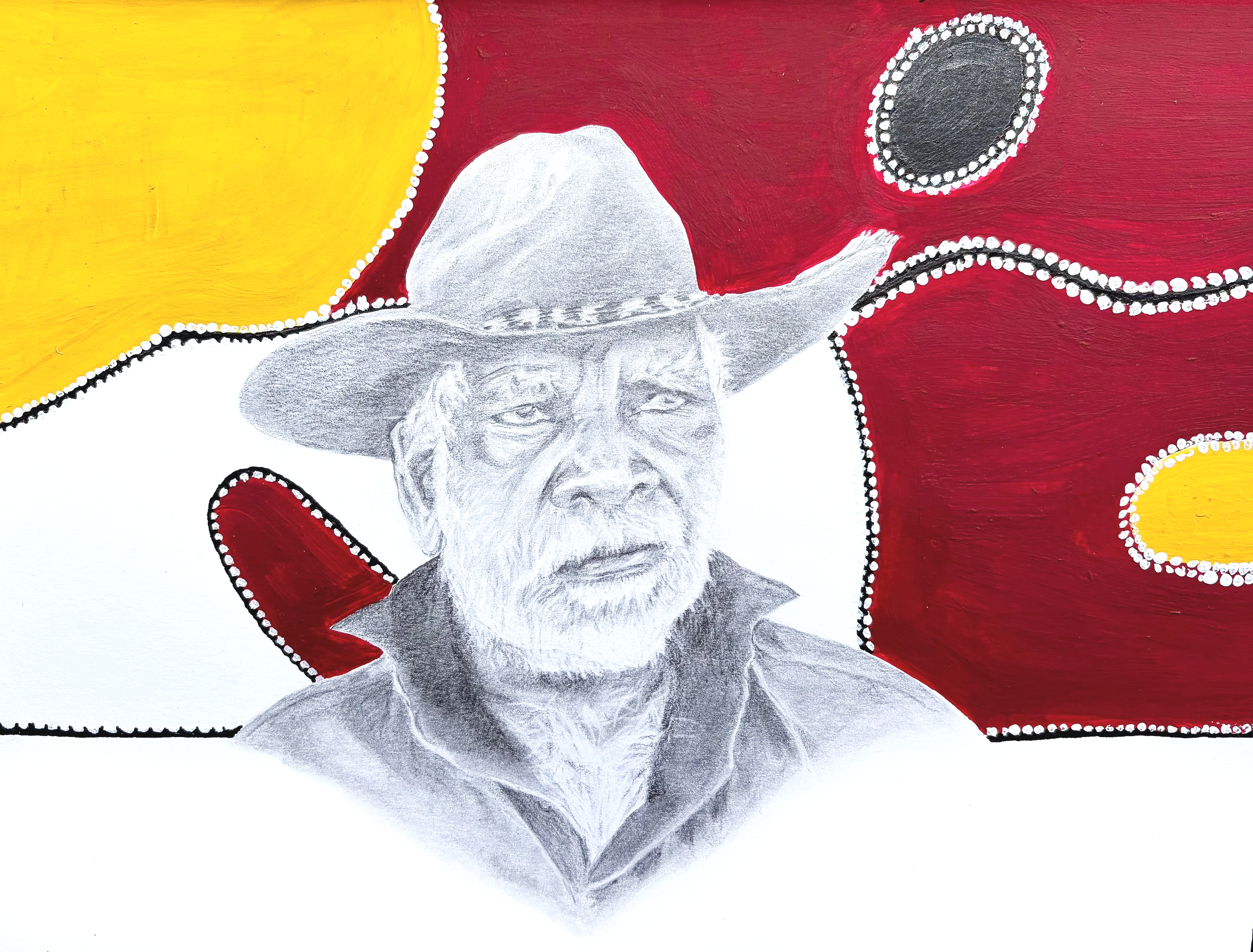
Freddie Timms
Freddie Timms was born in 1944 at Police Hole in the East Kimberley. As a child, he followed his parents to several large cattle stations in the region before starting work around the age of 20—like many of his contemporaries—as a stockman, general hand, and fence builder on various stations near Kununurra. He met Rover Thomas while both were working at Bow River Station and Texas Downs.
In 1985, Freddie Timms moved to Warmun with his second wife, Beryline Mung. He worked for a time in the Argyle diamond mine, then settled in Frog Hollow, a community founded by his brother-in-law Jack Britten. It was then that he came into direct contact with the Kimberley art movement associated with the famous Gurirr Gurirr (Kuril Kuril) ceremonies initiated by Rover Thomas and other Gija leaders like his father-in-law George Mung Mung. Freddie Timms participated in these ceremonies as a dancer and collaborator while observing the early pictorial forms emerging.
His style, while reminiscent of Thomas', is highly personal and immediately recognizable with its broad blocks of color bordered by white dots. Many of his works resemble aerial maps depicting the framework of the territory where he lived and worked all his life. This cartography operates on a topographical level—showing landscape features such as black soil, red earth, sandy ground, hills, creeks, and waterholes—as well as on a historical and symbolic level, representing roads, settlements, and spiritual Dreaming places. He is also distinguished by his use of varied colors applied with great fluidity. Dark colors gradually gave way to bright, luminous tones. His success was immediate, and today Freddie's renown matches that of the movement's pioneers.
Freddie is also one of the few Aboriginal artists from a traditional background to have sought to express a political viewpoint through his art. In 1998, he became a key figure in the creation of the Jirrawun Aboriginal Corporation, being elected its president. This collective aimed to offer Gija artists from the Kimberley economic and artistic independence. His work then took on a more explicitly political dimension. He developed narratives related to colonial history, massacres, and tensions between Aboriginal and non-Aboriginal populations. Works such as Blackfella – Whitefella reflect this critical interpretation of the contemporary world. Freddie passed away in 2017.
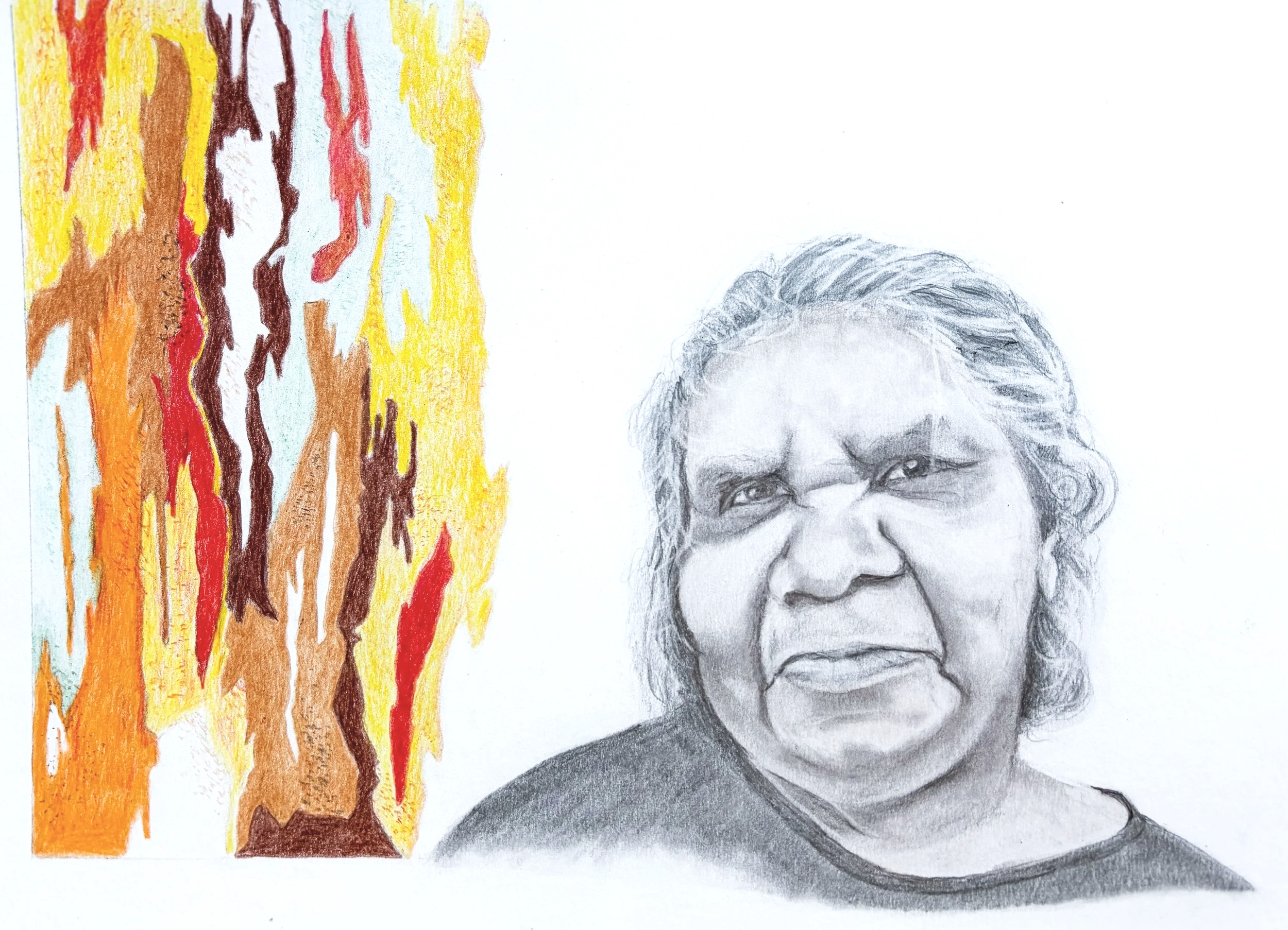
Rachael Lionel Mipantjiti
Rachael Lionel Mipantjiti comes from a renowned family of Ernabella artists. Her mother is Yurpiya Lionel, her grandmother was the late celebrated Pantjiti Lionel, and her sister Alison is also a highly regarded artist.
Rachael was born in Alice Springs and attended Ernabella Anangu School before beginning to paint in 2006 for Ernabella Arts, the oldest continuously running Indigenous Art Centre.
She paints the messages and stories she receives in dreams. In 2016, she collaborated with six other Ernabella artists to create a ceramic installation for the Shepparton Art Museum. The artwork was subsequently acquired by the National Gallery of Australia and featured in "Songlines: Tracking the Seven Sisters," a major international touring exhibition. Rachael was a finalist for the Telstra NATSIAA awards in 2016 and 2023.
Rachael shares: "I always thank my grandmother for passing on her knowledge to us. Pantjiti Lionel and Niningka Lewis taught us how to paint. Over twenty years ago, when they were at the Art Centre, Alison and I were just sitting around doing nothing, and our grandmother said to us: 'Listen to me carefully before I am gone. What will you do after I die? You need to get to work and find something unique.' Today, I am very happy, because everything comes from her. I started painting a pattern, like the other artists, and my grandmother said to me: 'No, not like that. It has to come from the heart, not the head.' I started painting that way, and it never stopped. I can't believe it. It all started from a dream, and now it has become reality on canvas."
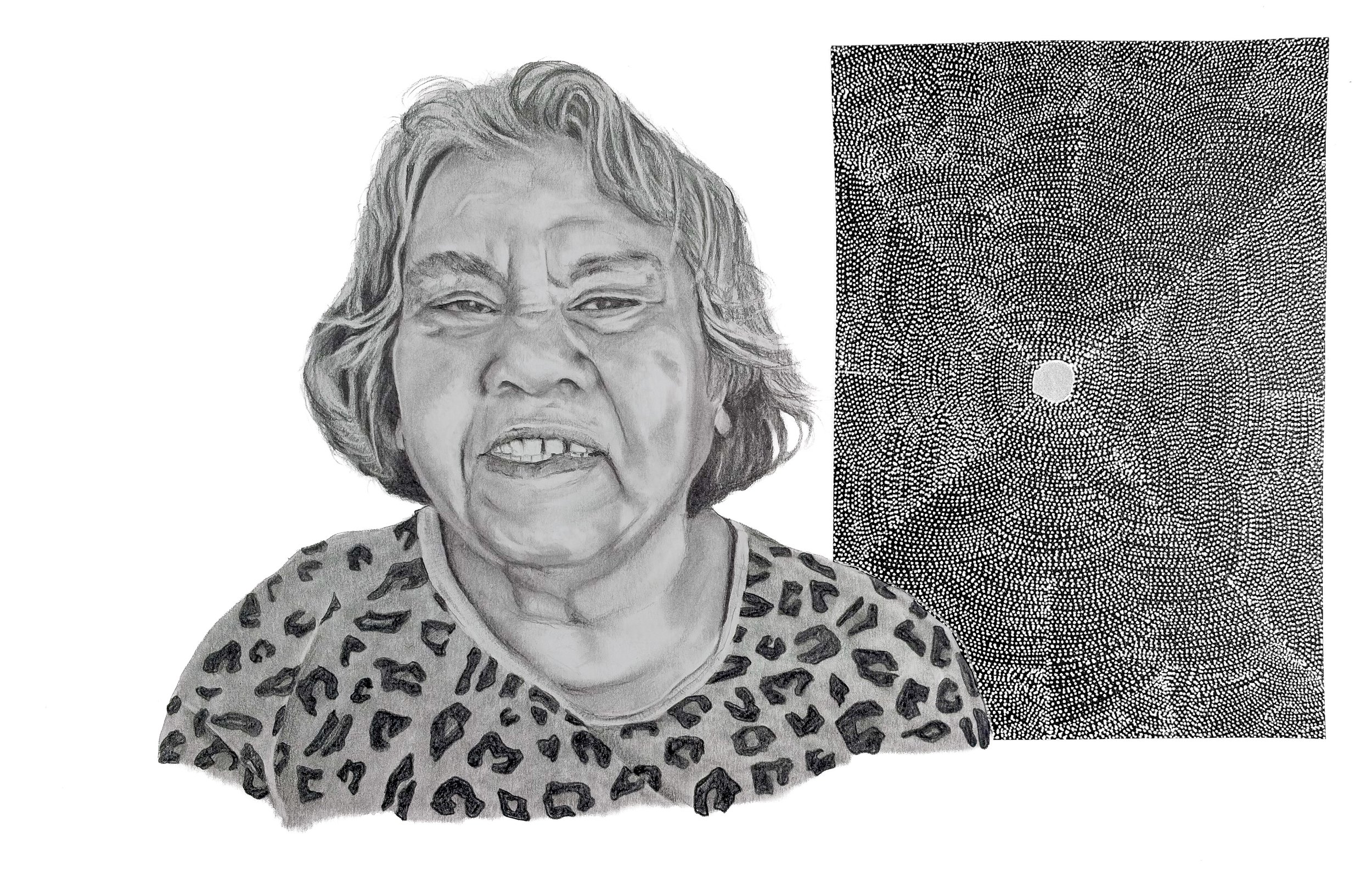
Margaret Loy Pula
Margaret Loy Pula (born 1956) is a major Australian Aboriginal artist from the Anmatyerre people, originally from the Utopia region in central Australia. She is the daughter of renowned artist Kathleen Petyarre and the mother of Abie Loy Kemarre. She thus belongs to an important lineage of female artists whose work is rooted in the transmission of stories, knowledge, and ancestral connections to the land.
Margaret Loy primarily paints her father's 'Dreams', particularly Anatye, the Bush Potato Dreaming. The bush potato, or wild yam, is an important food plant for the Anmatyerre people. Her paintings represent the plant and its growth as if observed from above. The fine networks of dots evoke the plant's roots, stems, and offshoots, as well as the landscape and the movements of the women gathering tubers after the rains.
Her technique relies on extremely precise dot work, creating compositions that are both delicate, structured, and deeply abstract. Behind this apparent abstraction lie narratives related to Country, traditional food, ceremonies, and knowledge passed down from generation to generation.
Margaret Loy Pula has received numerous accolades. In 2011, she became the first woman to win both the Sunshine Coast Art Prize and the Paddington Art Prize. In 2012, she became the first Aboriginal artist to win the prestigious Waterhouse Natural Science Art Prize.
Her work is exhibited extensively in Australia and internationally, notably in New York, and is featured in major collections. Today, Margaret Loy holds an important place in contemporary painting from Utopia, where she continues her people's artistic tradition while developing a personal pictorial language that bridges territorial mapping, abstraction, and cultural transmission.