
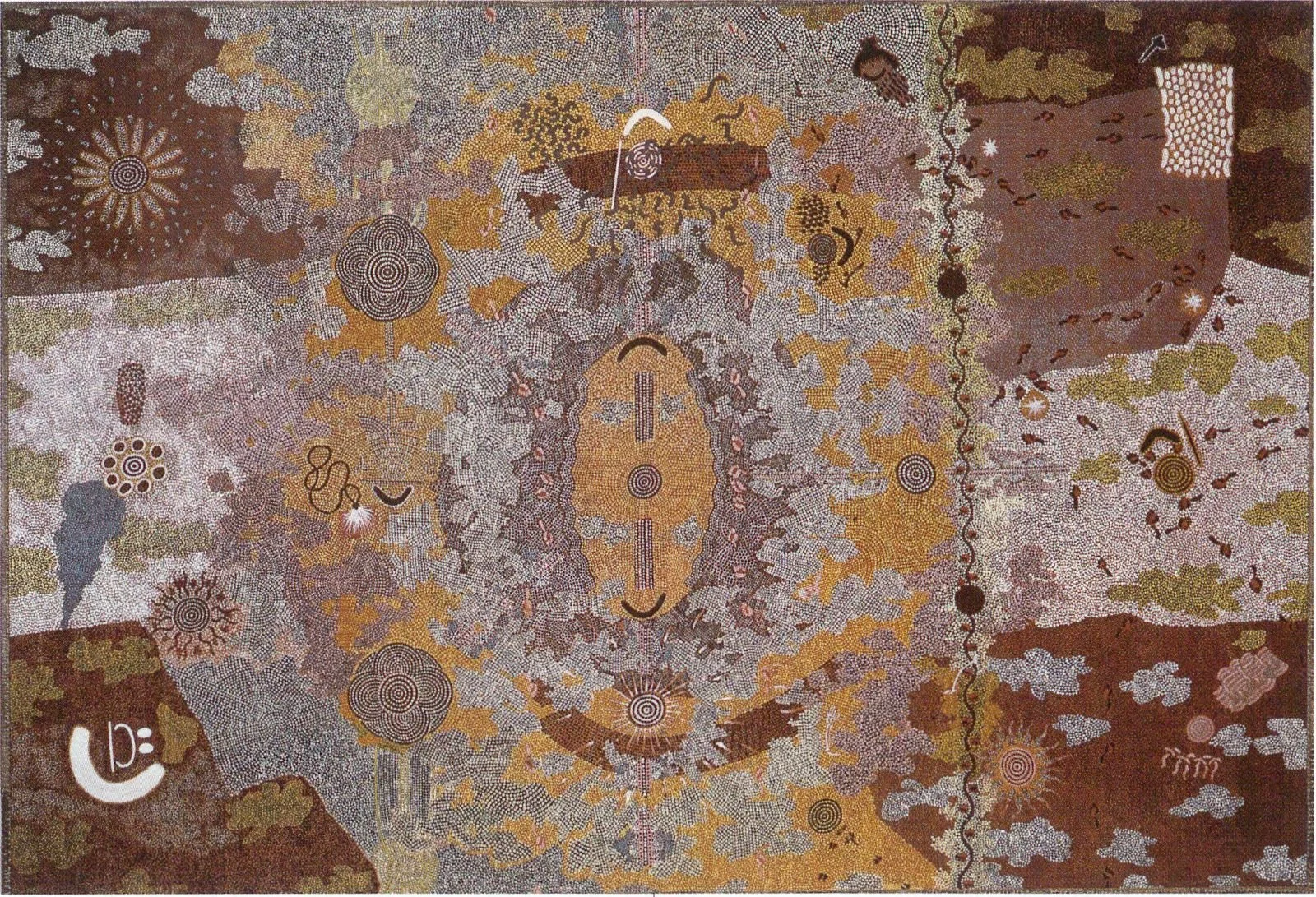
Clifford Possum Tjapaltjarri : le maître qui a fait entrer l'art aborigène dans l'histoire de l'art mondial
Clifford Possum Tjapaltjarri (c. 1932–2002) est l'artiste qui a le plus profondément transformé la perception mondiale de l'art aborigène australien : fondateur du mouvement de Papunya Tula, président de la coopérative dans les années 1970-80, et auteur de grandes "map paintings" où plusieurs récits du Tjukurpa se superposent sur une même toile avec une précision cartographique qui reflète son droit ancestral sur le territoire. Ses œuvres majeures — Warlugulong (1977), Man's Love Story (1978), Love Story (1972) — sont aujourd'hui dans les collections de la National Gallery of Australia, de l'Art Gallery of New South Wales et de la Royal Collection britannique. En 2007, Warlugulong a établi un record de 2,4 millions de dollars australiens aux enchères chez Sotheby's, acquis par la National Gallery of Australia — une consécration muséale et marchande sans précédent pour l'art du désert central. Ses filles Gabriella Possum Nungurrayi et Michelle Possum Nungurrayi perpétuent sa tradition picturale, tandis que son influence irrigue toute la peinture contemporaine du désert central australien. Inma Galerie invite à découvrir les artistes de cette filiation — ceux qui peignent aujourd'hui le même pays ancestral, avec le même langage visuel et la même rigueur documentaire.
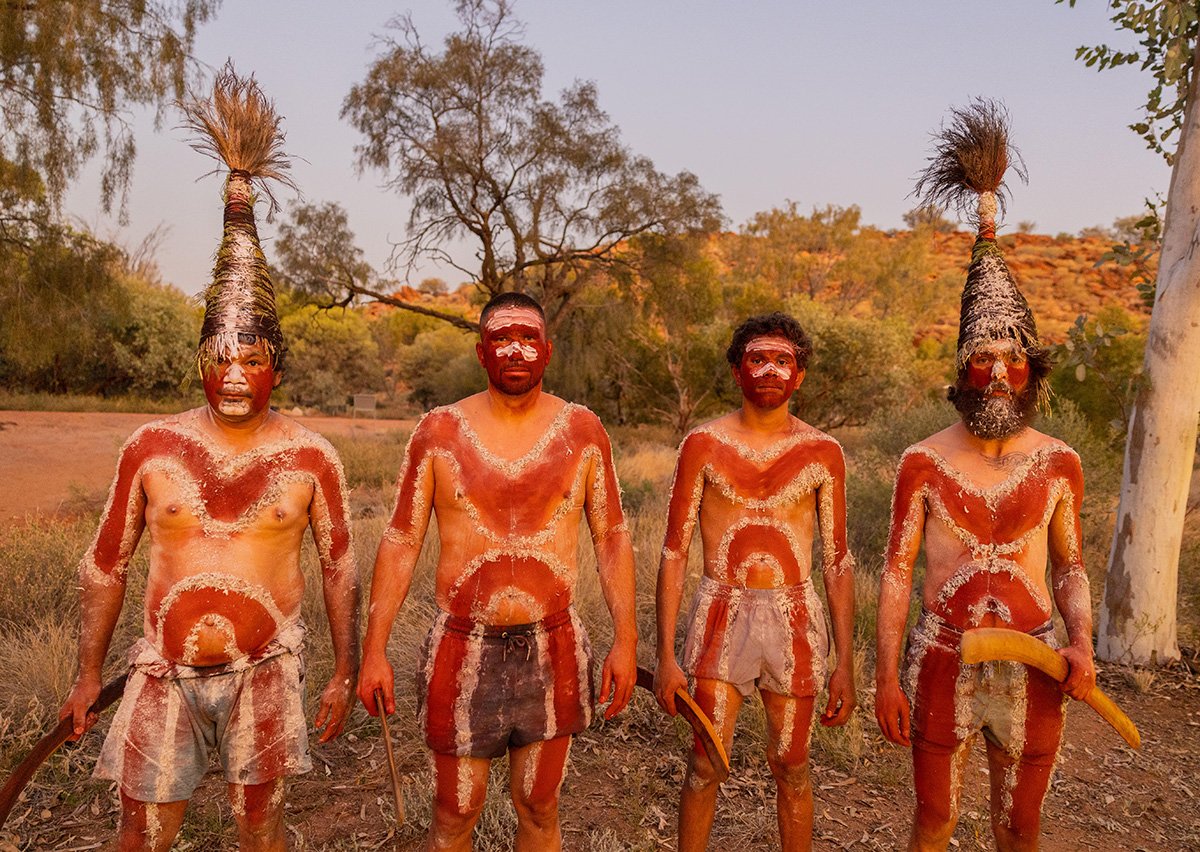
Le système des 8 skin names aborigènes : Comprendre Tjapaltjarri, Napurrula, Tjungurrayi
Le système des 8 skin names aborigènes — Tjapaltjarri, Tjampitjinpa, Tjungurrayi, Tjakamarra (masculins) et Napaltjarri, Nampitjinpa, Napurrula, Nakamarra (féminins) — structure la société Pintupi et Warlpiri depuis des millénaires en déterminant les mariages autorisés, les responsabilités cérémonielles, et les droits sur les récits du Temps du Rêve que chaque artiste peut légitimement peindre. Comprendre ce système transforme l'appréciation de l'art aborigène : Ningura Napurrula peignait Wirrulnga non par choix arbitraire mais par droit héréditaire lié à son statut de Napurrula et à sa lignée familiale ; Bob Gibson Tjungurrayi possède des responsabilités spécifiques sur le cycle Tingari liées à son skin name de Tjungurrayi. Le système prescrit les combinaisons matrimoniales (Tjapaltjarri épouse Nampitjinpa, Tjungurrayi épouse Napaltjarri, etc.), prévient la consanguinité sur quatre générations minimum, et régule toutes les relations sociales selon des protocoles millénaires d'une sophistication remarquable. Les variations orthographiques (Tjungurrayi/Tjupurrula, Nakamarra/Napanangka) reflètent les différences dialectales et les choix de transcription, mais le système sous-jacent reste identique à travers le désert central australien. Inma Galerie documente systématiquement les skin names dans les certificats d'authenticité, cette information confirmant l'identité culturelle de l'artiste, ses droits légitimes sur les récits représentés, et l'authenticité absolue de chaque œuvre selon les protocoles traditionnels respectés depuis des millénaires.
Old Mick Wallankari Tjakamarra: Pioneer ofAboriginal art guardian of the Dreaming
Old Mick Wallankari Tjakamarra (c. 1925–1998) was one of the most important founding artists of theAboriginal art movement launched in Papunya in 1971. A respected member of the Pintupi people, he played a crucial role in transforming the sacred stories of the Dreamtime into revolutionary acrylic paintings. Born in the Western Desert and having lived according to Pintupi nomadic traditions Pintupi adulthood, Old Mick possessed an authentic knowledge of Dreaming stories and ancestral ceremonies. In 1971, alongside Geoffrey Bardon and pioneers such as Clifford Possum Tjapaltjarri and Johnny Warangkula Tjupurrula, he participated in the early experiments that created the visual language ofAboriginal art . Old Mick contributed to the development of the dot painting technique, which became the iconic signature of CentralAboriginal art . His Aboriginal paintings are characterized by narrative compositions mapping the sacred sites and ancestral journeys of the Tingari cycle. A founding member of Papunya Tula Artists 1972, he participated in the historic exhibitions of the 1970s and 1980s that introducedAboriginal art the world. His Aboriginal paintings are included in the permanent collections of the National Gallery of Australia, the Art Gallery of NSW, and other prestigious institutions. Old Mick’s works possess exceptional heritage value as direct testimonies to the emergence ofAboriginal art . Inma Galerie, a specialist inAboriginal art , occasionally offers these rare historical works with Papunya Tula Artists authentication Papunya Tula Artists comprehensive documentation.

How do I start a collection ofAboriginal art ?
Discover how to start a collection ofAboriginal art with this expert guide from Inma Galerie. From understanding the ancestral traditions of the Dreamtime to modern acquisition techniques, learn how to identify authentic works, choose the right artists, and invest with confidence. Explore selection criteria, budget ranges, and best practices for preservation to build an exceptional collection that honors Aboriginal cultural richness while enhancing your artistic legacy.

Aboriginal art : Symbolism and Meaning of Traditional and Contemporary Colors
L'art aborigène australien fascine par sa richesse chromatique et sa profondeur symbolique. Dans cette tradition artistique millénaire, chaque couleur raconte une histoire liée au "Temps du Rêve". Des ocres naturelles des peintures rupestres aux acryliques éclatantes des œuvres contemporaines, découvrez comment les couleurs aborigènes transmettent un héritage culturel unique au monde, à travers les siècles jusqu'aux créations des plus grands artistes aborigènes d'aujourd'hui.

Contemporary Australian Aboriginal Art: A Millennia-Old Heritage in Constant Evolution
Aboriginal art captivates with its rich symbolism and millennia-old history. Spanning the ages without ever becoming static, this artistic expression—unique in the world—blends ancestral traditions with contemporary creativity. Our article invites you on a journey to the heart of this exceptional visual culture, from 65,000-year-old rock paintings to the innovative works of today’s Aboriginal artists. Discover the secrets of dot painting, the spirituality of the Dreamtime, and the inspiring journeys of artists such as Emily Kame Kngwarreye and Clifford Possum Tjapaltjarri. Whether you’re a seasoned collector or simply an art lover, immerse yourself in this fascinating visual world and learn to recognize, appreciate, and acquire authentic Aboriginal artworks with our expert guide.
This introductory excerpt can be placed at the beginning of the article, right after the main title and before the first section. It includes the main keywords and provides an engaging preview of the content that follows, while encouraging the reader to keep reading to learn more.

The Pinnacles Desert: An Ancestral Source of Inspiration for Contemporary Australian Aboriginal Art
Le Désert des Pinnacles, avec ses mystérieuses formations calcaires surgissant du sable doré, fascine bien au-delà de sa valeur géologique. Pour les artistes aborigènes australiens, ce paysage lunaire constitue une source d'inspiration spirituelle et créative depuis des millénaires. Notre article vous emmène à la découverte de ce site exceptionnel et de son influence déterminante sur l'art aborigène contemporain. Des techniques pointillistes traditionnelles aux œuvres abstraites modernes, plongez dans un univers artistique où chaque motif raconte une histoire ancestrale liée à ce territoire sacré. Une exploration culturelle et visuelle qui vous révélera pourquoi ces œuvres uniques sont aujourd'hui recherchées par les collectionneurs du monde entier.