
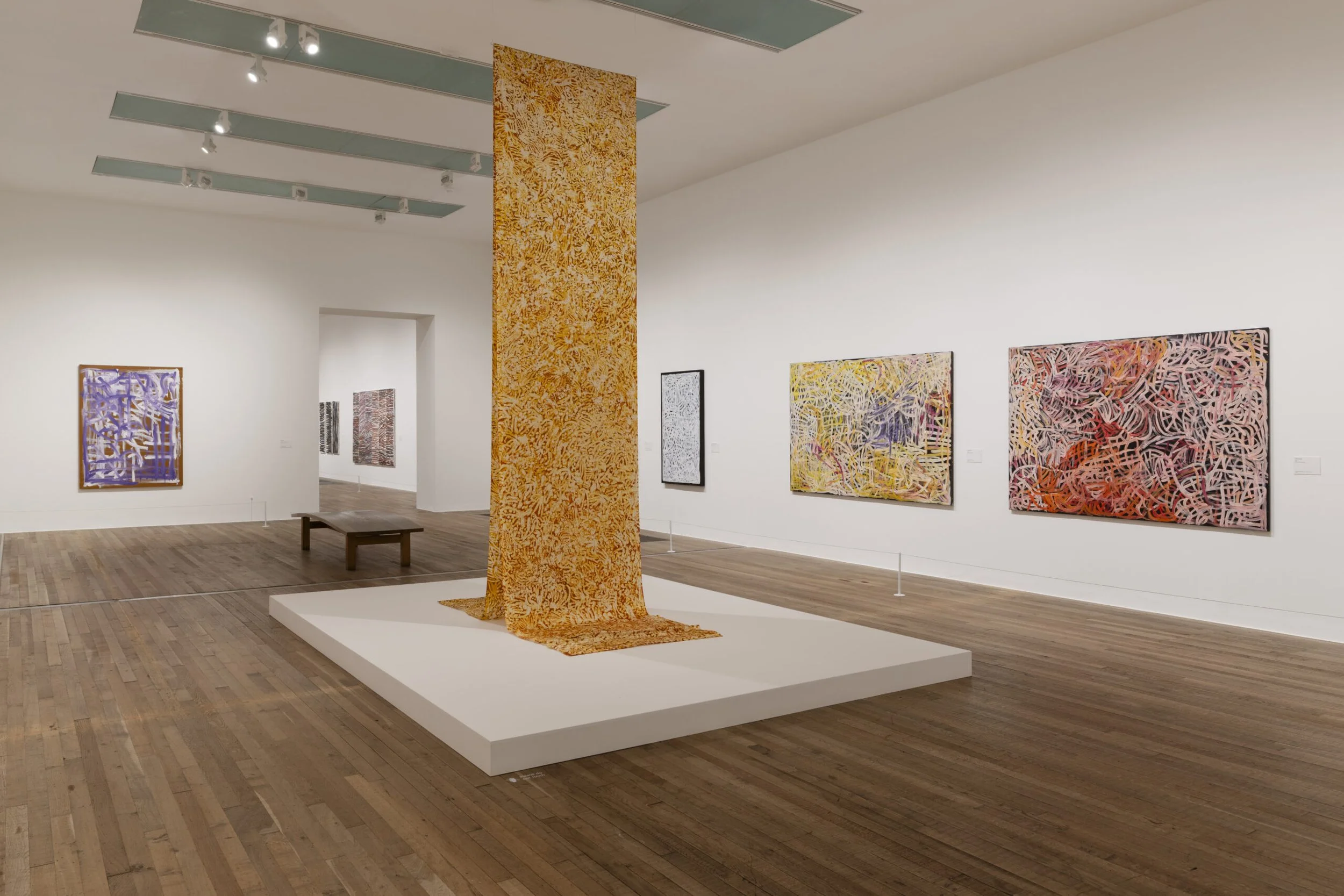
Emily Kame Kngwarreye : l'artiste aborigène qui a bouleversé l'histoire de l'art contemporain
Emily Kame Kngwarreye (c.1910-1996) est l'une des figures les plus extraordinaires de l'art contemporain mondial : artiste Anmatyerre d'Utopia, dans le désert australien, elle a commencé à peindre à plus de 70 ans et produit près de 3 000 toiles en huit ans. Comparée à Monet, Rothko et Pollock par les critiques internationaux, elle représente l'Australie à la Biennale de Venise 1997 à titre posthume. Earth's Creation I (1994) établit le record de 2,1 millions de dollars australiens aux enchères en 2017. En 2025, la Tate Modern lui consacre la plus grande rétrospective jamais organisée en Europe pour un artiste australien. Ce guide complet retrace sa vie, son œuvre — les cinq périodes stylistiques, l'Awelye, le Dreaming d'Alhalkere — et les dynamiques du marché, avec les clés pour collectionner l'art d'Utopia en France.
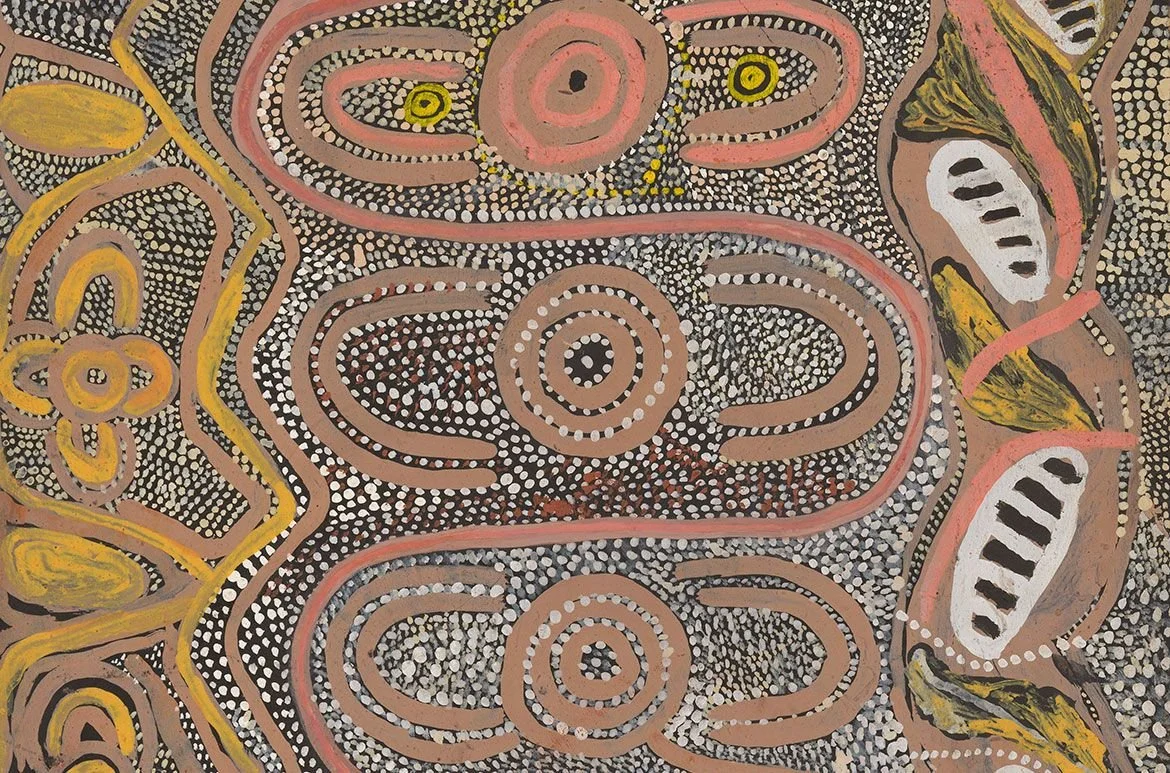
Symboles de l'art aborigène : comprendre le langage visuel qui traverse 50 000 ans
Les symboles de l'art aborigène australien — cercles, lignes, points, U inversés — sont bien plus qu'un code décoratif à mémoriser. Ils forment un système de transmission culturelle millénaire, conçu pour cartographier le territoire, raconter les récits du Tjukurpa et préserver des savoirs à plusieurs niveaux de lecture selon le degré d'initiation du regardeur. Ce guide va au-delà des définitions de base : il explique pourquoi ces symboles existent, comment les lire en pratique — avec trois exercices concrets — et ce qui reste délibérément opaque. Une clé de lecture qui, une fois tenue en main, change définitivement votre façon de regarder ces peintures.
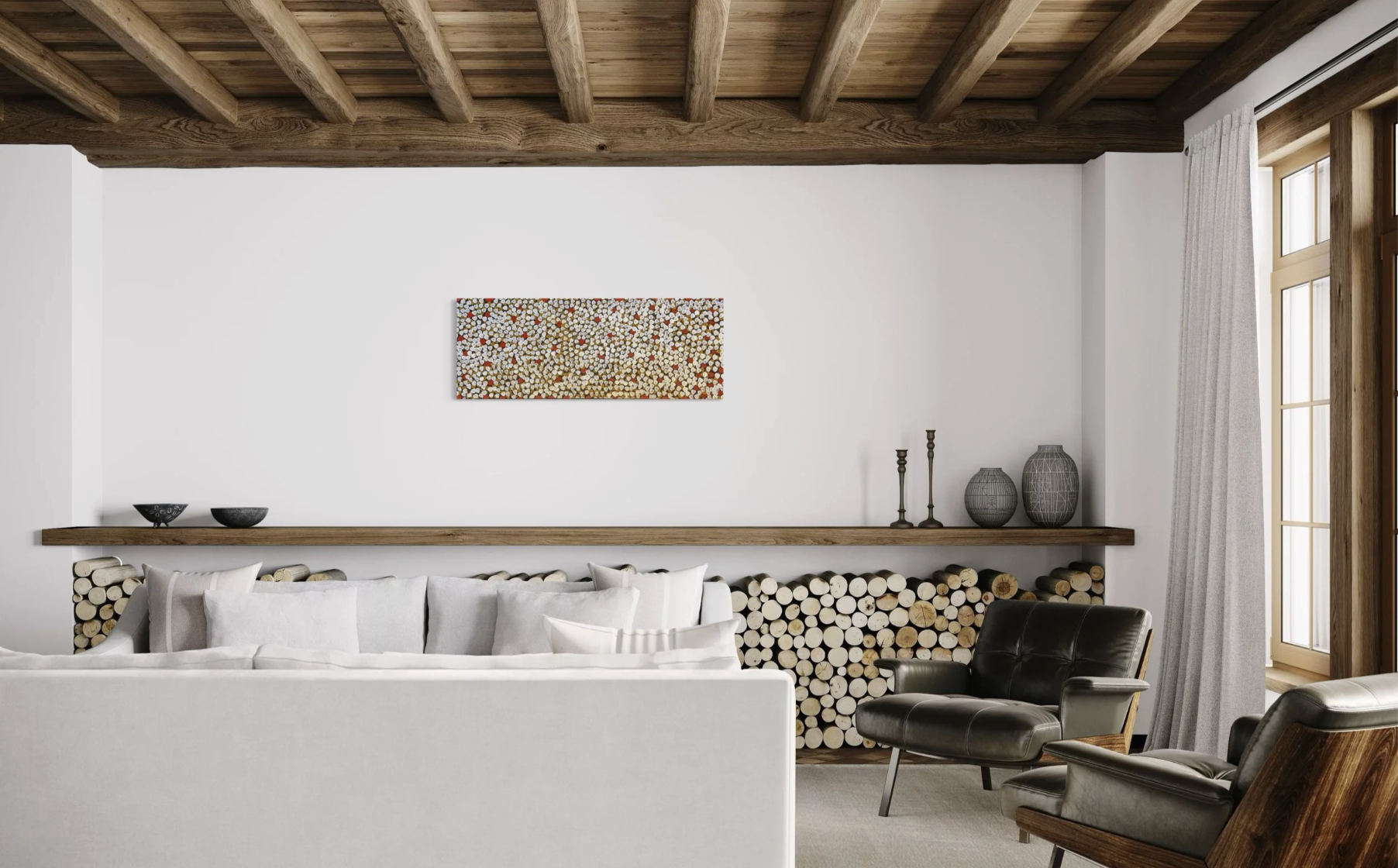
Old Mick Wallankari Tjakamarra: Pioneer ofAboriginal art guardian of the Dreaming
Old Mick Wallankari Tjakamarra (c. 1925–1998) was one of the most important founding artists of theAboriginal art movement launched in Papunya in 1971. A respected member of the Pintupi people, he played a crucial role in transforming the sacred stories of the Dreamtime into revolutionary acrylic paintings. Born in the Western Desert and having lived according to Pintupi nomadic traditions Pintupi adulthood, Old Mick possessed an authentic knowledge of Dreaming stories and ancestral ceremonies. In 1971, alongside Geoffrey Bardon and pioneers such as Clifford Possum Tjapaltjarri and Johnny Warangkula Tjupurrula, he participated in the early experiments that created the visual language ofAboriginal art . Old Mick contributed to the development of the dot painting technique, which became the iconic signature of CentralAboriginal art . His Aboriginal paintings are characterized by narrative compositions mapping the sacred sites and ancestral journeys of the Tingari cycle. A founding member of Papunya Tula Artists 1972, he participated in the historic exhibitions of the 1970s and 1980s that introducedAboriginal art the world. His Aboriginal paintings are included in the permanent collections of the National Gallery of Australia, the Art Gallery of NSW, and other prestigious institutions. Old Mick’s works possess exceptional heritage value as direct testimonies to the emergence ofAboriginal art . Inma Galerie, a specialist inAboriginal art , occasionally offers these rare historical works with Papunya Tula Artists authentication Papunya Tula Artists comprehensive documentation.