
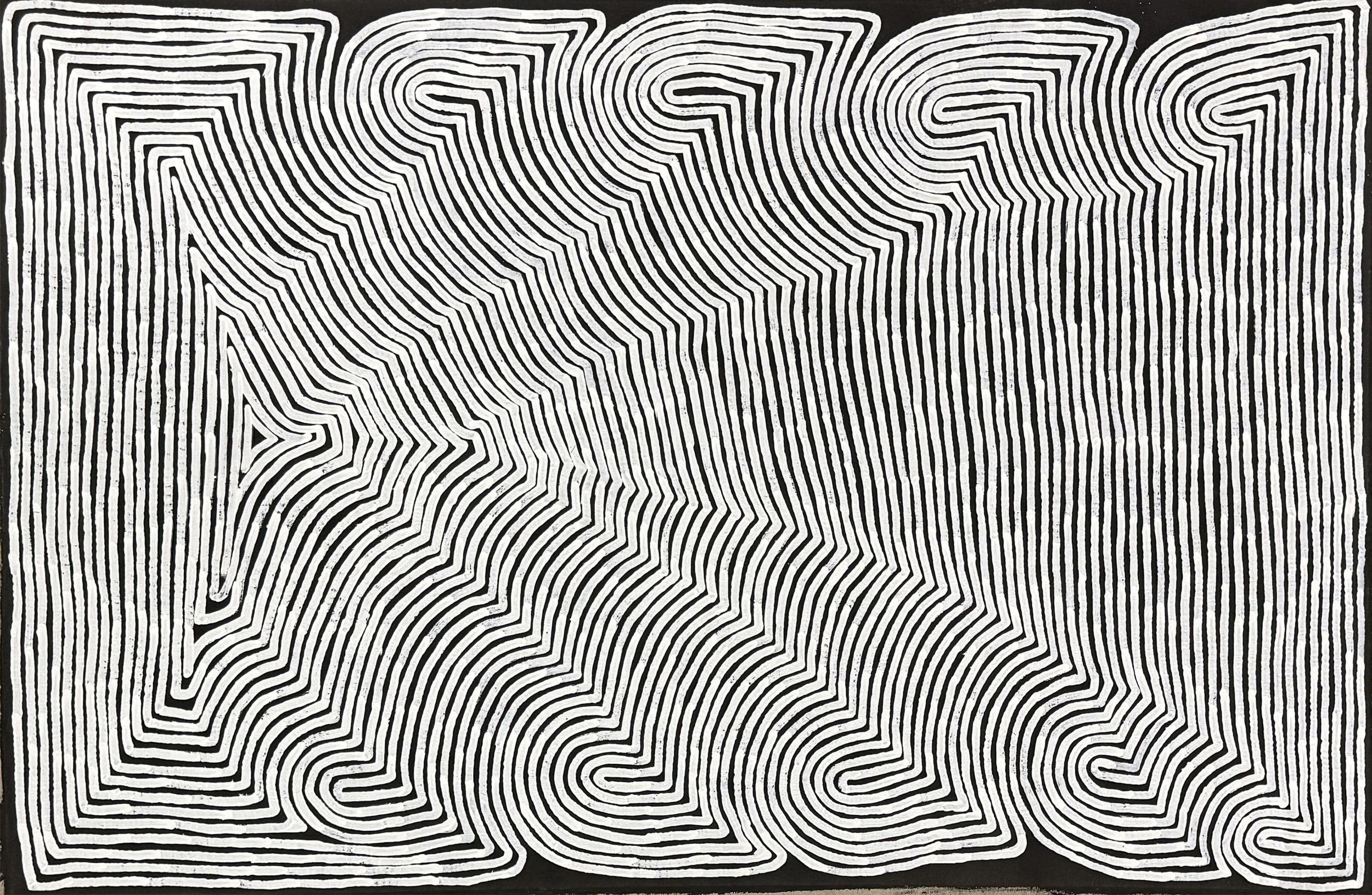
 Image 1 sur 5
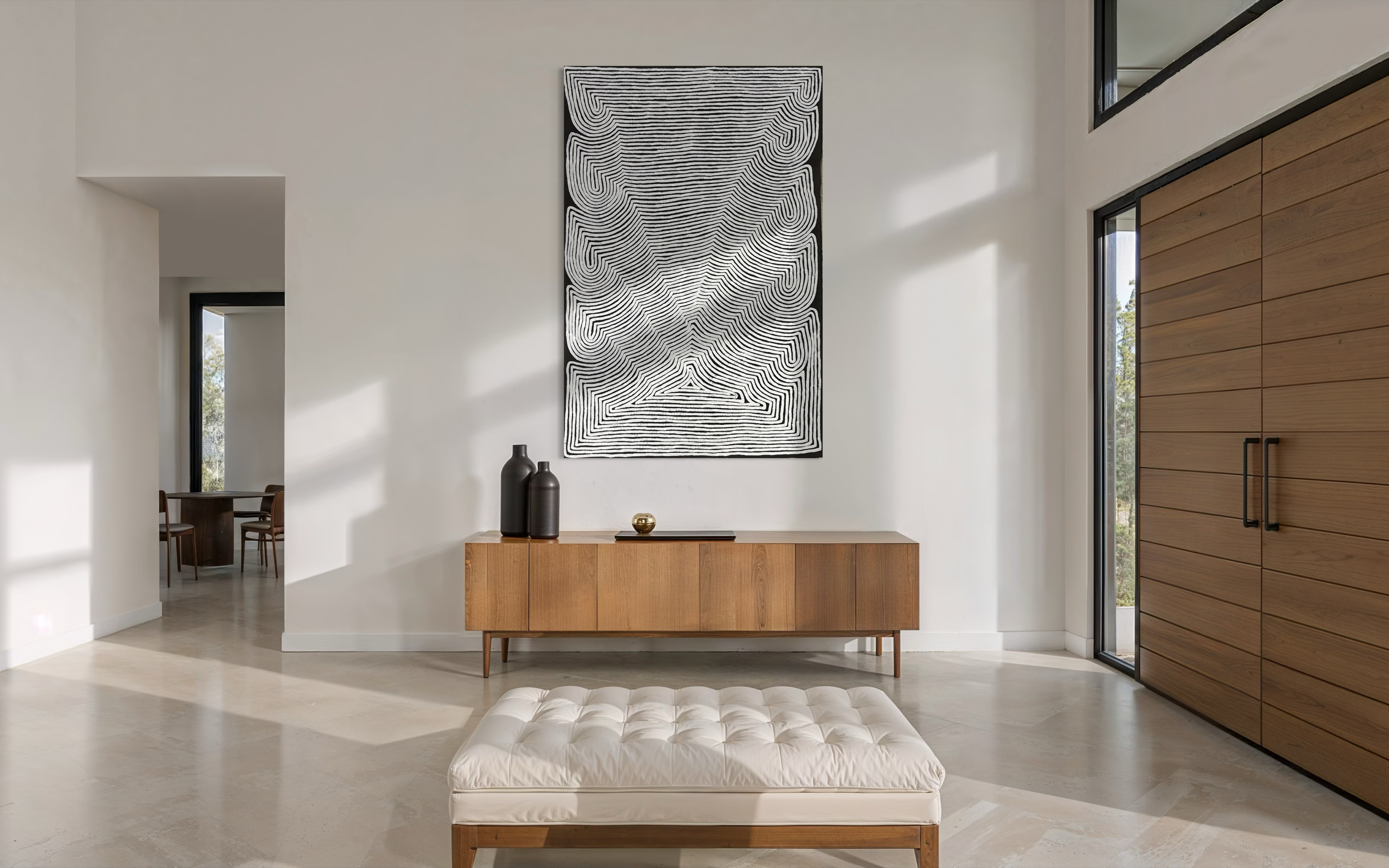 Image 2 of 5
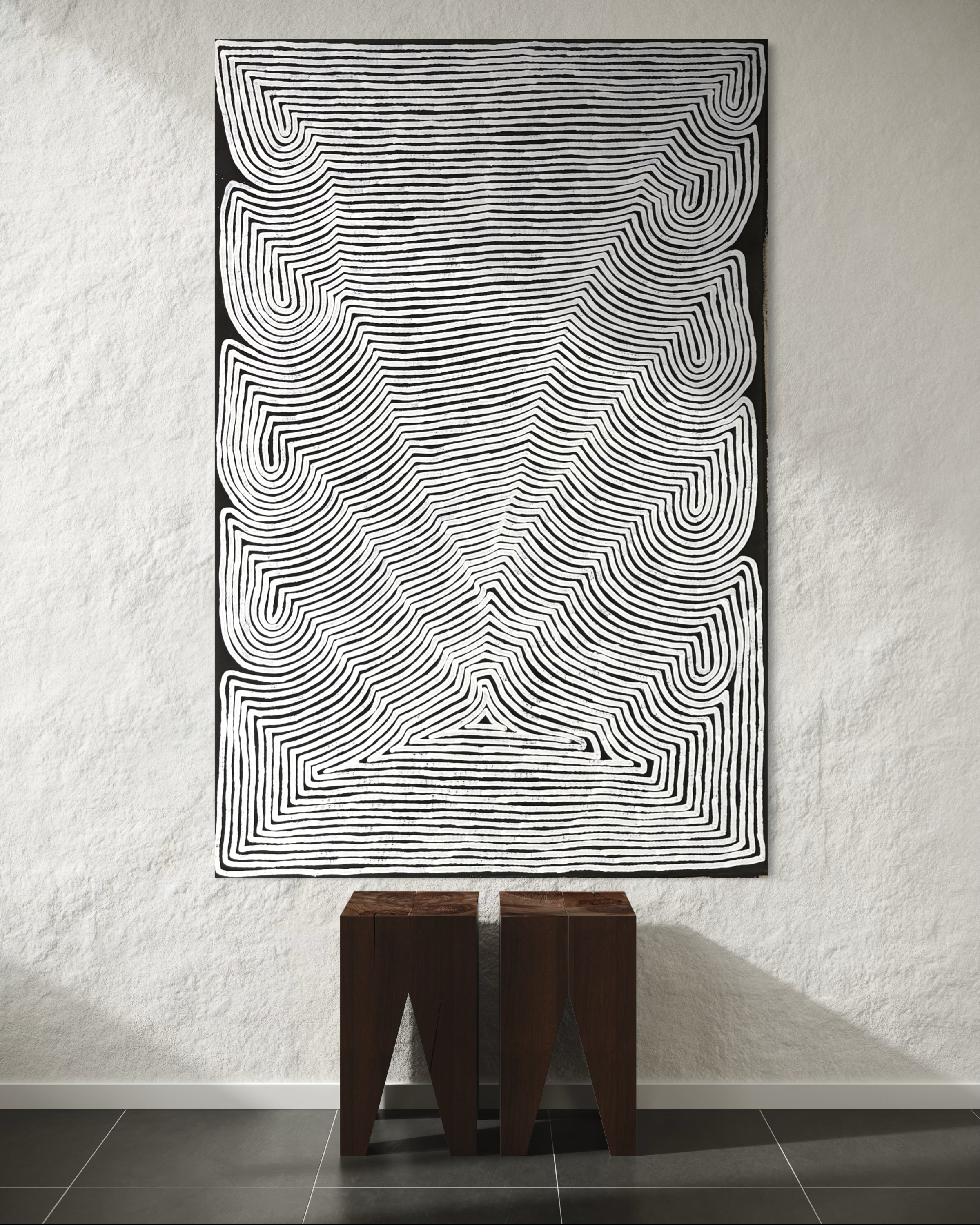 Image 3 of 5
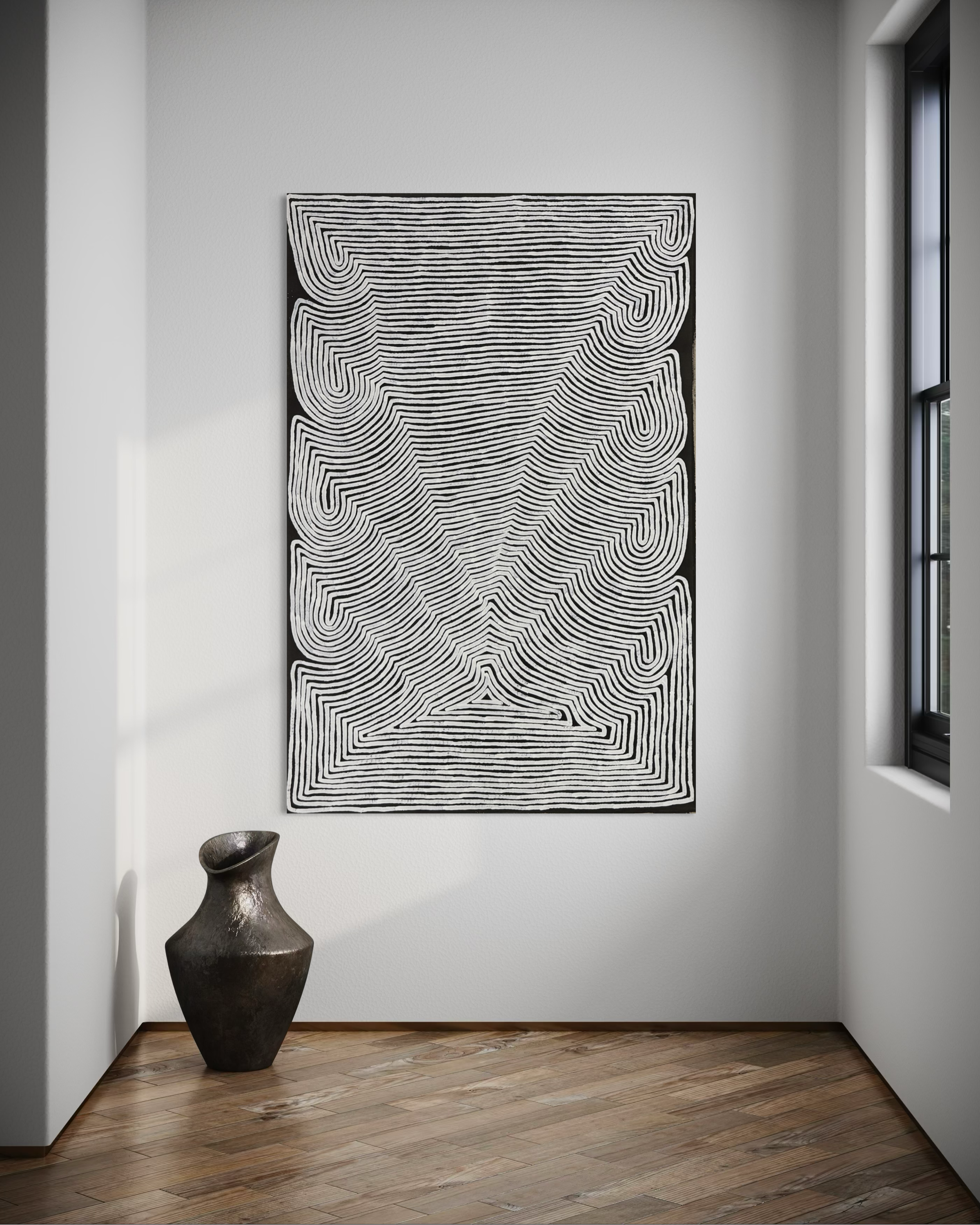 Image 4 of 5
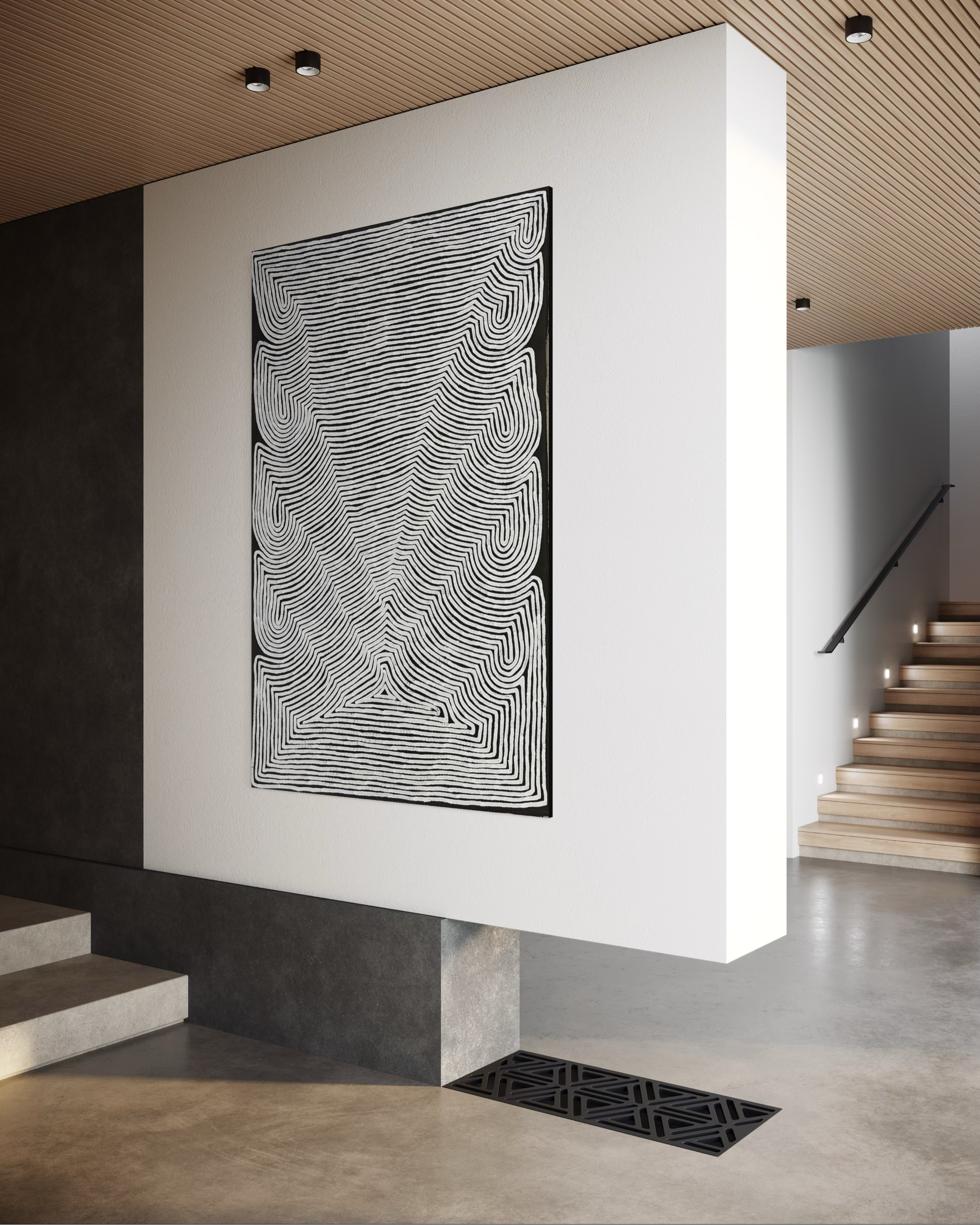 Image 5 of 5
This monumental artwork by Ronnie Tjampitjinpa, created in 2007, masterfully illustrates the bold minimalist approach that revolutionized the aesthetic of Western Desert art in the 1990s and made him one of the most collected Aboriginal artists worldwide. Titled Water Dreaming, this significant acrylic on Belgian linen painting (179 × 118 cm) embodies the distinctive geometric style that characterizes Ronnie's artistic maturity. Through its hypnotic composition of parallel lines forming bold concentric rectangles, the artist evokes the sacred site of Kalipinypa, a Water Dreaming location where his grandfather passed away, creating a spiritual mapping that is both seemingly simple and profoundly mysterious.
With its monochromatic black and white palette of absolute purity, this canvas generates vibrant optical effects that captivate the eye and invite meditative contemplation. The repetitive geometric bands, freed from their traditional iconographic references while maintaining the Papunya emphasis on the repetition of lines and shapes, create a pulsating illusion characteristic of the Pintupi visual language. This exceptional work, accompanied by three photographs showing the creation process and a photograph of the artist with the finished work, as well as its certificate of authenticity from the Grasstree Gallery, attests to the historical importance of this piece in the career of an artist unanimously recognized as one of the great masters of the Aboriginal art movement.
All artworks offered by Inma are authentic and delivered with an official certificate of authenticity issued by the art center or gallery, guaranteeing their provenance and value. Each piece is carefully packaged in professional materials suitable for the transport of artworks. Shipping is handled by UPS, with real-time tracking and full insurance, ensuring secure and peaceful delivery to your home.
Ronnie Tjampitjinpa (1943-2023), known as the "King of Kintore," was one of the pioneers and most influential figures of the contemporary Aboriginal art movement. Born near Tjiturrunya/Muyinnga, approximately 100 km west of the Kintore Ranges, he grew up living the traditional nomadic desert life before the droughts of the 1950s forced his family to move to Haasts Bluff and then Papunya. Initiated into Pintupi traditions at Yumari, he was one of the youngest members of the founding group who began painting with Geoffrey Bardon in 1971-1972, working under the tutelage of his uncle Uta Uta Tjangala. A founding member and shareholder of Papunya Tula Artists, chairman of the Kintore Outstation Council, and elected chairman of Papunya Tula Artists in 2004, he realized his dream by returning to Kintore in 1981 and then establishing his outstation at Ininti (Redbank) in 1983. Winner of the Alice Springs Art Prize in 1988, a seven-time NATSIAA finalist, celebrated with a retrospective exhibition at the Art Gallery of New South Wales in 2015, and ranked among the 50 most collectible Australian artists in 2008-2009, his work is featured in over 30 major institutional collections, including the National Gallery of Australia, the Musée du Quai Branly in Paris, and the Seattle Art Museum. His exceptional artistic legacy, characterized by bold geometric minimalism exploring themes of Water Dreaming, Bushfire Dreaming, and the Tingari Cycle, continues to inspire and fascinate art lovers worldwide.