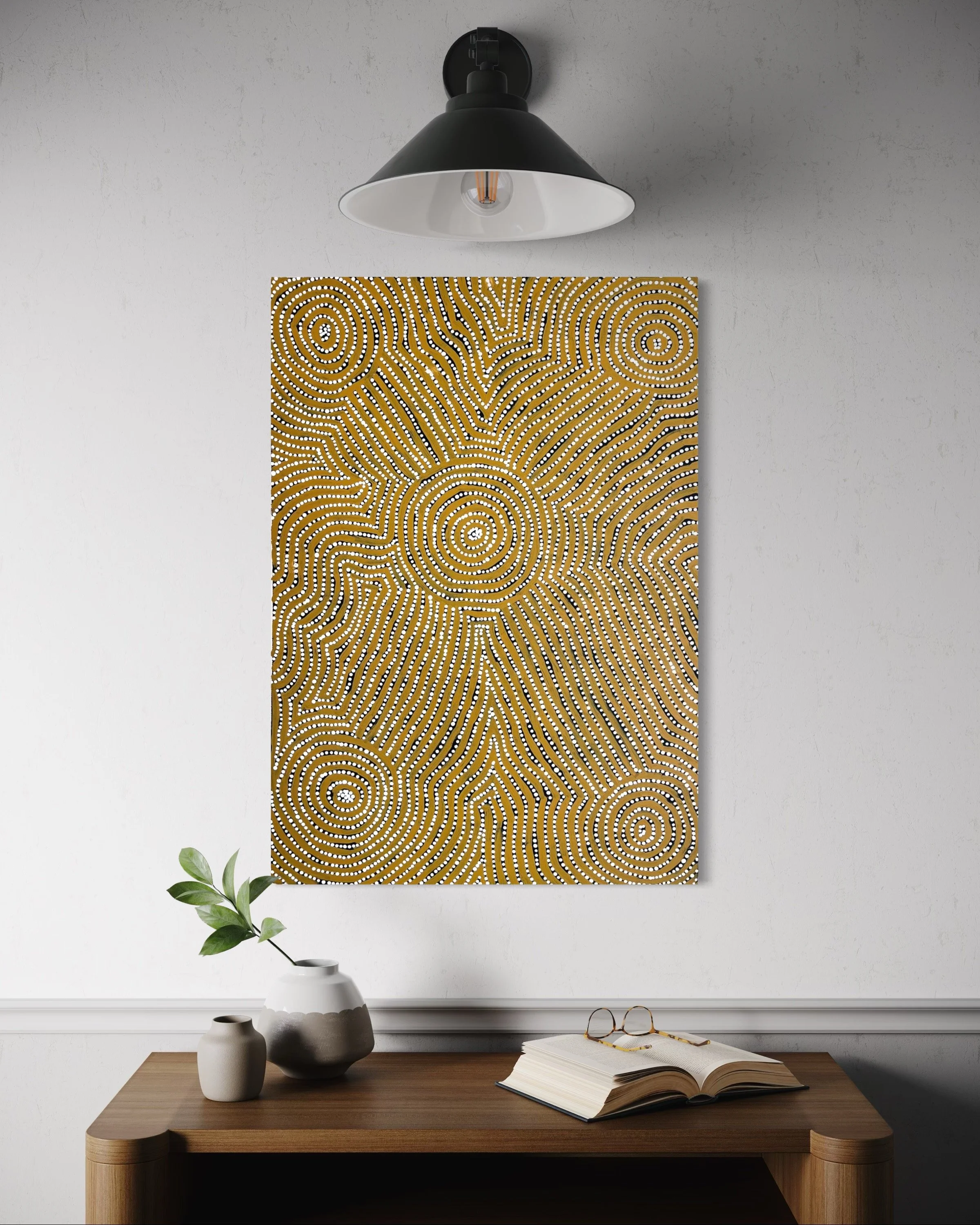
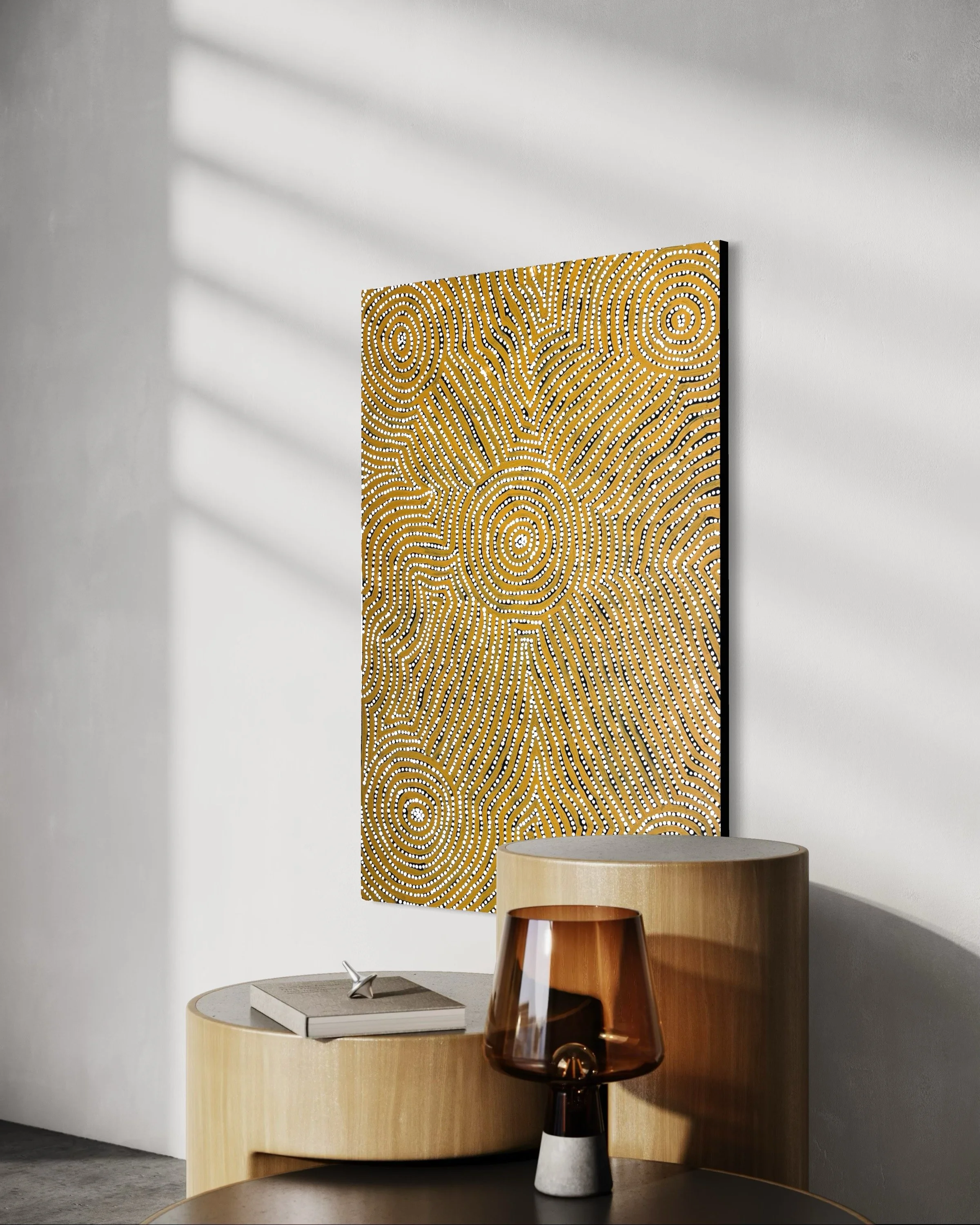
 Image 1 of 8
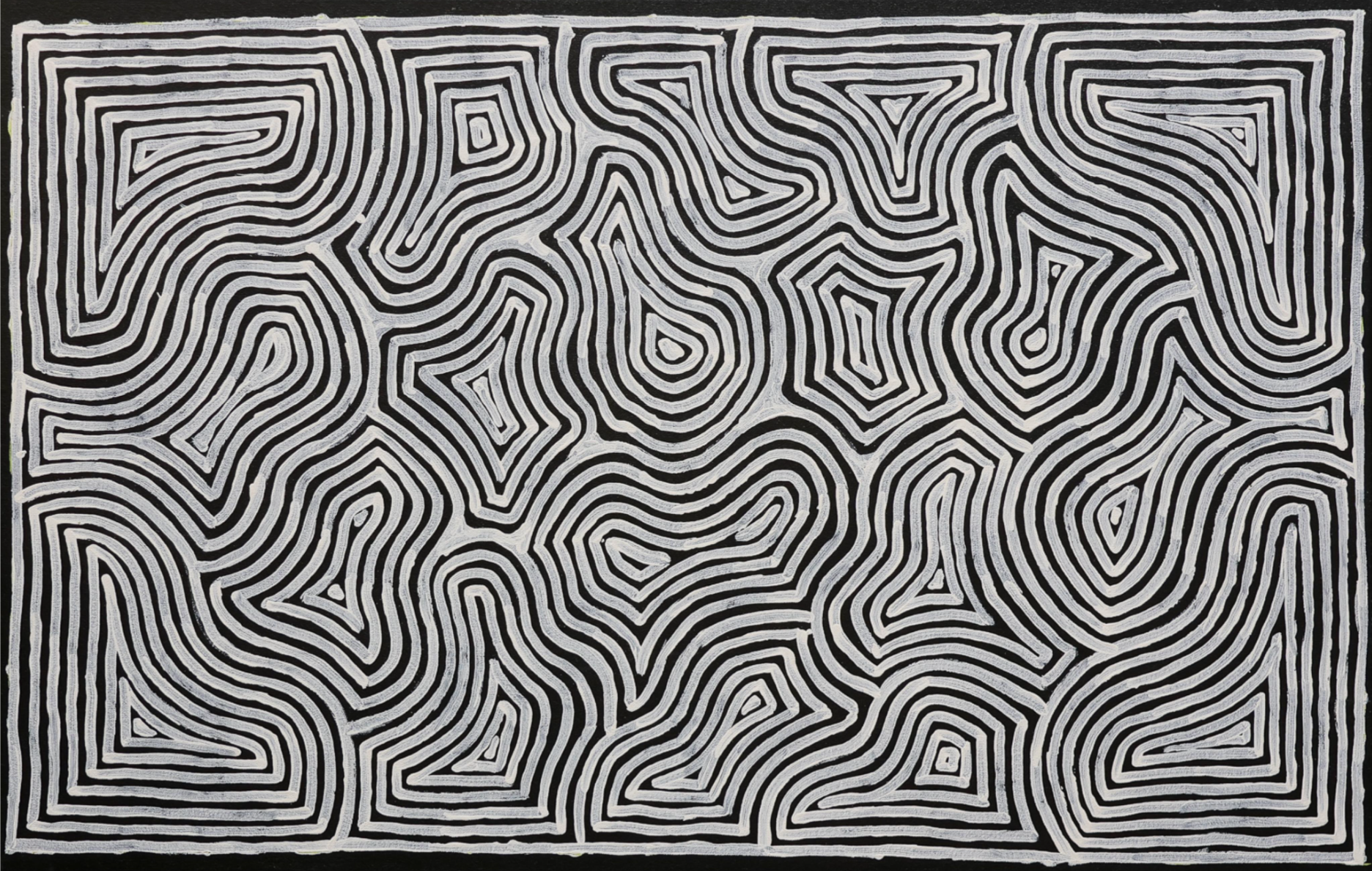
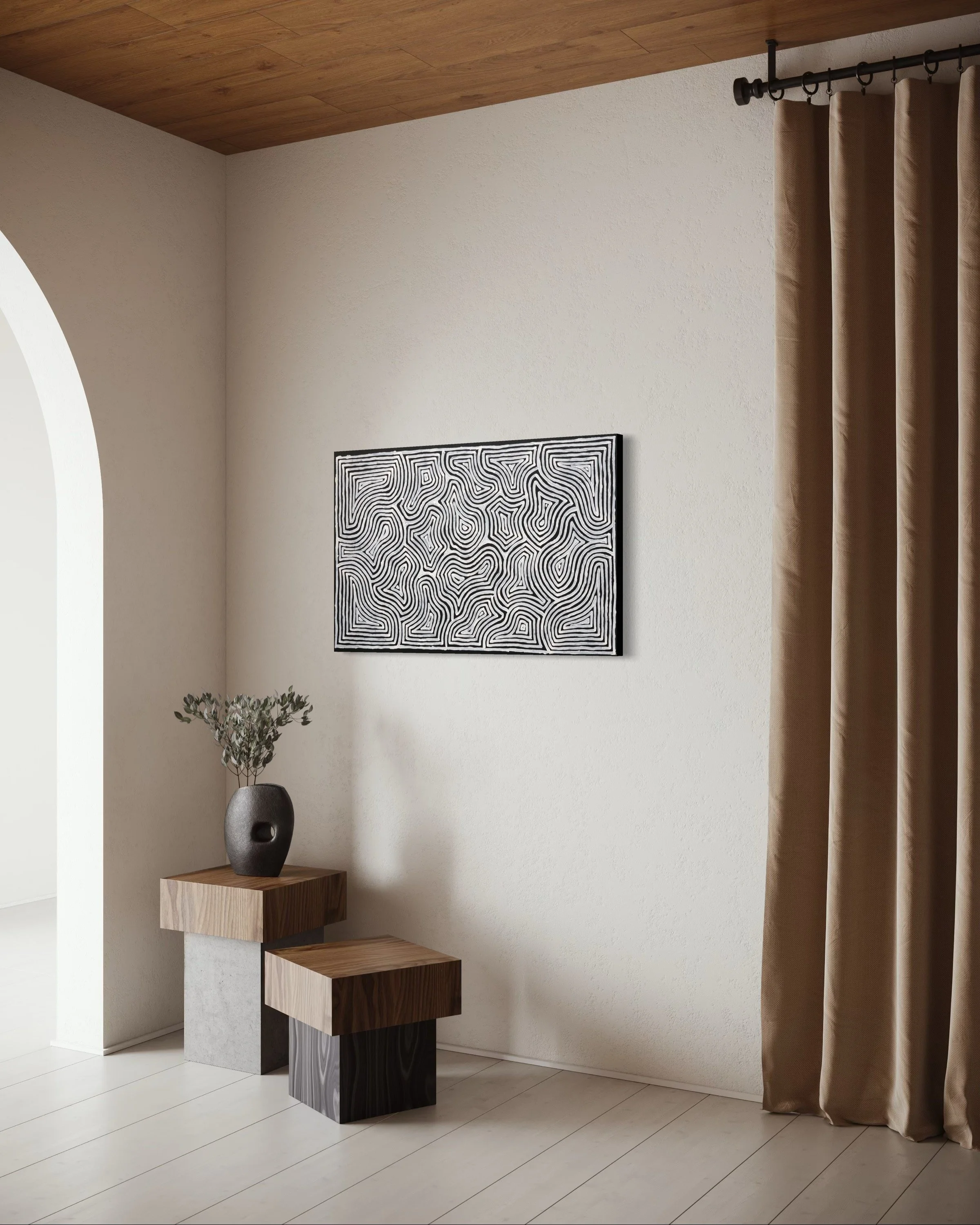 Image 2 of 8
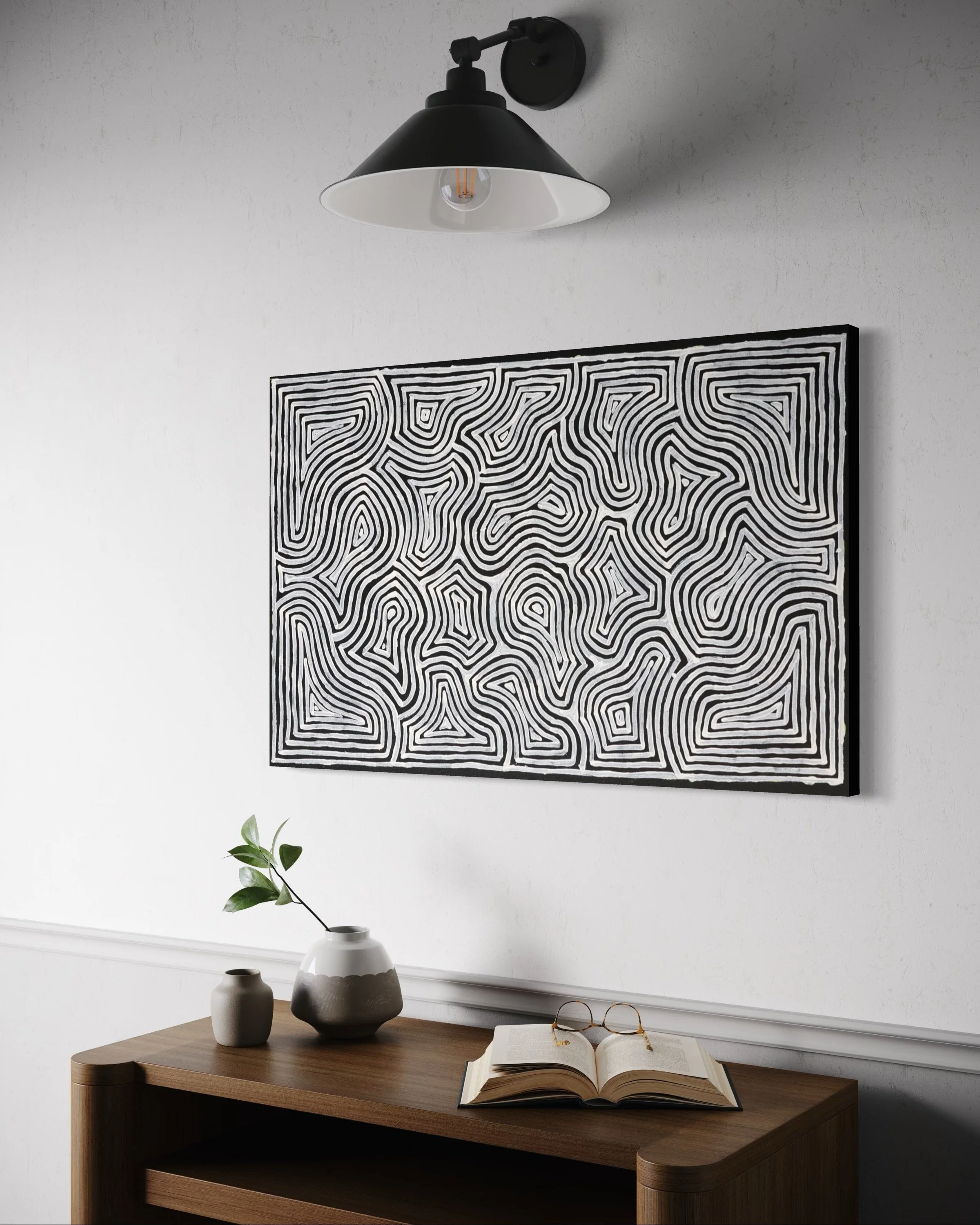 Image 3 of 8
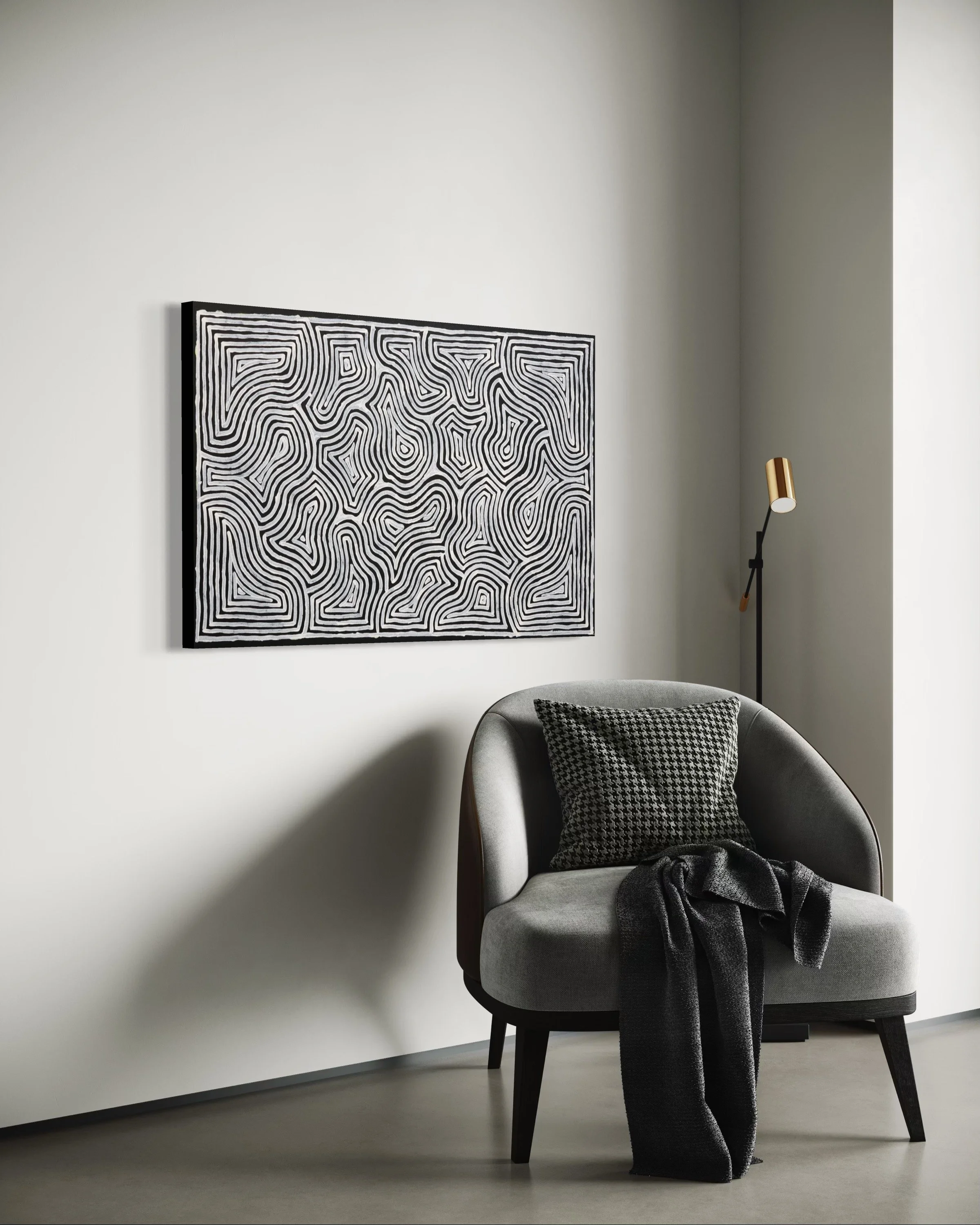 Image 4 of 8
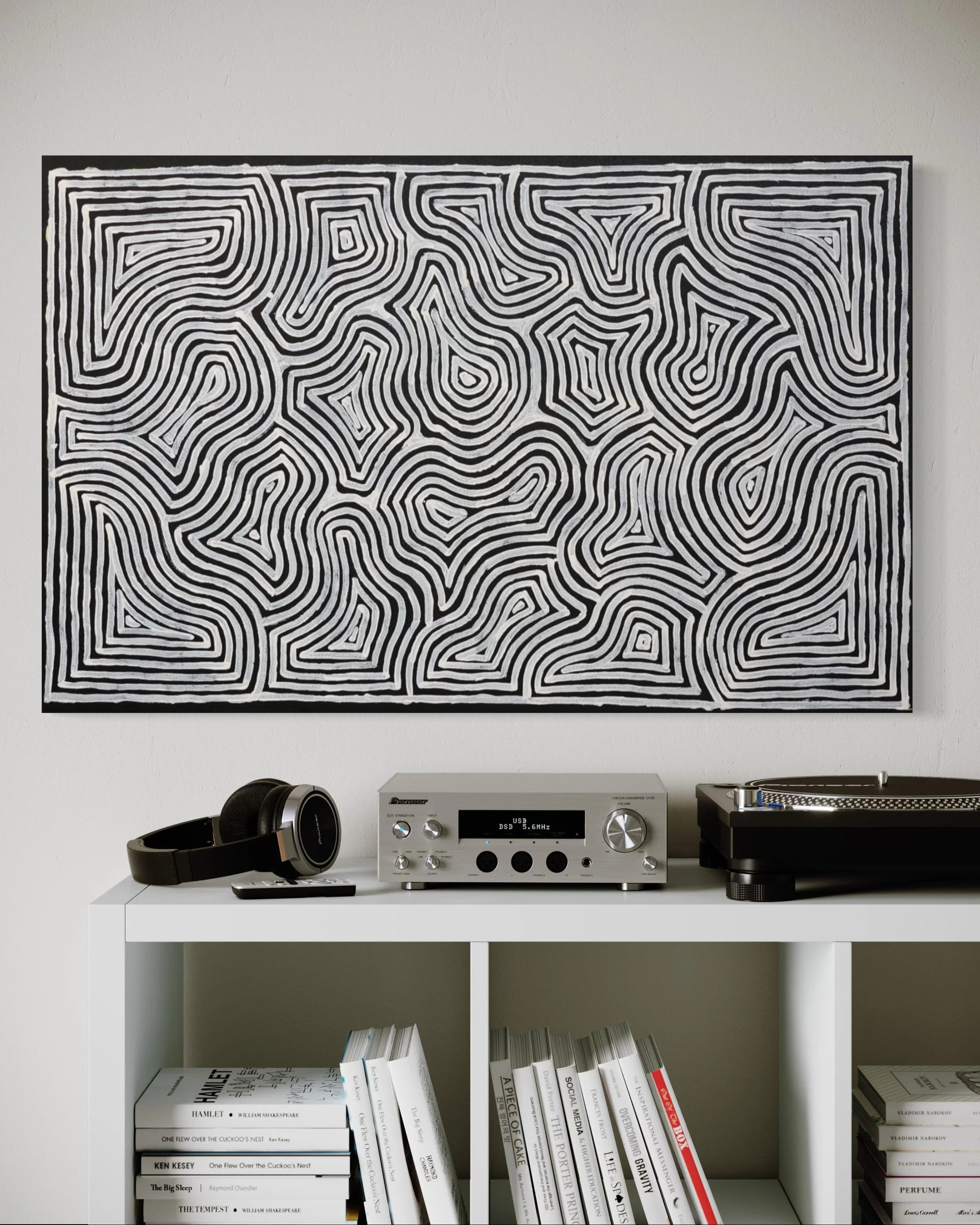 Image 5 of 8
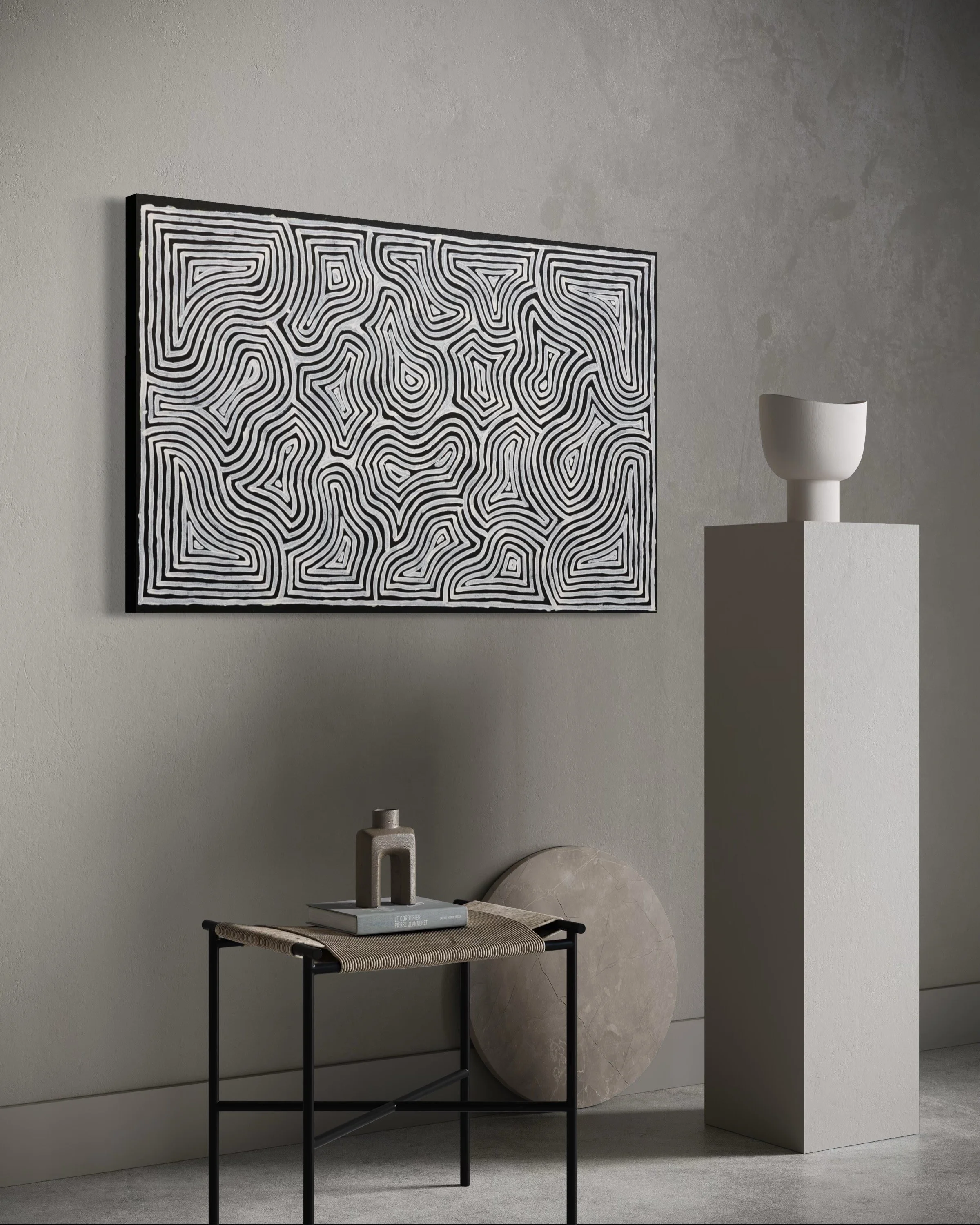 Image 6 of 8
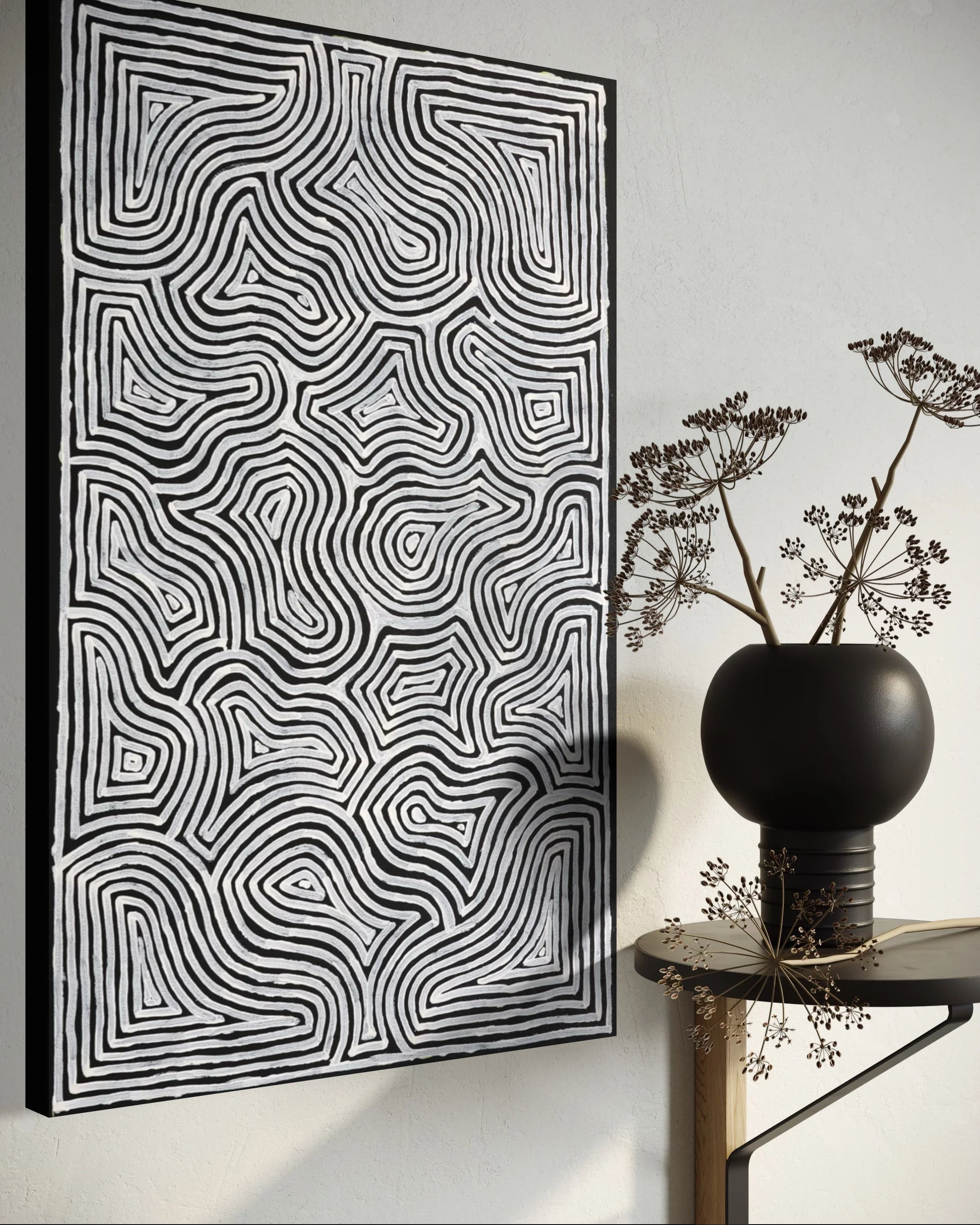 Image 7 of 8
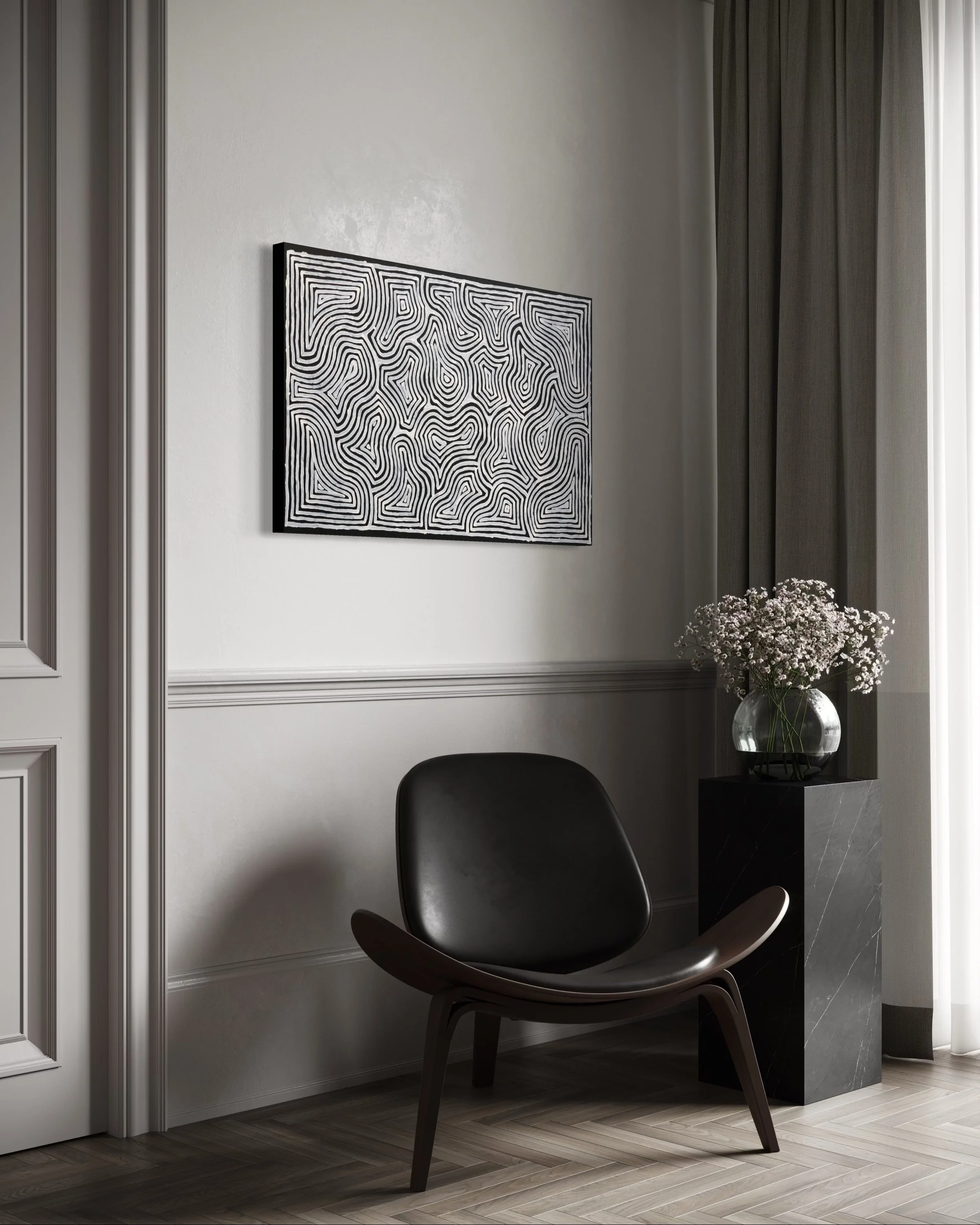 Image 8 of 8
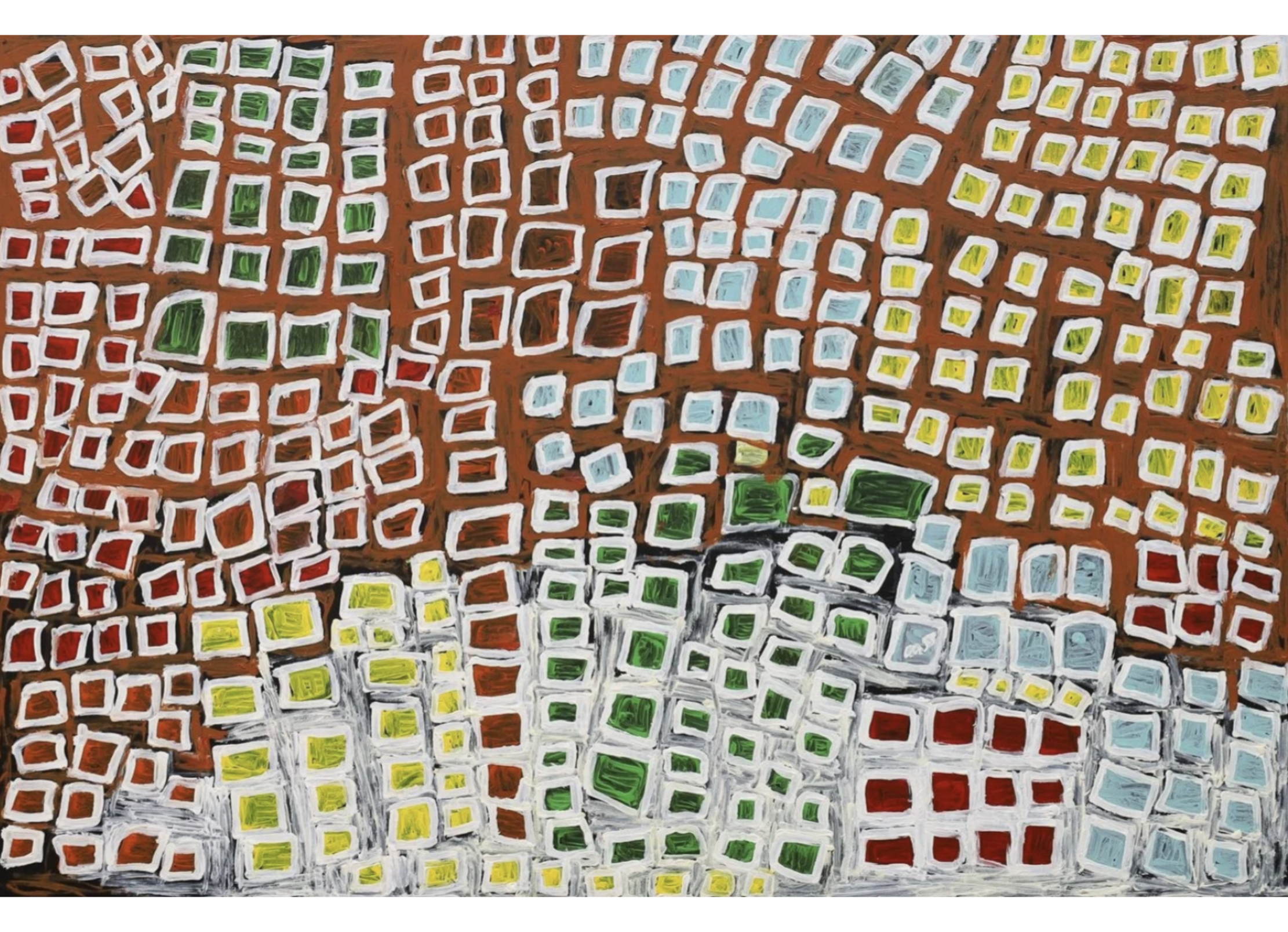
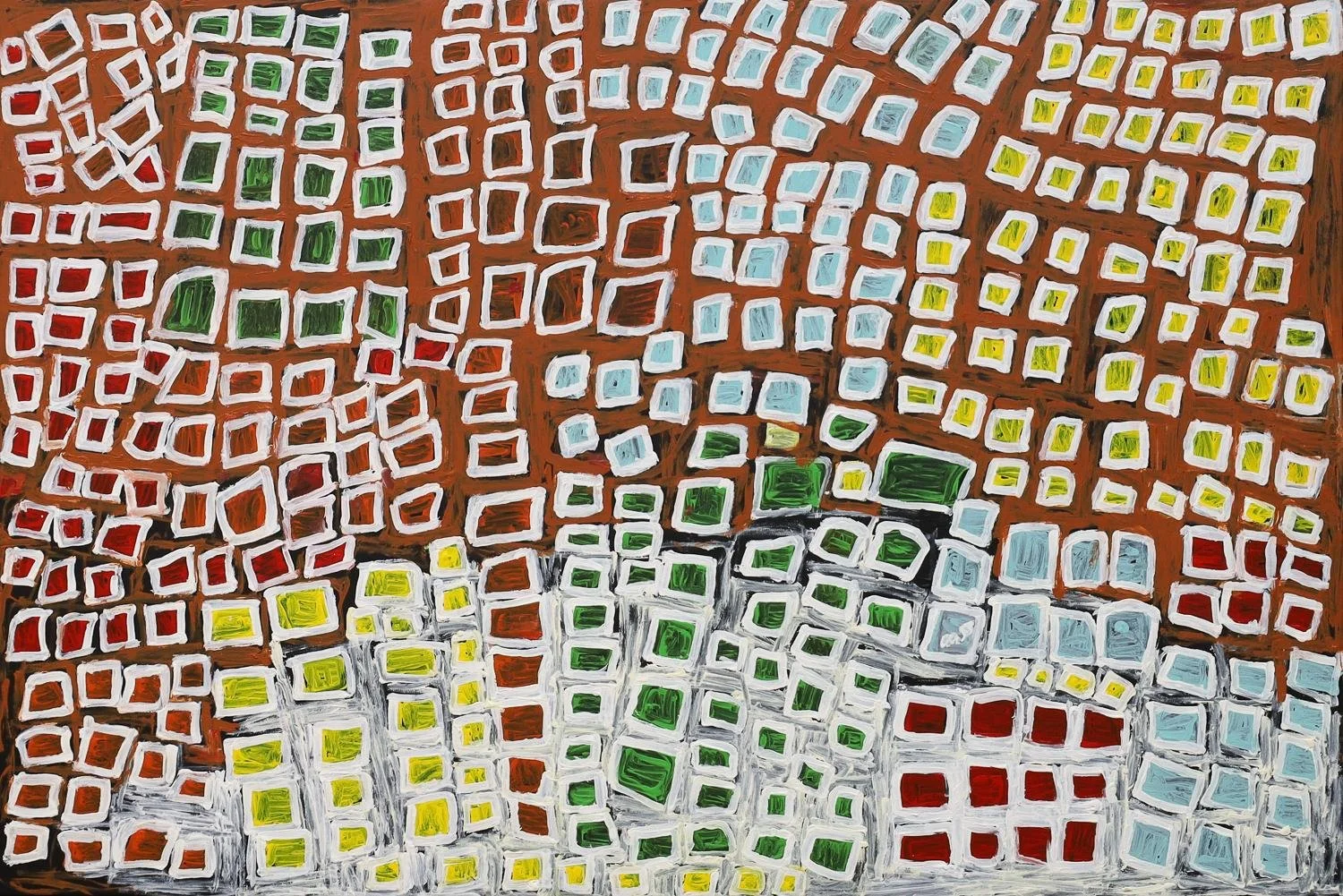
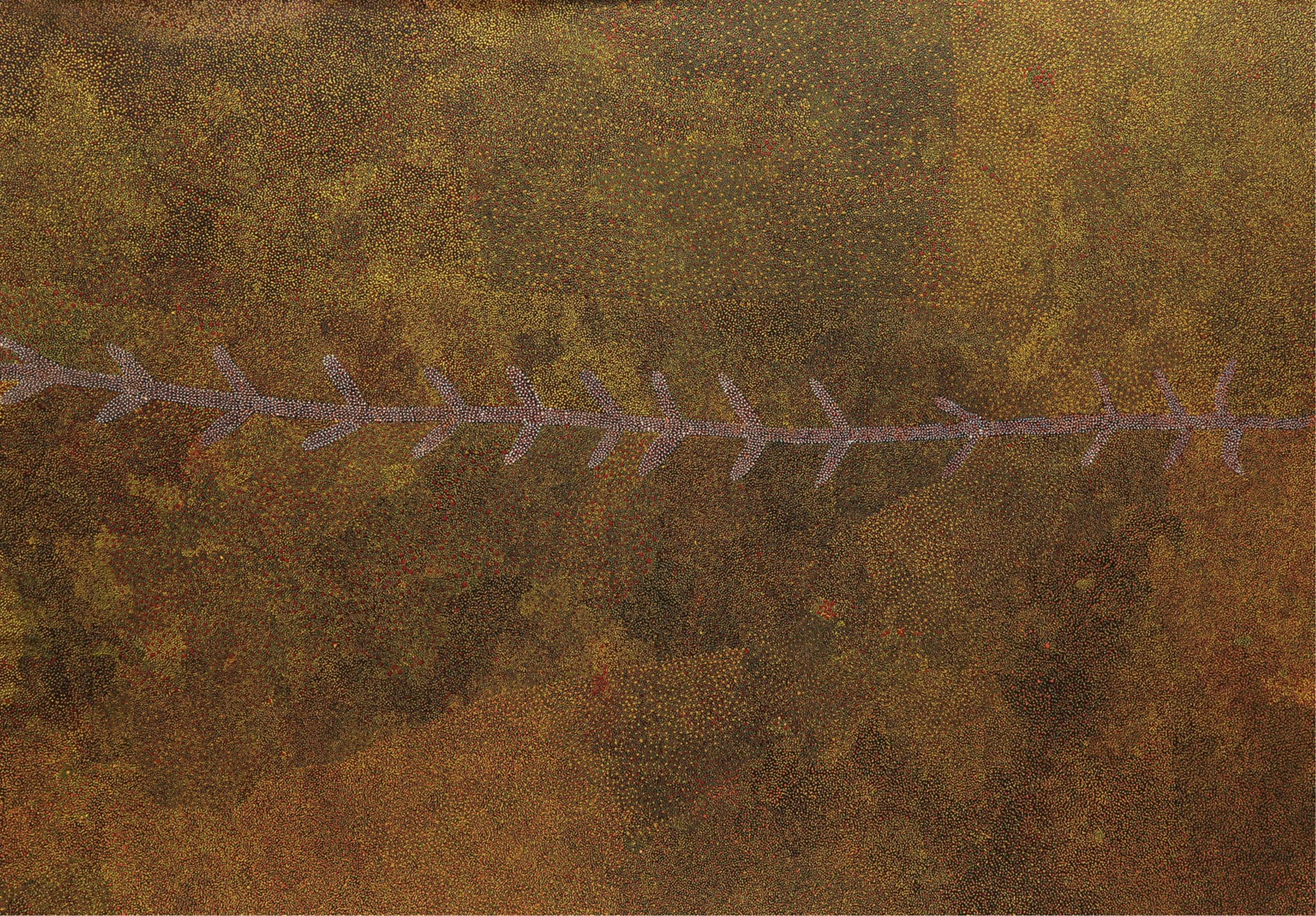
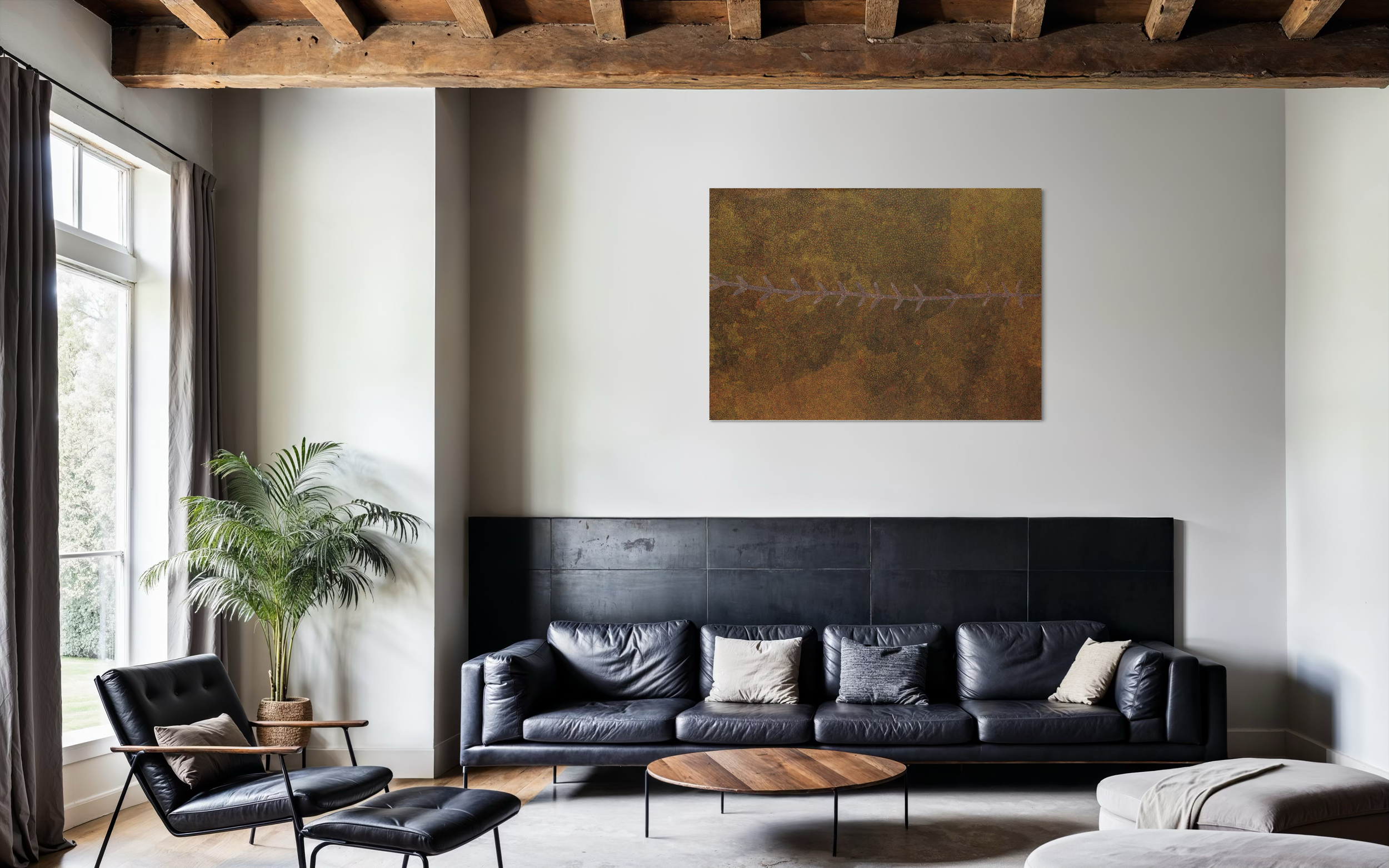
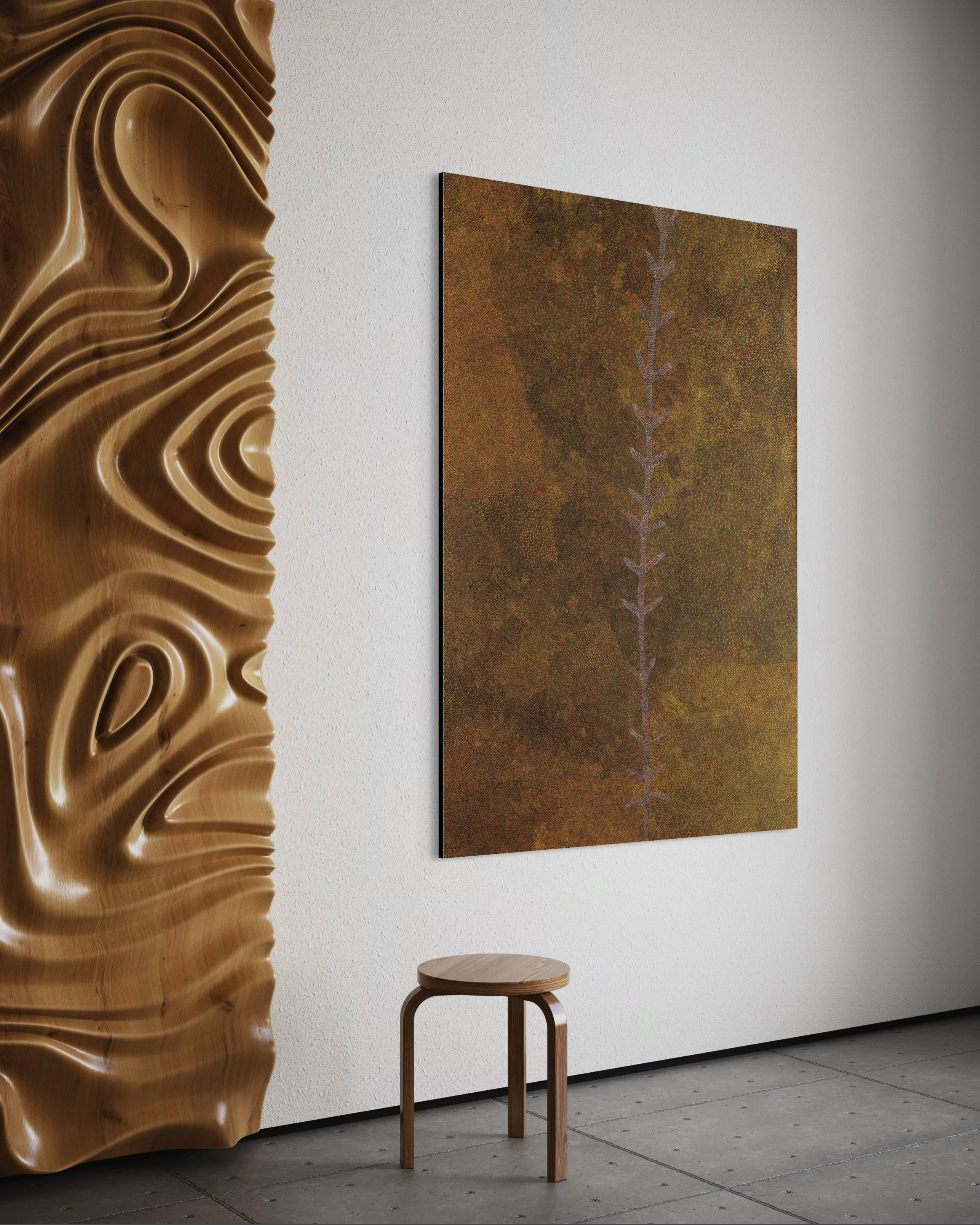
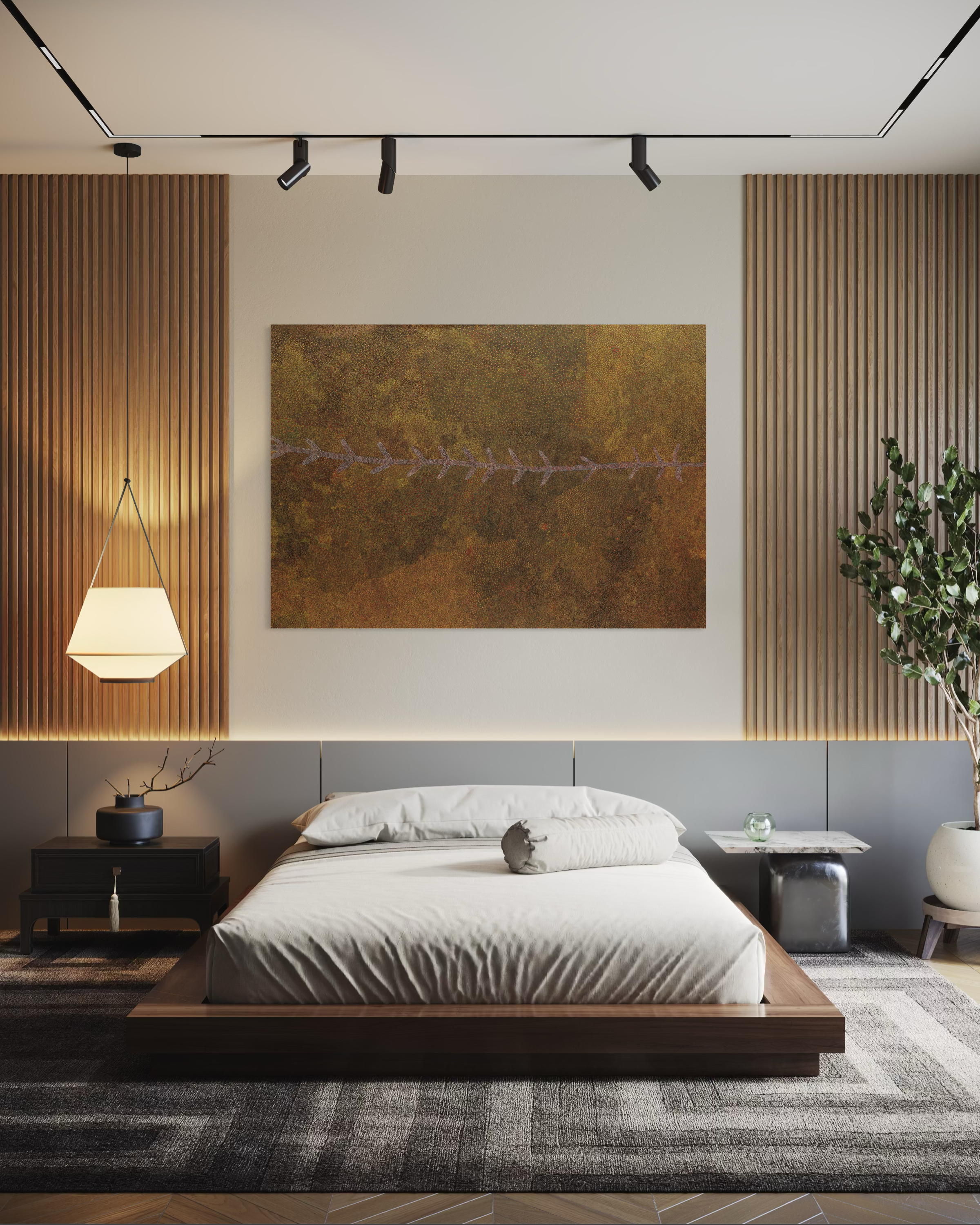
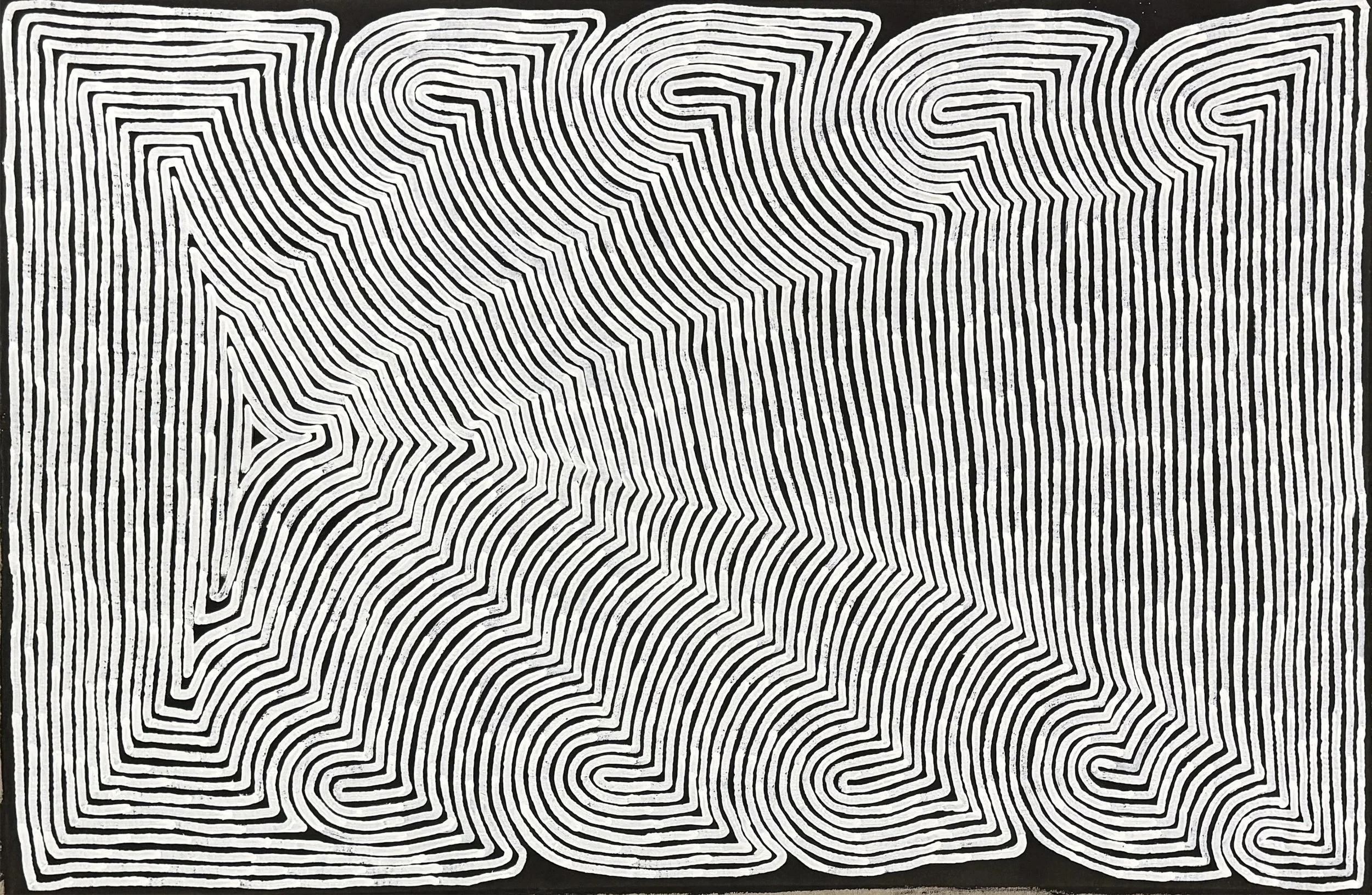
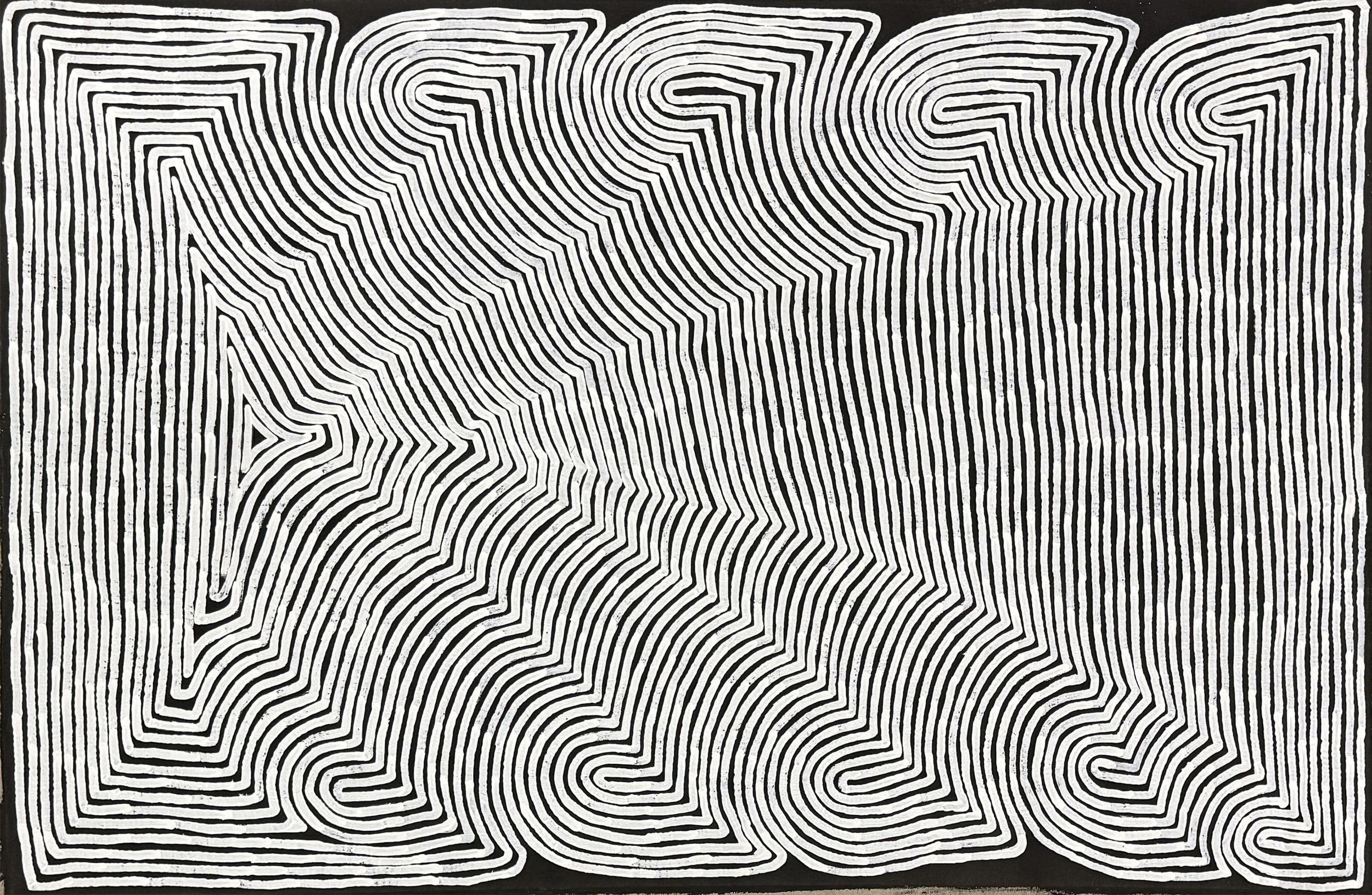
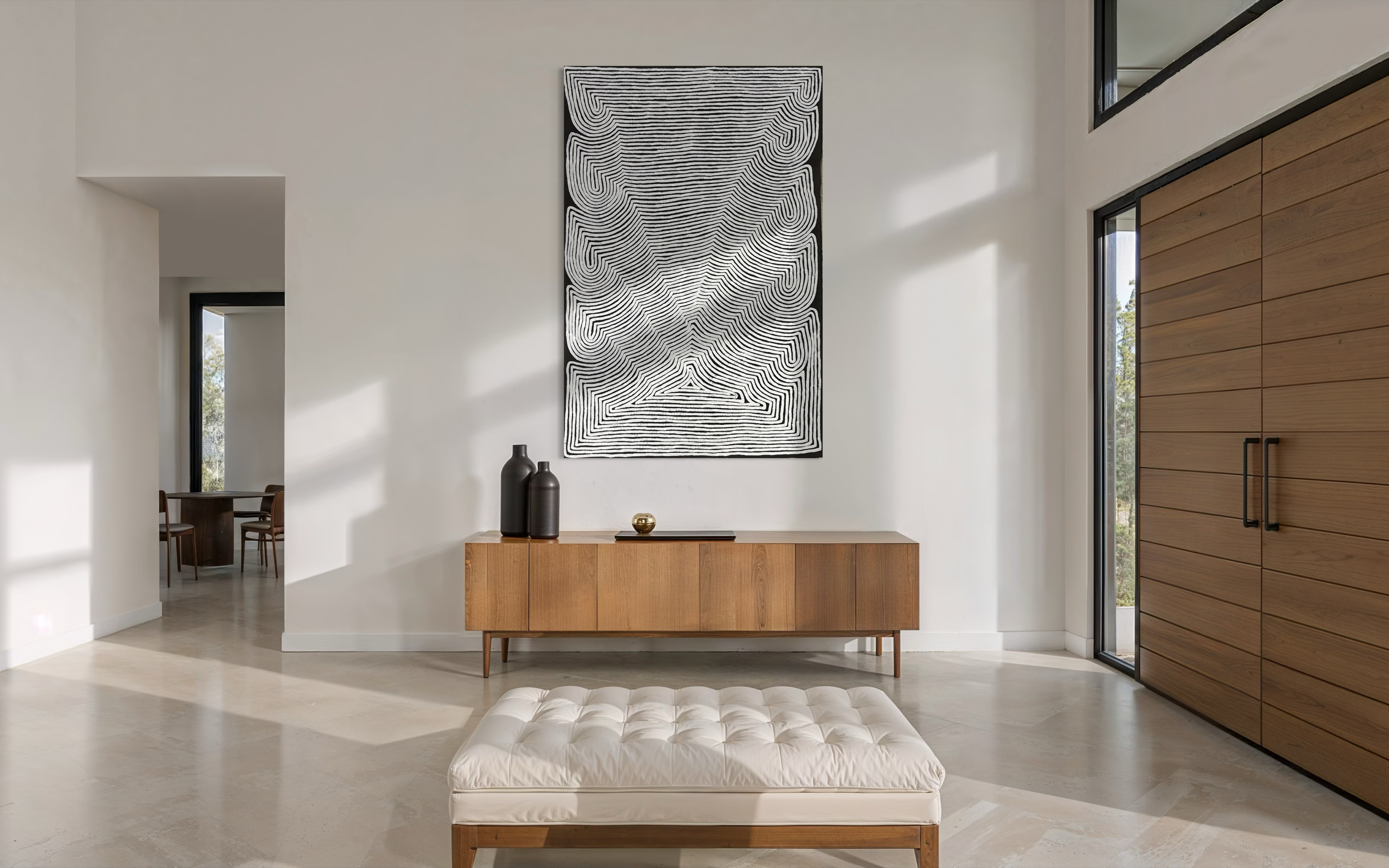
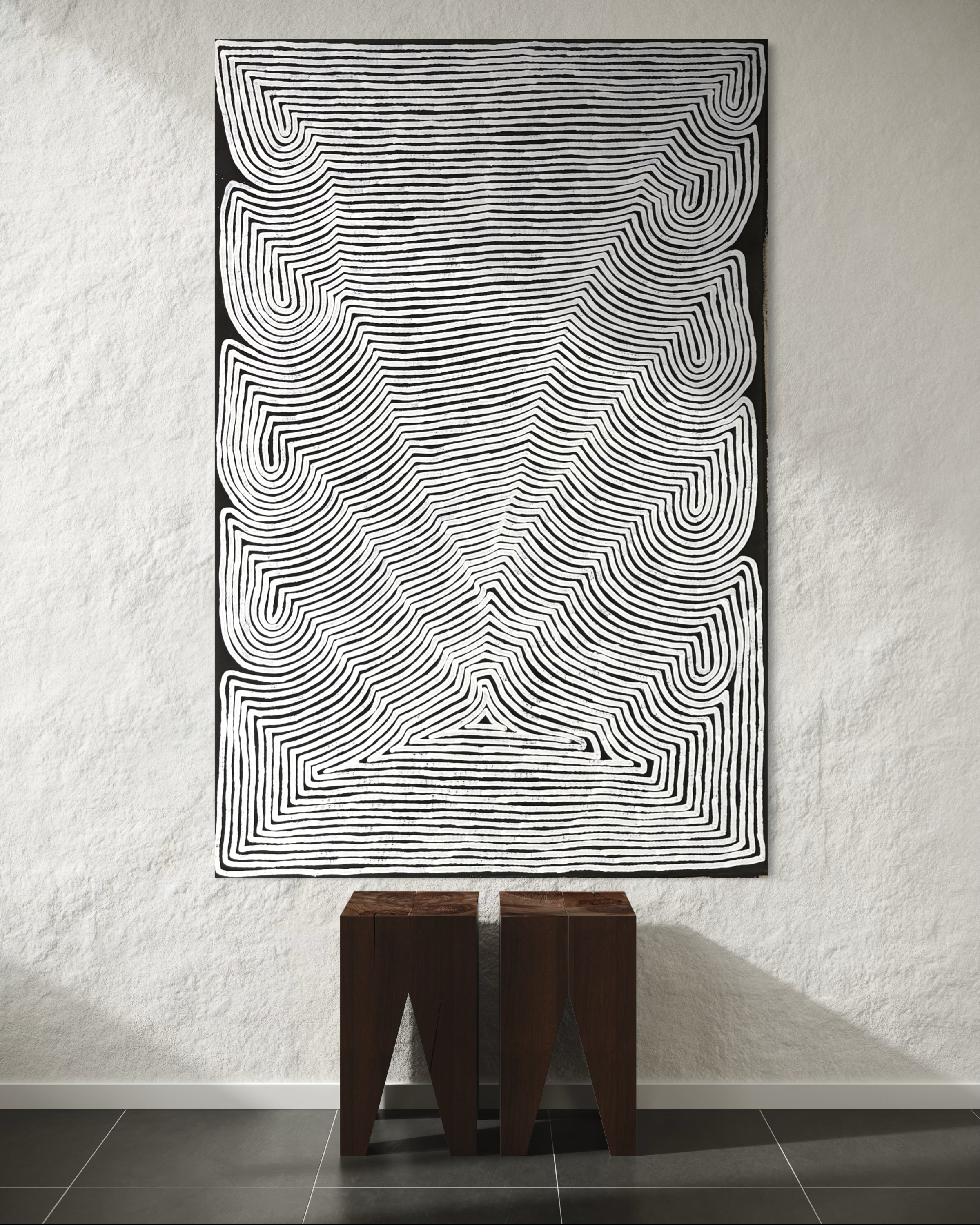
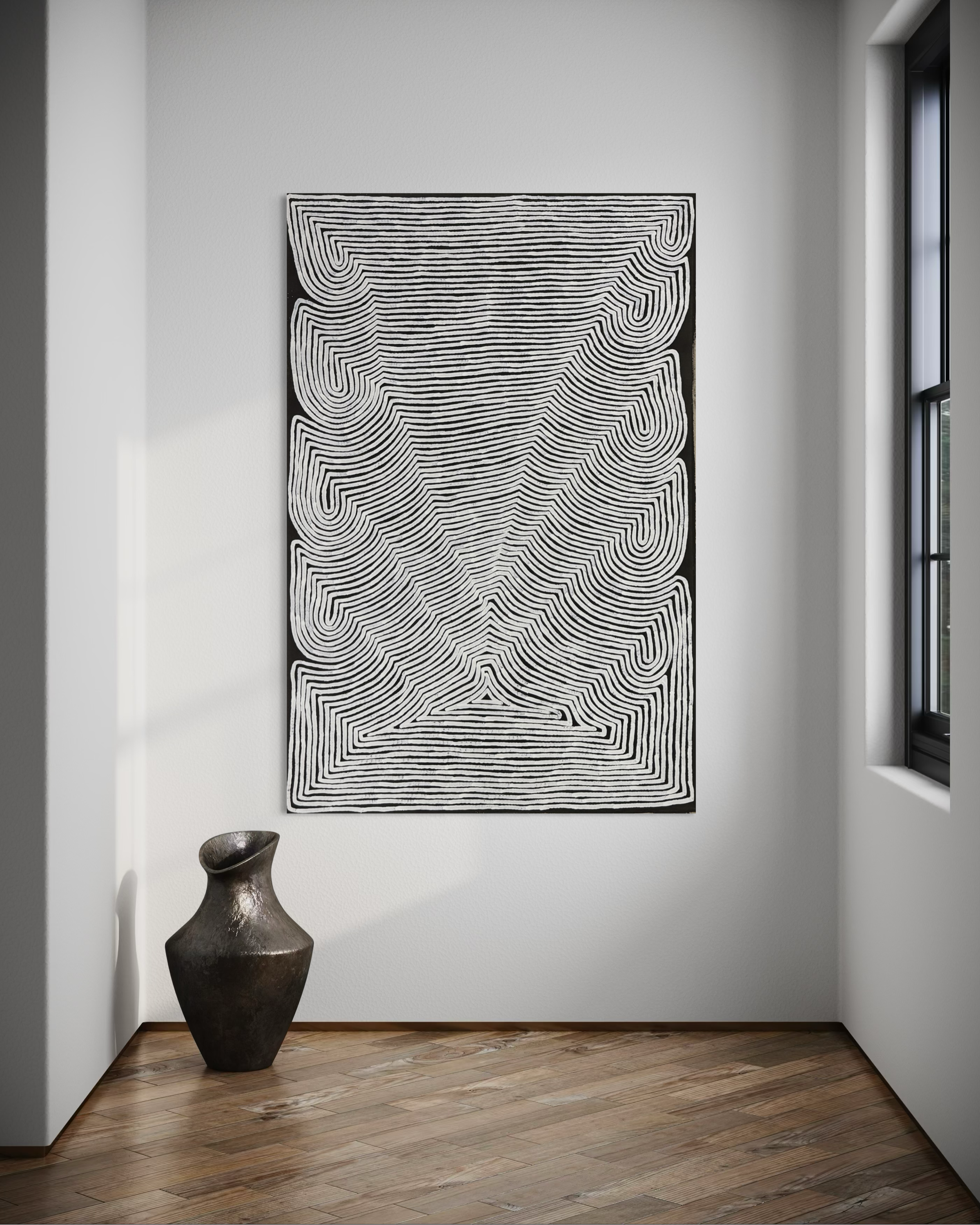
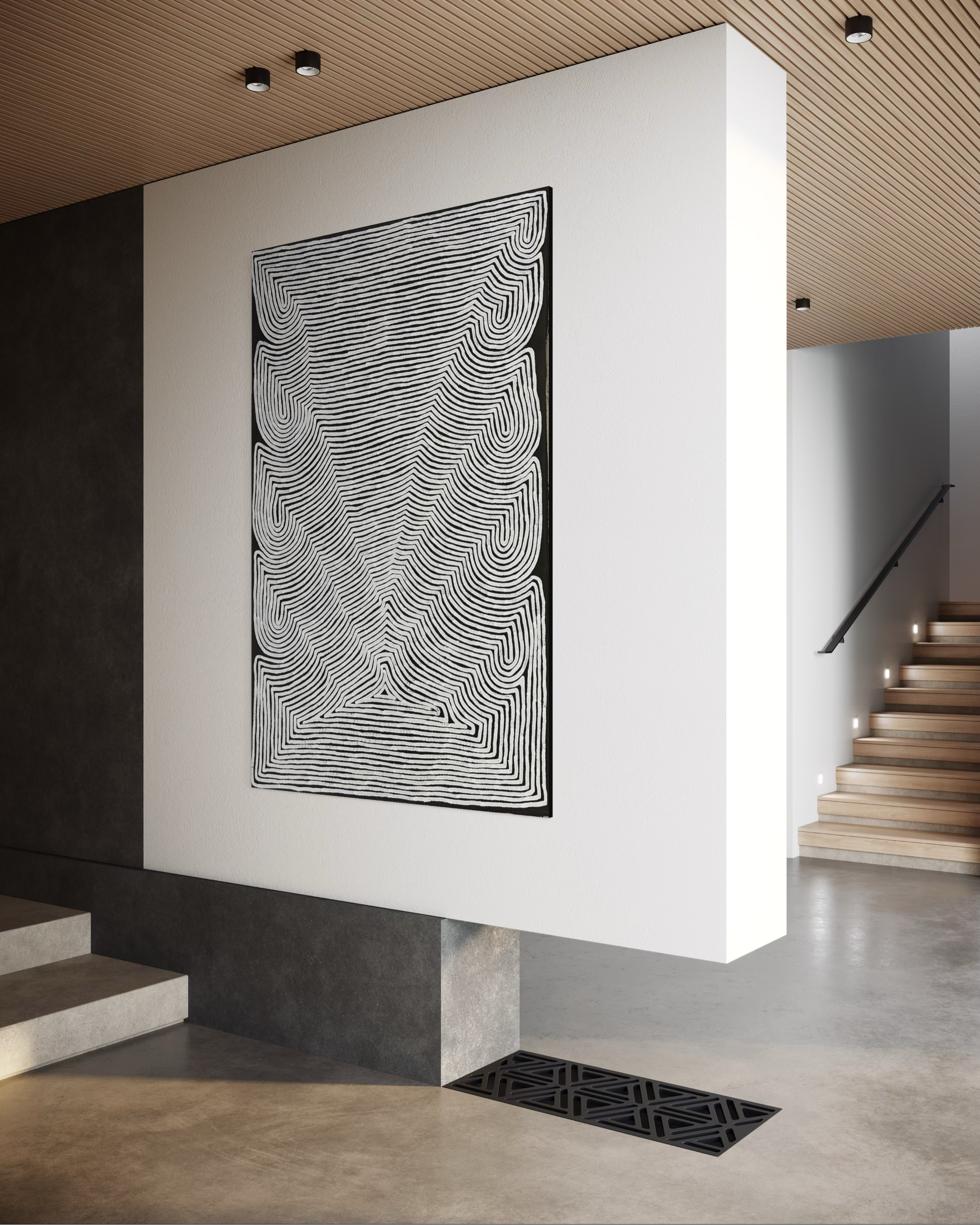
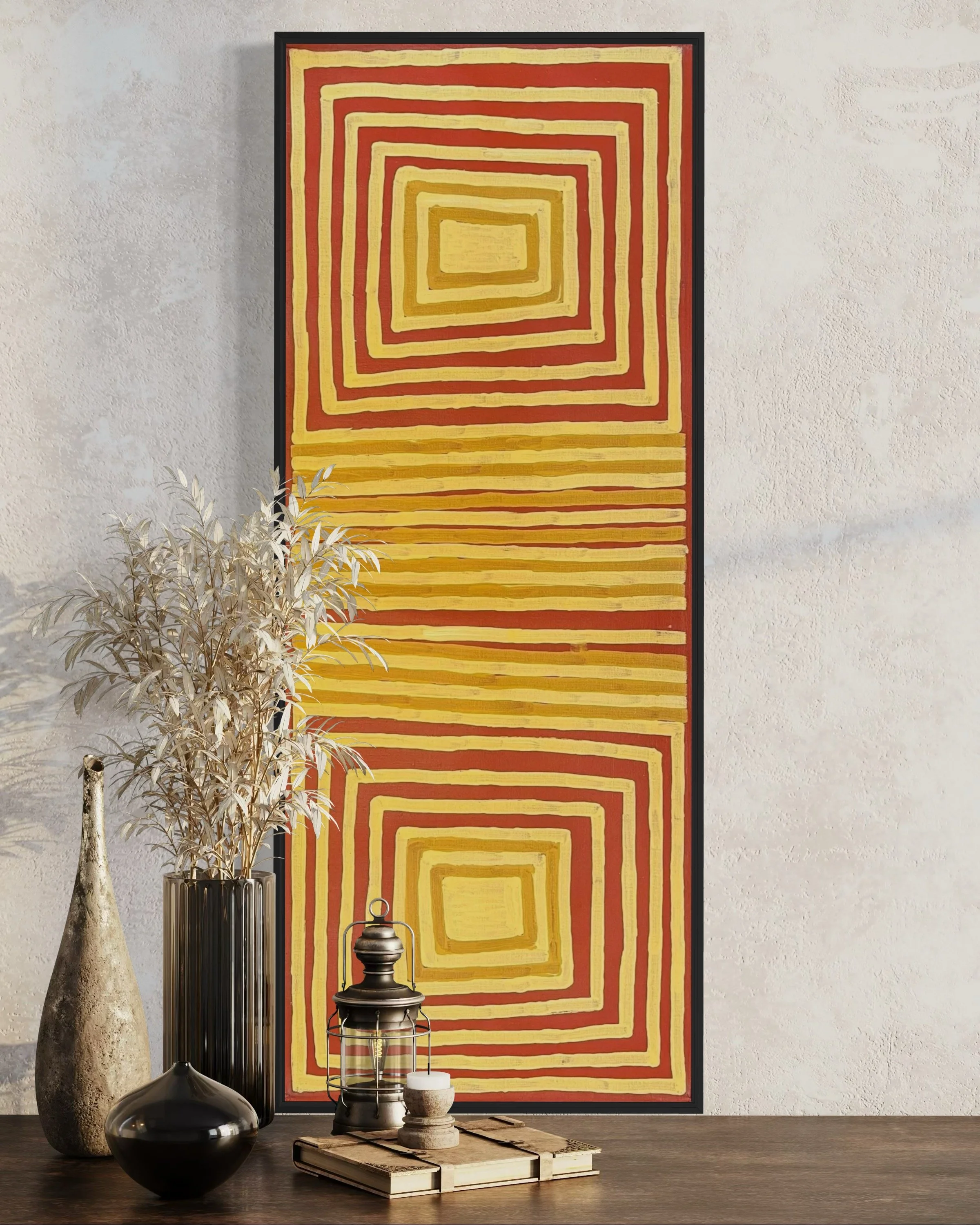
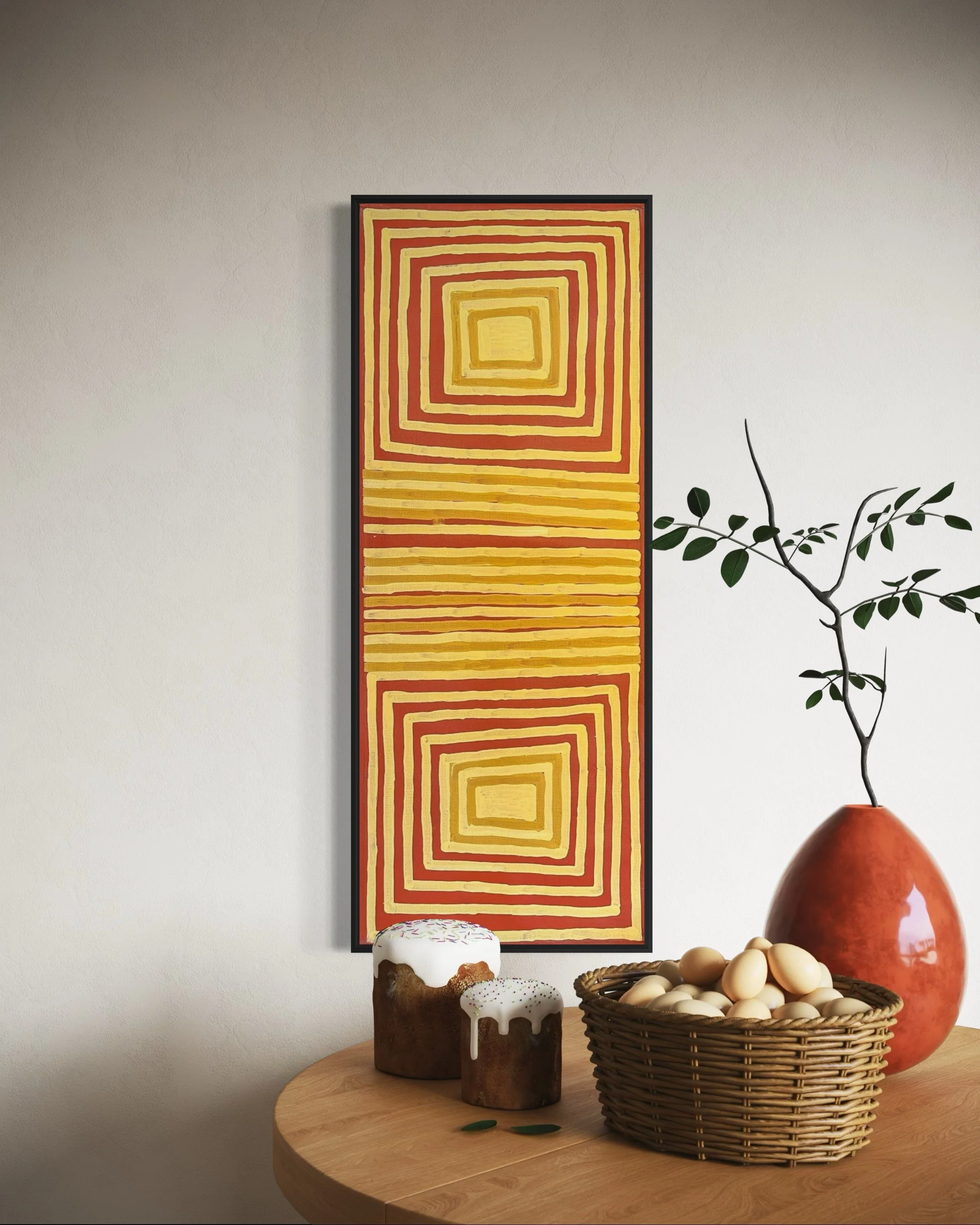
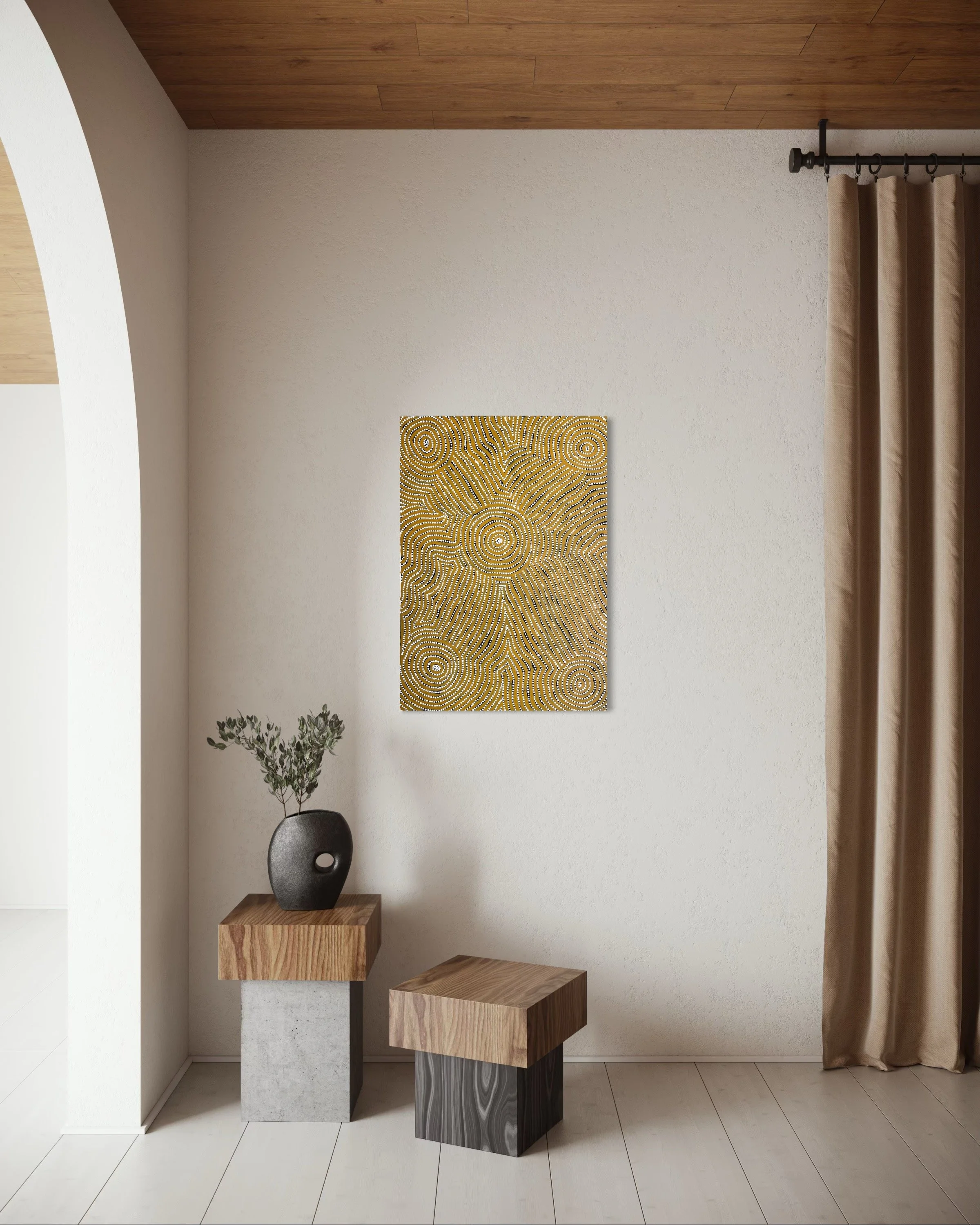
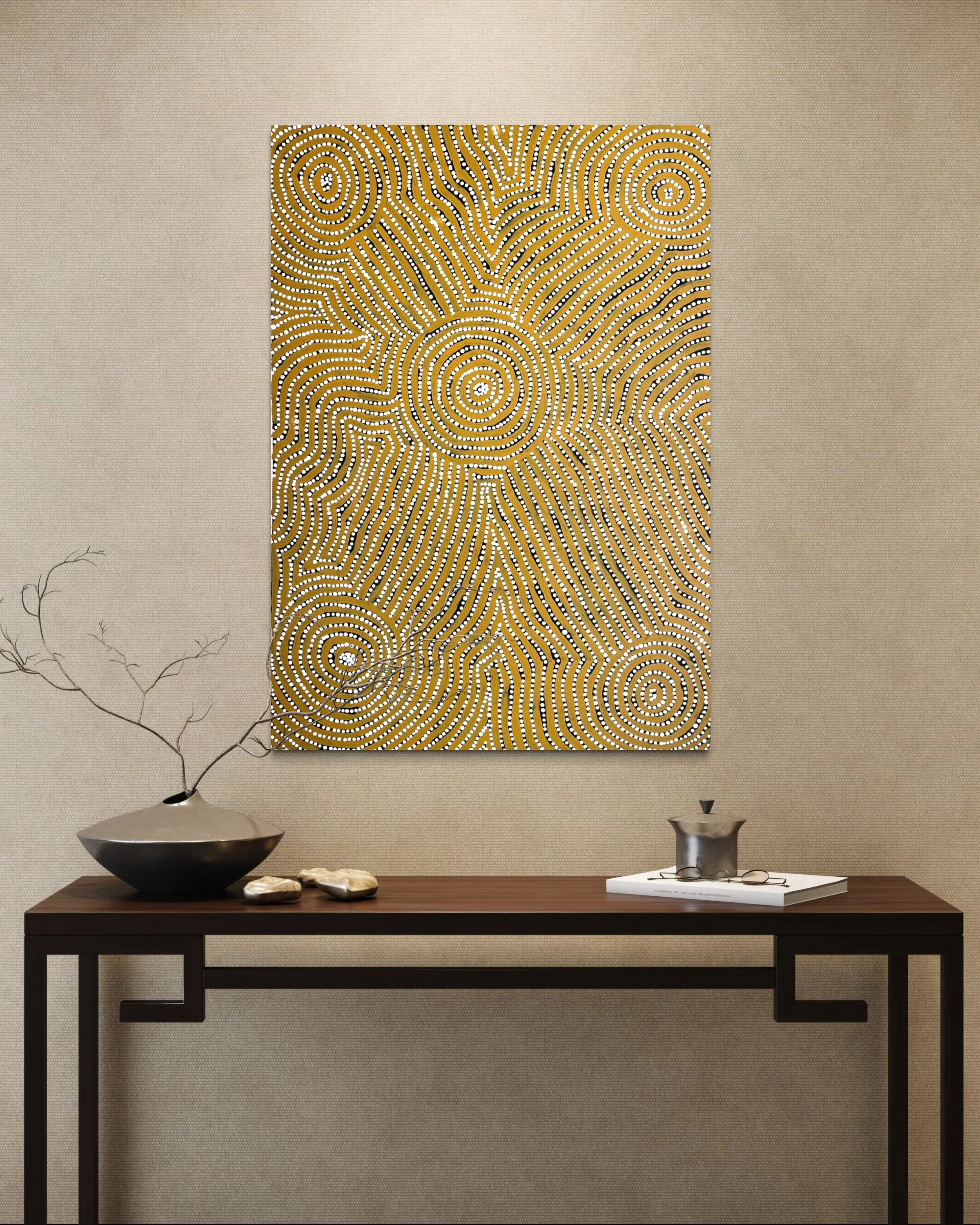
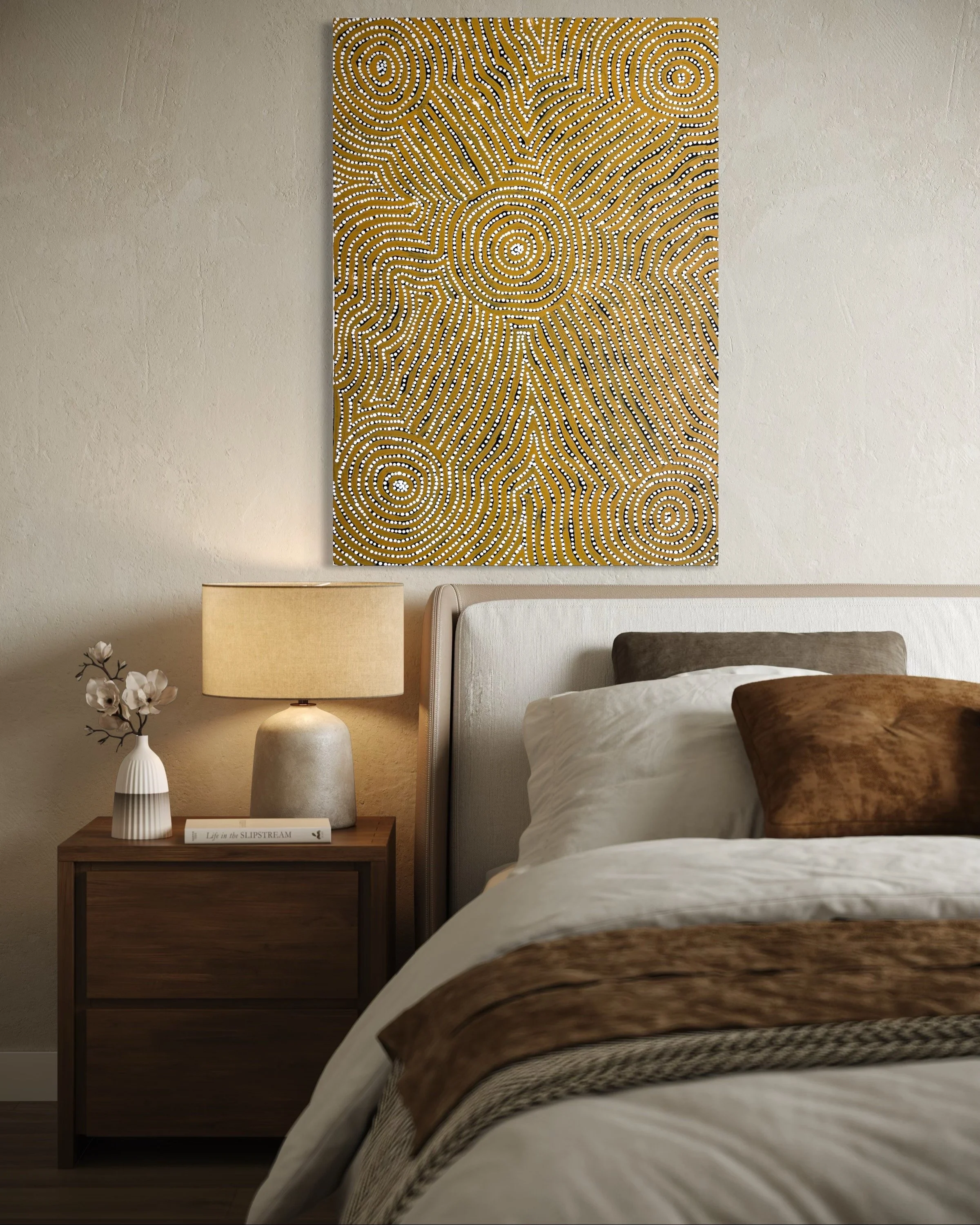
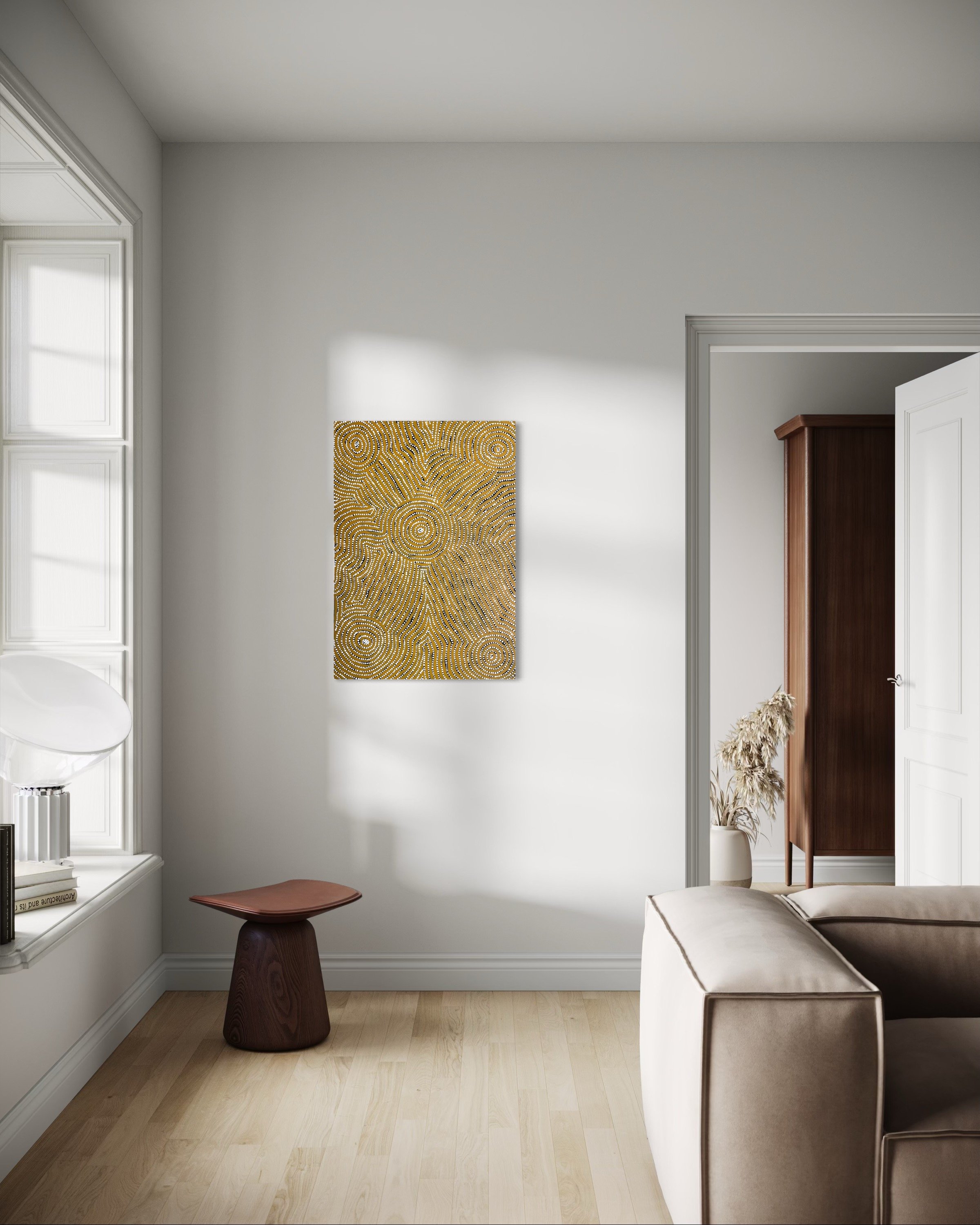
This exceptional work by George Hairbrush Tjungurrayi, created in 2022, represents the culmination of the revolutionary minimalist style that has propelled the artist to the forefront of the most sought-after contemporary masters of Australian Aboriginal art. Titled Tingari, this acrylic on canvas painting (100 × 64 cm) perfectly illustrates the significant stylistic evolution initiated in the 1990s. Through its characteristic composition of finely drawn parallel lines and vibrant geometric patterns, George transcends traditional representations of the Tingari Cycle to create a striking optical effect that immediately captivates the viewer and invites contemplation.
With its rhythmic and hypnotic visual structure, this canvas testifies to the major aesthetic breakthrough embodied by Tjungurrayi alongside other pioneering artists such as his brother Willy, Turkey Tolson Tjupurrula, Ronnie Tjampitjinpa, and Mick Namarari. The meticulously spaced transverse lines simultaneously evoke ceremonial body paintings and striated desert sculptures, transmitting the ancestral narratives of the Tingari Dreaming in a resolutely modern pictorial language. This ready-to-hang artwork embodies the technical excellence and spiritual depth that have earned George international recognition, with works featured in all major museums of Indigenous art in Europe, America, and Australia.
All artworks offered by Inma are authentic and delivered with an official certificate of authenticity issued by the art center or gallery, guaranteeing their provenance and value. Each piece is carefully packaged in professional materials suitable for the transport of artworks. Shipping is handled by UPS, with real-time tracking and full insurance, ensuring secure and peaceful delivery to your home.
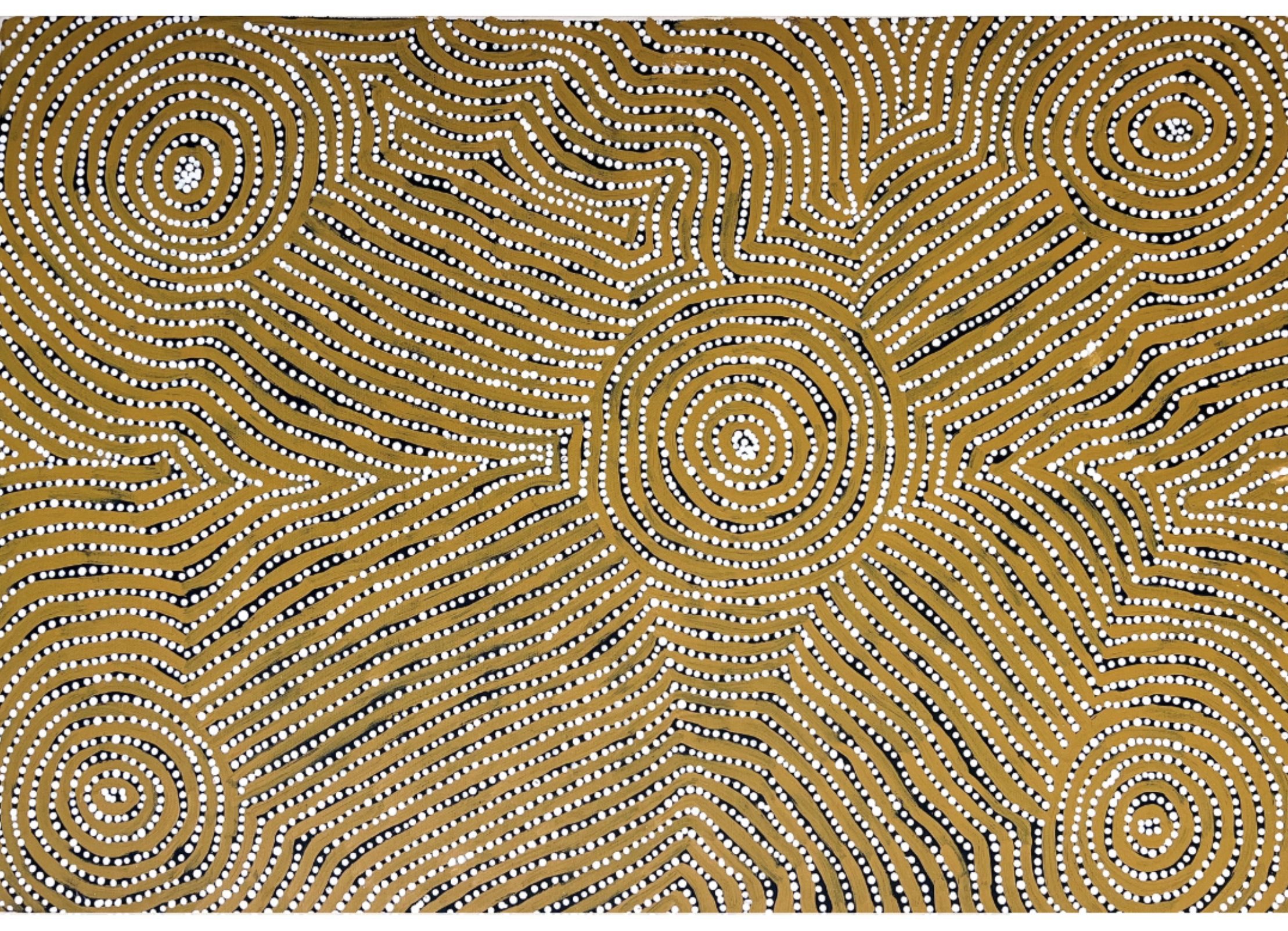
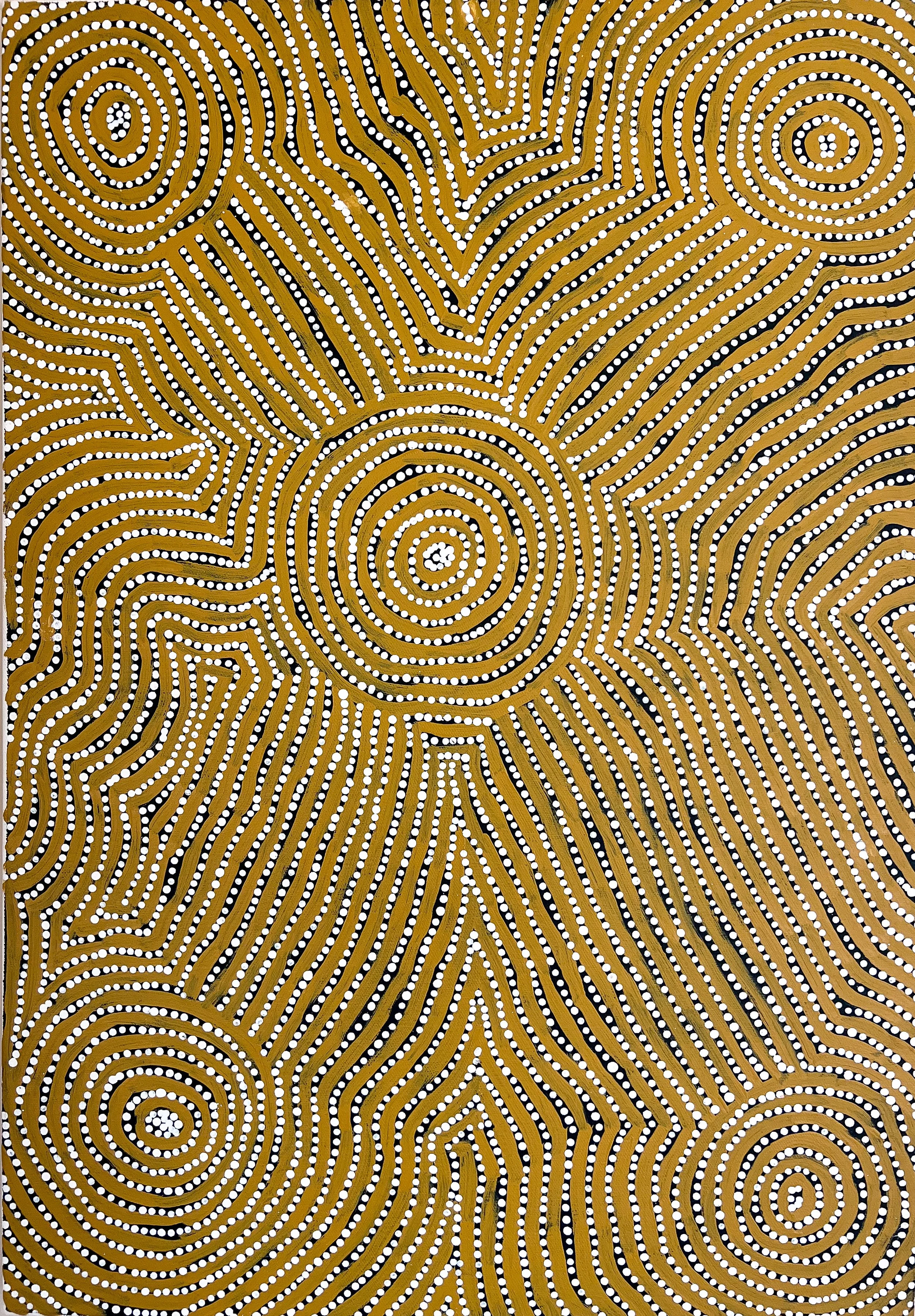
George Hairbrush Tjungurrayi (born circa 1943-1947 in Wala Wala, near Kiwirrkurra, in the Gibson Desert, Western Australia) is among the most influential figures in contemporary Aboriginal art. Raised in the traditional nomadic Pintupi way of life until his arrival in Papunya in 1962, he comes from a family of respected artists including his brother Willy Tjungurrayi and his sisters Naata and Nancy Nungurrayi. Involved from the very beginning of the Papunya Tula movement in 1971 alongside his inspiring uncle Charlie Tarawa Tjungurrayi, he began painting independently around 1976-1980. His style initially reflected the traditional pointillist motifs associated with the Tingari Cycle before ushering in, in the 1990s, a new revolutionary phase of desert painting, characterized by abstract minimalism and striking optical effects. Recognized among the 50 most collectible Australian artists (2003), a finalist for the Wynne Prize and the Alice Prize (2006), the Mosman Art Prize (2020), and a participant in the 21st Biennale of Sydney (2018), his works are held in the collections of the world's most prestigious institutions, including the National Gallery of Australia, the Art Gallery of New South Wales, the Museum of Contemporary Art in Sydney, and the Groninger Museum in the Netherlands.